climbing fruit · Vitacées
GrapeVitis vinifera
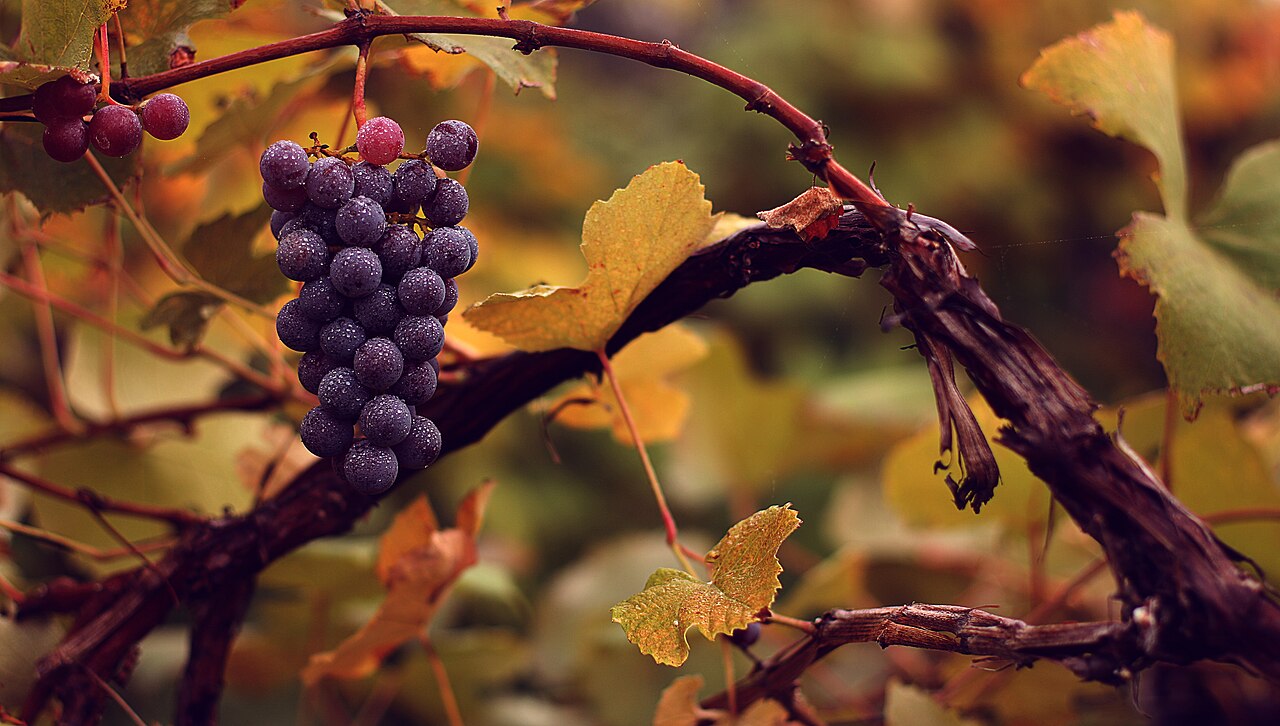
The table grape is no longer reserved for the south: the recent resistant varieties ripen without difficulty against a Belgian wall, and the glasshouses of Hoeilaart made the fame of the Brussels grape. A vine takes up little room, dresses a facade and delivers golden or blue bunches in September.
- Difficulty
- Intermediate
- Exhibition
- Full sun, south- or west-facing wall
- Watering
- Low; only the first two summers and in marked drought
- Floor
- Poor, stony, drained, warm; dislikes damp
- Spacing
- 1.5 to 2 m between plants along a wall
- Harvest
- 2 to 3 years after planting
Calendar · Belgian climate
When to sow, plant and harvest
| Activity | Jan | Feb | Mar | Apr | May | Jun | Jul | Aug | Sep | Oct | Nov | Dec |
|---|---|---|---|---|---|---|---|---|---|---|---|---|
| Plantation | yes | yes | yes | yes | yes | yes | ||||||
| Harvest | yes | yes |
Step by step
1Choosing
Favour varieties resistant to downy mildew and powdery mildew, which need no treatments: Muscat bleu, with its large musky black berries, Regent, Boskoop Glory or Birstaler Muskat, a white grape, do well everywhere in Belgium. Perle de Csaba and Chasselas doré are early but more susceptible. Under glass, Frankenthal and Royal made the history of Hoeilaart. Choose a two-year-old grafted plant, with brown wood and healthy buds.
2Planting
Plant from November to March, outside frosty spells, or in April from a container, against a south- or west-facing wall, a shed, a pergola. The vine wants a poor but drained and warm soil: on heavy clay, plant on a mound with gravel. Bury the rootball 20 cm from the wall, leaning the stem towards the support, with the graft union above soil level. Cut back to two buds, water, mulch with gravel or wood chippings.
3Caring
Winter pruning, in February, outside frosty spells, does everything: on a horizontal cordon, prune each of the year's shoots to two buds to form spurs; on a Guyot, keep a rod of six to eight buds and one spur. In summer, pinch out the shoots two leaves above the last bunch, remove the water shoots and take leaves off around the bunches in August to let air in. Water sparingly, except in the first two summers.
4Harvesting
A ripe bunch has soft, translucent, fragrant berries whose stalk is beginning to turn woody; the pips are brown. Taste them: the sugar goes no further once the bunch is picked. In Belgium, the harvest runs from late August for the early varieties to mid-October for Muscat bleu or Regent. Cut with secateurs, keeping a piece of the cane, in dry weather, having protected the bunches from wasps with bags or a net.
5Storing
Fresh grapes keep one to two weeks in a cool place, better still in a cool, airy room, with the bunches hung up. One tradition is to plunge the end of the cane into a bottle of water to keep the bunches until Christmas. Pasteurised juice, jelly, raisins in a dehydrator, or homemade wine for the curious, make the most of large harvests. The young leaves, blanched, can be stuffed.
Further reading
Planting and caring for plants properly
How to plant properly
Choosing the variety and the grafted plant
In Belgium, the variety decides whether you succeed: favour hybrids resistant to downy and powdery mildew that ripen in 130 to 150 days. Muscat bleu, Regent, Boskoop Glory and Nero for black grapes; Birstaler Muskat, Solaris, Phoenix or Lakemont, seedless, for white. The traditional wine grapes, Chasselas, Perle de Csaba, Frankenthal, need a cold glasshouse or an exceptional summer. The plant must be grafted on a phylloxera-resistant rootstock, a legal requirement in the nursery trade: check the graft union 25 cm above the roots. A one-year-old plant in a pot, with brown wood, establishes just as well as a two-year-old.
Choosing the wall or the pergola
The vine wants full sun and stored warmth: a brick wall facing south or south-west, the front of a shed, a pergola over a paved terrace are ideal. Avoid north and east, where the grapes do not ripen and downy mildew thrives. Allow 1.5 to 2 m between plants along a wall for a cordon, 3 m for a pergola where each plant will cover one width. Before planting, fix horizontal galvanised wires every 40 cm from 60 cm above the ground, held 10 cm off the wall on vine eyes, so that air circulates behind the foliage.
Preparing a poor, warm soil
Against all intuition, the vine produces better in poor, stony, drained soil than in rich earth, where it makes wood and no sugar. Dig a hole 60 cm in every direction, take out the builder's rubble without regretting it, and mix into the soil a third of gravel or coarse sand, only one spadeful of mature compost, and a handful of wood ash. On heavy clay, plant on a 20 cm mound with a drainage bed of gravel and do not bury the roots in a hollow. The foot of a wall, dry and warm, is exactly what suits it.
Planting and cutting back
Plant from November to March outside frosty spells bare-rooted, or in April from a pot, 20 or 30 cm from the wall, leaning the stem slightly towards the support. The graft union must stay 5 cm above the soil so that the scion does not root on its own account and send out roots susceptible to phylloxera. Soak the roots for an hour, trim them to 15 cm, fill in, firm, water generously. Then cut the plant back to two buds above the graft: a single vigorous shoot, staked vertically, will form the trunk in the first year. Mulch with gravel or wood chippings, not damp straw.
In a pot or container
The vine grows very well in a container of 50 to 70 litres on a south-facing terrace, trained on a stake as a fan or on a small trellis, with short pruning to two or three spurs. Choose an early, compact variety, Muscat bleu, Lakemont or Vanessa. The compost must drain: garden soil, sand, a little compost, over 5 cm of gravel. Water every other day in summer, but let the surface dry out in between; no nitrogen fertiliser, a handful of ash in spring is enough. Wrap the container in winter or bring it into a cold shelter. A vine in a pot gives five to ten bunches.
Beginner's mistakes
The first is to plant a vine facing north or east, or in a rich, watered border: it grows magnificently and never ripens. The second is not to prune in the first year, to let five shoots run and end up with a tangled bush that you no longer know how to take in hand. Many people bury the graft union or choose a susceptible wine grape that loses its leaves to downy mildew as early as July. Finally, letting it fruit too soon and too heavily: a two-year-old vine carrying twenty bunches exhausts itself; keep nothing in the first year, three bunches in the second, and the full crop from the fourth.
Look after it properly
Watering in the first years
For the first two summers, water every week in dry weather, ten to fifteen litres at the base, especially at the foot of a wall where the rain does not reach; the young plant must send down deep roots. From the third year, cut back sharply: the vine goes looking for water two metres down and watering in summer harms the quality of the grapes. One exception: from fruit set to veraison, in June and July, a generous watering every fortnight in a dry year avoids tiny berries. After veraison, when the berries take colour, not another drop, or the bunches split and the sugar is diluted.
Mulching and feeding
A mineral mulch of gravel or crushed slate suits it better than a damp organic mulch, which encourages fungi at the foot of the wall; on a pergola, dry wood chippings will do. Feeding is minimal: a spadeful of mature compost and a handful of wood ash in March, for the potash that makes the sugar and hardens the wood before winter. Never nitrogen or manure, which give foliage, bunches that fail to set and downy mildew. A spray of horsetail liquid in May and June strengthens the tissues. A lime wash on the trunk in winter limits mosses and insect eggs.
Forming, then pruning as a Guyot or a cordon
In the first year, keep a single staked shoot; in February, cut it back to the height of the first wire, at 60 cm. In the second year, let two opposite shoots grow and lay them along the wire in February: that is a bilateral cordon. From then on, every February, prune all the year's shoots to two buds every 20 cm along the cordon: these are the spurs, which carry the bunches. With the Guyot, an alternative for a pergola, keep a rod of six to eight buds laid along the wire and a two-bud spur that will supply next year's rod. Prune outside frosty spells, before the sap starts bleeding.
Managing the growth in summer
Summer makes the quality: in May, rub out buds, keeping only two shoots per spur, and remove the water shoots on the trunk. In June, tie the shoots in vertically and pinch them two leaves above the last bunch; remove the laterals, the secondary shoots born in the leaf axils. In July, limit each shoot to one or two bunches and cut the tip off any over-long bunch. In August, take leaves off around the bunches on the morning side to expose them to sun and air, without stripping them bare on the south side. These operations reduce disease more than any treatment.
Preventing diseases and pests
With a resistant variety and airy foliage, the Belgian vine stays healthy. Against downy mildew, oil spots on the leaves and white down underneath, remove the affected leaves, never wet the foliage and spray horsetail liquid or a garlic decoction in damp weather; copper remains possible as a last resort but builds up in the soil. Powdery mildew, a grey dust on the berries, is treated with wettable sulphur or diluted milk as soon as it appears. Grey mould is prevented by taking off leaves and stopping the watering. Wasps and birds are dealt with by organza bags over each bunch from veraison, more reliable than netting.
Through the season
In February, prune outside frosty spells, before the vine starts bleeding. In March, compost lightly, lime-wash the trunk, repair the wires. In April, protect the young shoots from a late frost with a fleece, they are very tender. In May, rub out buds and tie in. In June, pinch out, tie in, watch for downy mildew in thundery weather. In July, limit the bunches, horsetail liquid. In August, take leaves off, bag the bunches at veraison, stop all watering. In September-October, harvest according to variety. In November, gather up the leaves, protect the base of a young vine by earthing up with soil or dry straw.
Harvesting and storing
Grapes ripen no further after picking and gain in sugar until the first frosts: taste them, the skin should be thin, the flesh melting, the pips brown and the stalk browning at its base. In Belgium, Solaris and Birstaler Muskat are picked in late August or early September, Muscat bleu and Regent in late September or October. Cut the bunch with secateurs keeping a piece of the cane, in dry weather, in the afternoon, and set it down without handling it by the berries. Remove split berries before storing. Hung in a cool, airy room, sound bunches hold for three to four weeks.
Obtaining seeds or seedlings
Seeds and seedlings: where to find them
When choosing a fruit tree or shrub, opt for a nursery near you: they stock rootstocks and varieties suited to the local climate, and can advise you on pollination. In Belgium, look for varieties from the Gembloux Research Centre (RGF label); in France, nurseries in the ‘Croqueurs de pommes’ network; elsewhere, collections of regional varieties.
From the vegetable patch to the plate
And then we savour it
What it offers
Grapes supply fast sugars, potassium and polyphenols concentrated in the skin and pips.
In the kitchen, it’s simple
A bunch of Muscat bleu with a piece of Herve cheese or a fresh goat's cheese: nothing to add.
Living well
A vine on the front of the house offers shade in summer, colour in autumn, and the pleasure of harvesting your own grapes.
Also worth a look