soft fruit · Rosacées
RaspberryRubus idaeus
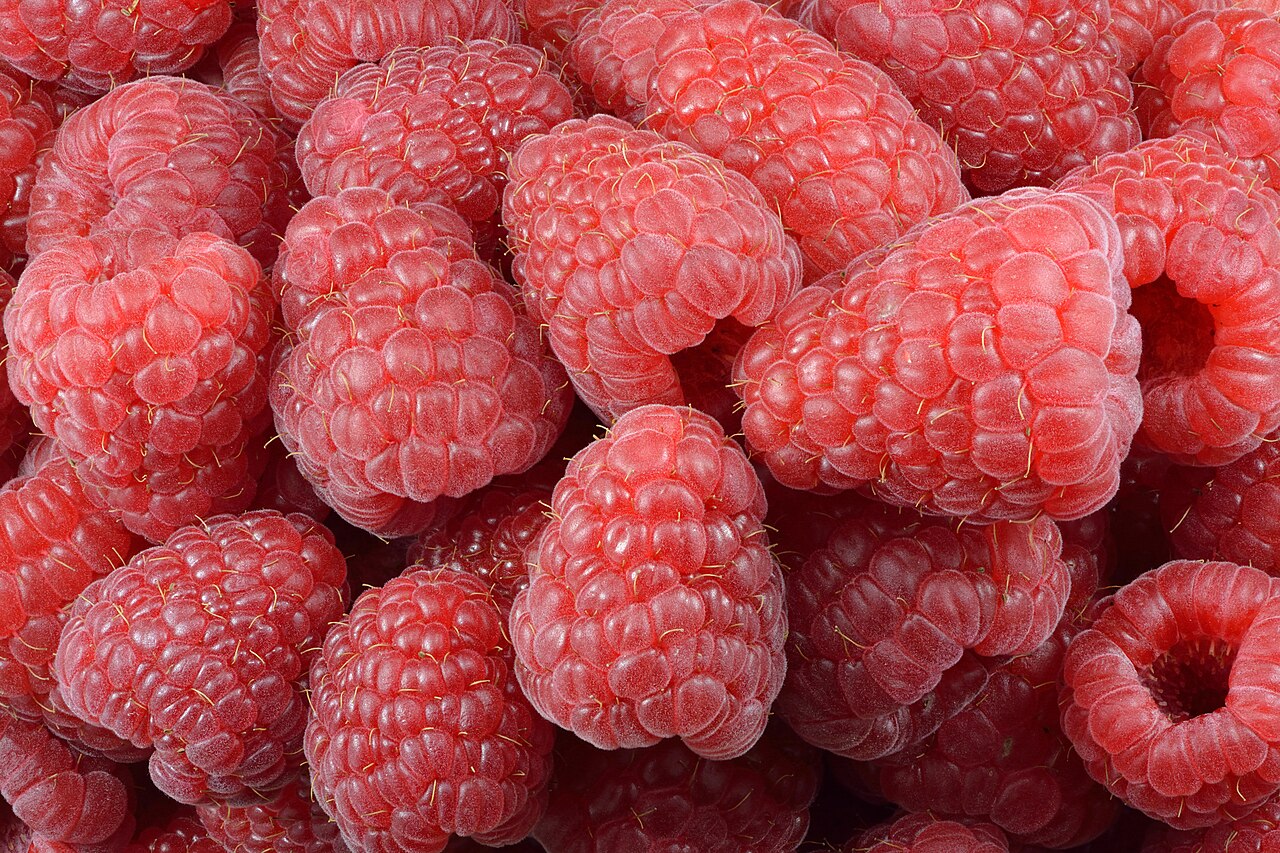
Hardy and generous, the raspberry is happy in our gardens, where it copes easily with the winters and cool summers. A few metres of fruiting hedge, well trained on wires, give kilos of fragile fruit every year that you never find so fresh in the shops.
- Difficulty
- Easy
- Exhibition
- Sun or partial shade
- Watering
- Regular in summer, soil never waterlogged
- Floor
- Moist, humus-rich, drained, slightly acid
- Spacing
- 40 to 50 cm along the row, 1.5 to 2 m between rows
- Harvest
- First harvest the year after planting, full production from the 3rd year
Calendar · Belgian climate
When to sow, plant and harvest
| Activity | Jan | Feb | Mar | Apr | May | Jun | Jul | Aug | Sep | Oct | Nov | Dec |
|---|---|---|---|---|---|---|---|---|---|---|---|---|
| Plantation | yes | yes | yes | yes | yes | |||||||
| Harvest | yes | yes | yes | yes | yes |
Step by step
1Choosing
Two families share the garden: summer-fruiting raspberries fruit in June-July on the previous year's canes, autumn-fruiting ones produce from late August until the frosts on the current year's growth. Combining the two spreads the harvest over four months. For a small garden, an autumn-fruiting variety such as Heritage or Autumn Bliss is pruned without a second thought. Choose healthy plants, certified virus-free, as these diseases make plantings degenerate.
2Planting
Plant bare-rooted between November and March, outside frosty spells, in soil loosened deeply and enriched with compost. Space the canes 40 to 50 cm apart on a row running north-south, and cut them back to 25 cm after planting. Put up a support system from the start: two wires stretched between posts, at 60 cm and 1.20 m high, are enough. A thick mulch of leaves or wood chippings limits suckers and keeps the soil cool.
3Caring
On summer-fruiting types, cut the canes that have fruited down to ground level as soon as the harvest ends, and keep six to eight young shoots per metre. On autumn-fruiting types, cut all the canes down in winter for a single, abundant autumn harvest. Water in dry spells, especially while the fruit swells, and pull up suckers that escape from the row. A dressing of compost each spring maintains vigour.
4Harvesting
The raspberry comes away from its core by itself when ripe: if it resists, wait a day or two. Pick in dry weather, in the morning, into shallow punnets so as not to crush the fruit underneath. In high season, go through every two days. Forgotten fruit quickly goes mouldy and attracts the fruit fly, so leave nothing on the canes.
5Storing
Fragile, the raspberry keeps only two days in the fridge, unwashed. The freezer is its best ally: spread the fruit on a tray, then bag it once hard, and it will keep its shape. Jam, coulis, syrup and raspberry vinegar make the most of the surplus. Autumn-fruiting types, with their spread-out harvest, also avoid the gluts that are hard to manage.
Further reading
Planting and caring for plants properly
How to plant properly
Choosing the spot
The raspberry is a plant of woodland edges: it is happy in sun or light partial shade, in moist, humus-rich, drained soil, and suffers above all in soils waterlogged in winter, where its roots rot. Give it a strip a metre wide along a fence, at the bottom of the garden or as a divider between two areas, running north-south so both faces of the hedge get the sun. Avoid spots where potatoes, tomatoes or old raspberries have grown, and hollows where cold air lingers in spring. A six-metre hedge feeds a family.
Preparing the soil
In autumn, loosen a trench 40 cm wide and 30 cm deep along the length of the row, without turning, and work in five kilos of mature compost or rotted manure per linear metre, plus a bucket of leaf mould or aged wood chippings, as the raspberry likes slightly acid woodland soils. On heavy clay, build a ridge 20 cm high along the whole row. Carefully remove couch grass and bindweed, which it will be impossible to extract later from the spreading roots. Put up the support wires before the raspberries, so as not to injure the roots later.
Choosing the plant
Buy certified virus-free plants, bare-rooted from November to March or in pots all year, rather than suckers from a neighbour, often carrying diseases that make the planting degenerate within a few years. Choose according to the harvest you want: summer-fruiting types, such as Tulameen, Glen Ample or Malling Promise, give in June-July on the previous year's canes; autumn-fruiting types, such as Heritage, Autumn Bliss or Polka, produce from August until the frosts on the current year's growth and are pruned without a second thought. A yellow variety such as Fallgold amuses children and escapes the birds. Two or three plants per metre are enough.
Planting in winter
Plant from November to March, outside frosty spells and waterlogged soil, the best moment being November, when the soil is still warm. Soak the bare roots for an hour in a bucket of water, trim damaged roots, and plant every 40 to 50 cm in a wide hole, the roots well spread out flat, the crown 3 or 4 cm below the surface: the raspberry likes to be slightly buried, unlike the strawberry. Firm, water five litres per plant even if it is raining. Immediately cut the canes back to 25 cm above the ground to force new shoots from the base.
Training on wires from the start
An untrained raspberry flops under the weight of the fruit and becomes impossible to harvest. Every 3 metres, set sturdy posts 1.80 m tall, driven in 50 cm, and stretch two galvanised wires at 60 cm and 1.20 m above the ground; for vigorous autumn-fruiting types, a third wire at 1.60 m is useful. Tie the canes to the wire as they grow with soft ties, spreading them out in a fan. Another method, the V system, stretches two pairs of wires 60 cm apart on either side of the row: the fruiting canes lean on the outside, the young shoots grow up the middle.
In a large container
A raspberry lives reasonably well in a container of 40 to 50 litres, 40 cm deep, one plant per container, in a mix of two thirds potting compost and one third garden compost over careful drainage. Choose a compact autumn-fruiting type, Autumn Bliss or a dwarf balcony variety, which is cut to the ground every winter and needs no complicated support, just three stakes in a wigwam. Place the container in sun, water almost every day in summer, feed every fortnight with liquid organic fertiliser and repot every three years in March, removing surplus suckers.
Beginner's mistakes
Planting suckers taken from an old garden, and importing viruses and dieback with them. Planting a potted plant in high summer without watering it every day. Forgetting the support wires and trying to put them in two years later in the middle of the roots. Not cutting back at planting, which gives a few fruits in the first year but a weak stool. Letting suckers invade the lawn and the neighbouring vegetable bed, for want of an edging sunk 30 cm deep. Finally, pruning a summer-fruiting type like an autumn-fruiting one, to the ground in winter, and wondering why it gives nothing the following summer.
Look after it properly
Watering just right
The raspberry has shallow roots and suffers from drought sooner than you might think, especially while the fruit swells, in June for some, in August-September for others. Water at the base ten litres per metre of row once or twice a week without rain, in the morning, without wetting the foliage or the fruit. A porous hose laid under the mulch, along the row, is the most worthwhile investment in the fruiting hedge. Never water in soil that is already sodden, and not at all in winter, except containers under cover.
Mulching and feeding
Mulch the row all year round 8 to 10 cm deep with wood chippings, dead leaves, straw or dried grass clippings, topping up every autumn: this mulch keeps the soil cool, limits suckers outside the row and reproduces the woodland soil the plant prefers. Every March, spread a 3 cm layer of mature compost along the row, under the mulch, and add a handful of wood ash per metre for potash. Comfrey liquid diluted to 10 % at flowering supports the harvest. Avoid fresh manure and nitrogen fertilisers, which make soft canes and bland fruit.
Pruning according to type
On summer-fruiting types, as soon as the harvest ends in July, cut down to ground level all the canes that have fruited, recognisable by their brown, dry wood. Keep six to eight young green shoots per metre, the most vigorous, tie them in and remove the rest; they will carry next year's fruit. In February, shorten their tips to 1.60 m. On autumn-fruiting types, cut all the canes back to 5 cm above the ground between December and February for a single abundant autumn harvest; or, for two harvests, cut only the upper part that has fruited, and the lower part of the same canes fruits in June.
Preventing diseases and pests
The raspberry beetle, whose larva is found in the June fruit: hoe around the base in winter to expose the larvae to birds, shake the flowers over a sheet in the morning to trap the adults, and prefer autumn-fruiting types, which fruit after the beetle's flight. Against Drosophila suzukii, pick every two days, leave no overripe fruit, and lay a very fine mesh net over the autumn-fruiting types in August. Cane dieback, purplish spots and wood that snaps, comes from damp and crowding: open up the row, drain, cut out and burn diseased canes. Aphids are controlled with soft soap.
Through the season
February, cutting autumn-fruiting types to the ground, shortening summer-fruiting types, checking the wires. March, compost, ash, topping up the mulch, pulling up suckers outside the row. May, tying in young shoots, comfrey liquid on summer-fruiting types in flower. June-July, harvest of summer-fruiting types, watering, removal of fruited canes as soon as it ends. August-October, harvest of autumn-fruiting types, net against fruit fly, watering in drought. November, planting new plants, thick autumn mulch. December-January, pruning autumn-fruiting types in mild weather, hoeing around the base to expose larvae.
Harvesting and extending the season
The ripe raspberry comes away by itself, leaving its white core on the cane; pick in the morning, in dry weather, into shallow punnets, every two days in high season. To spread the harvest from June to October, combine a row of summer-fruiting types and a row of autumn-fruiting types, and let the autumn types fruit twice by pruning only the upper part of the canes. A fleece laid over the autumn types in October gains two or three weeks before the frosts. Renew the planting every ten to twelve years, on a different spot, from new plants, when the fruit shrinks and the canes weaken.
Obtaining seeds or seedlings
Seeds and seedlings: where to find them
A selection of reputable seed suppliers that deliver to your country, listed in order of proximity. Evadya does not receive any commission: these are suppliers we recommend for their reliability.
Semailles
For Belgian artisan seed producer, organic and reproducible seeds, over 250 regional varieties, a planting calendar tailored to the Belgian climate.
Against Small organisation: limited range of hybrid varieties and possible stock shortages during peak season.
Search for ‘raspberry’ on SemaillesFerme de Sainte Marthe
For A long-established organic seed supplier, offering seeds and young plants, heirloom varieties, and nutrition and recipe guides.
Against Dispatched from the Loire: postage charges to Belgium and Switzerland; plants are fragile in transit.
Search for ‘raspberry’ on Ferme de Sainte MartheVreeken’s Zaden
For A very wide range of Dutch products, competitive prices, and numerous varieties suited to the Benelux climate.
Against Website in Dutch only; limited selection of organic produce.
Search for ‘raspberry’ on Vreeken’s ZadenFrom the vegetable patch to the plate
And then we savour it
What it offers
The raspberry is rich in fibre, vitamin C and manganese, with very little sugar.
In the kitchen, it’s simple
Crushed with a fork with a little sugar, raspberries make an instant coulis for fromage frais, ice cream or a simple slice of bread.
Living well
The raspberry hedge is the place where you stop, every summer evening, to graze on the way home from work.
Also worth a look