soft fruit · Grossulariacées
BlackcurrantRibes nigrum
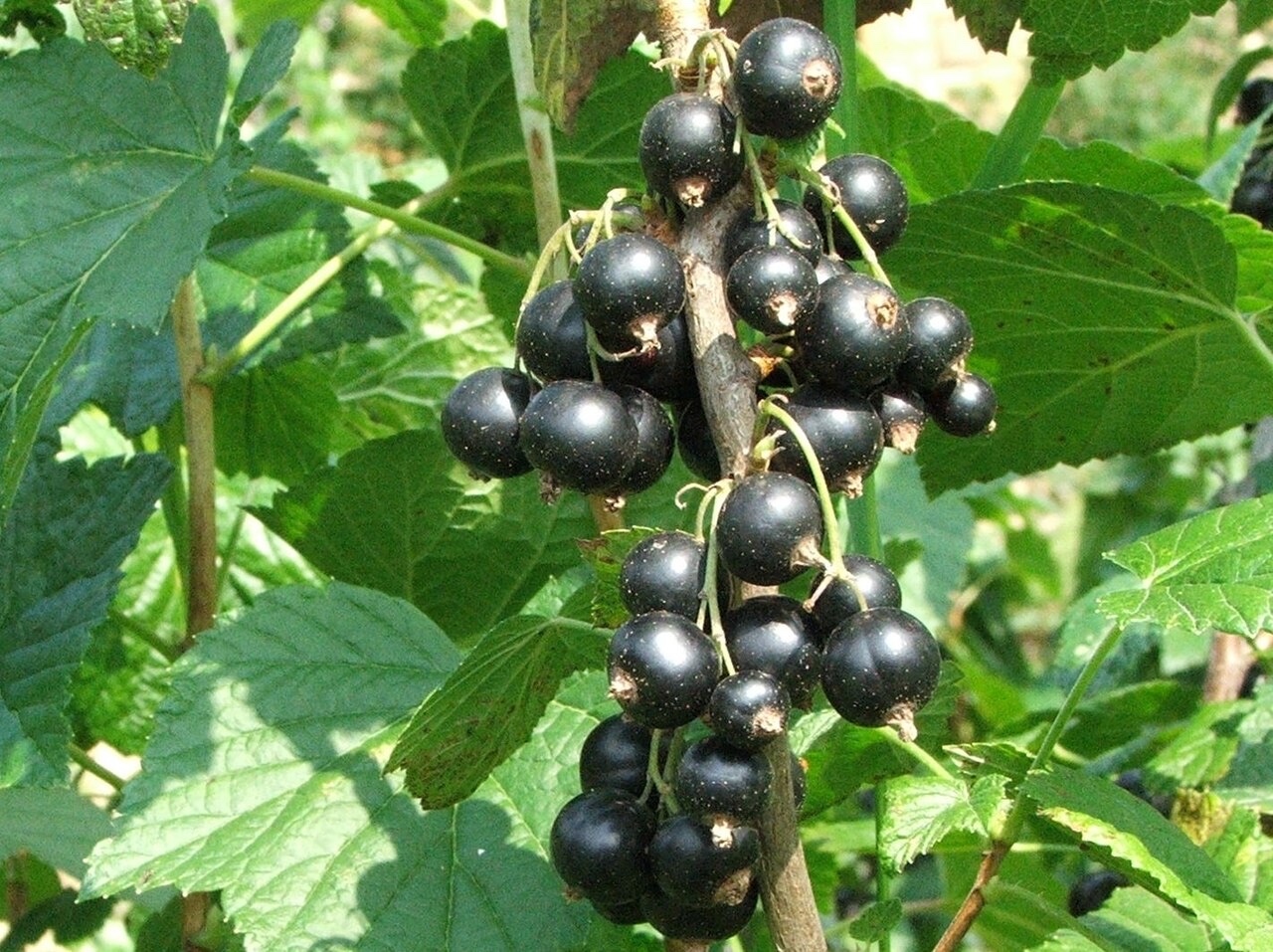
The blackcurrant is all fragrance: its crushed leaves, its buds and its black berries perfume everything they touch. An undemanding shrub, productive from its third year, it likes our temperate summers and moist soils, and delivers the raw material for the most intense liqueurs, syrups and jams.
- Difficulty
- Easy
- Exhibition
- Sun or light partial shade
- Watering
- Moist all season, without standing water
- Floor
- Deep, rich, moist, neutral to slightly acid
- Spacing
- 1.5 m between shrubs
- Harvest
- First harvest in the 2nd year, full production from the 3rd or 4th year
Calendar · Belgian climate
When to sow, plant and harvest
| Activity | Jan | Feb | Mar | Apr | May | Jun | Jul | Aug | Sep | Oct | Nov | Dec |
|---|---|---|---|---|---|---|---|---|---|---|---|---|
| Plantation | yes | yes | yes | yes | yes | |||||||
| Harvest | yes |
Step by step
1Choosing
Modern varieties from the Scottish Ben series, such as Ben Sarek, compact, or Ben Lomond, resist powdery mildew better and flower late, which keeps them safe from frosts. Noir de Bourgogne offers the finest fragrance, but needs a pollinator. Titania, vigorous and healthy, suits the family garden. Buy a certified plant, with two or three branches, without abnormally swollen buds, the sign of the dreaded big bud mite.
2Planting
Set the blackcurrant in from November to March, outside frosty spells, in full sun or light partial shade, in deep soil enriched with compost and well-rotted manure. Space at 1.5 m. Plant the crown 5 cm lower than it was in the nursery to stimulate shoots from the base, then cut all the branches back to two or three buds: this severe pruning builds a vigorous shrub. Mulch thickly from planting.
3Caring
The blackcurrant fruits mainly on the previous year's wood. Every winter, remove at ground level a quarter of the branches, the oldest, darkest and most branched, to keep a bush of ten to twelve young stems. Water in June if the weather is dry, without wetting the foliage, and top up the mulch. A dressing of compost and wood ash in spring supports a production that stays good for ten to fifteen years.
4Harvesting
The berries ripen in July, from the base towards the tip of the string. Wait until they are a deep, glossy black and slightly soft; fruit picked too early stays astringent. Detach whole strings or strip the berries directly on the bush for short-stringed varieties. Harvest in two or three passes, in dry weather, in the morning. A mature shrub gives four to six kilos.
5Storing
Fragile, the fresh berry keeps three days in a cool place. Freeze it stripped, on a tray: it keeps its aroma and colour. Syrup, jelly, crème de cassis, coulis and sorbets make the most of the bulk of the harvest; fruit dried in a dehydrator slips into mueslis. The leaves, dried, give a fragrant herbal tea, and the buds are harvested in March for macerations and liqueurs.
Further reading
Planting and caring for plants properly
How to plant properly
Choosing the variety and type of plant
The blackcurrant is not grafted: it is always planted as a bush on its own roots, which explains its longevity and how easily it renews itself. The Scottish Ben varieties were bred for cool, rainy climates like ours; Ben Sarek stays compact, around 1.2 m, ideal in a small garden, while Ben Lomond and Ben Connan reach 1.5 m. Titania, from Sweden, is very vigorous and resists rust well. Prefer a certified two-year-old plant, with two or three stems, to a cutting from a neighbour, often carrying the big bud mite and reversion virus.
Choosing the spot
The blackcurrant flowers early, from mid-April, and its flowers drop below -2 °C: avoid dips in the ground and sloping garden bottoms where cold air collects, and prefer an open position sheltered from the east wind. Full sun gives the sweetest berries; light partial shade is tolerated and even delays flowering, which is no bad thing here. Leave 1.5 m on each side for access and laying a net. Do not plant near a Weymouth pine, the alternate host of blackcurrant rust.
Preparing the hole and the soil
The blackcurrant is the hungriest of the soft fruits: prepare a pit 60 cm square and 40 cm deep, loosening the bottom without bringing it up. Mix into the excavated soil a third of mature compost and a good spadeful of well-rotted manure, plus a handful of hoof and horn that will feed slowly. The soil must stay moist without suffocating: in heavy clay, raise the planting slightly on a small 10 cm mound rather than digging a hole that would hold water. A pH close to 6 suits it.
Planting bare-rooted
From November to March, outside frosty spells, plant bare-rooted after soaking the roots for an hour in water. Set the crown 5 cm lower than in the nursery, because the blackcurrant must constantly send up new stems from the stool; this deep planting is the key to a bush that renews itself. Fill in with the enriched mix, firm, water with ten litres. Then cut all the stems back to two or three buds above the ground: it is hard to do, but the shrub comes back vigorously in spring with six to eight new stems. Mulch 10 cm deep.
In a pot or container
A blackcurrant in a container is possible but less convincing than a redcurrant: the plant needs to renew its stems from the base, which a pot limits. Choose Ben Sarek, the most compact, in a container of at least 50 litres, filled with a compost-rich mix. Water generously from May to July, as the broad foliage transpires a great deal, and top-dress with compost each spring. Prune harder than in open ground, to five or six stems. Expect a harvest of one to two kilos and a replacement of the plant about every eight years.
Beginner's mistakes
The most common is not cutting the plant back at planting, for fear of losing a year: you get a three-stemmed shrub that stays puny. The second is waiting for the end of the harvest to realise that the flowers froze: a fleece laid over the shrub on a clear April night saves the season. You also see blackcurrants planted in dry, sandy soil, without mulch, that lose their leaves in August. Finally, do not take over an old plant from a neighbour's garden: the swollen buds of the big bud mite spread within three years.
Look after it properly
Watering in the first years
The blackcurrant has large leaves and spreading roots: it suffers quickly in June when the wind dries the soil. For the first two summers, water every week in dry weather, ten to fifteen litres at the base, without wetting the foliage so as not to encourage powdery mildew. The decisive period runs from fruit set to the swelling of the berries, from mid-May to the end of June. An extra watering in early August supports the formation of next year's fruit buds. Mature and well mulched, the shrub only asks for water during prolonged heatwaves.
Mulching and feeding
The blackcurrant is the only soft fruit that tolerates and appreciates an annual dressing of manure: in March, spread under the mulch a barrowload of rotted manure or mature compost for three shrubs, topped up with a handful of sieved wood ash for potash. Then renew a 10 cm mulch of wood chippings or dead leaves, which will keep the soil cool and avoid any hoeing near the shallow roots. A spray of diluted nettle liquid in April gives young plants a boost. Avoid any feeding after July.
Pruning: formation, then fruiting
The blackcurrant fruits mainly on one-year-old wood, a little on two-year-old wood, hardly at all beyond. Formation is simple: after the planting cut-back, let it grow without pruning for two winters. From the third year, every winter, cut to ground level the quarter of stems that are oldest, with dark, branched bark, along with prostrate or spindly stems, to keep ten to twelve stems of which a third are the current year's shoots. Never shorten the vigorous shoots from the base, they carry the next harvest. Burn any wood carrying swollen buds.
Preventing diseases and pests
The big bud mite, a tiny mite that swells the buds into round balls, is spotted in winter: pick off and burn every suspect bud, and grub out a plant with more than a third of its buds affected. Powdery mildew whitens the young shoots in June in warm, humid weather; the Ben varieties resist it, otherwise spray wettable sulphur or diluted milk at the first sign of felting. Rust, as orange spots under the leaves, disappears once pines are kept at a distance and fallen leaves are gathered up. Blackbirds are dealt with by a net laid as soon as the berries blacken.
Through the season
In January, prune and inspect the buds. In March, manure and mulch; harvest a few buds for a maceration if you like. In April, watch for frosts and cover on clear nights. In May, water if the month is dry, and watch for powdery mildew on the young shoots. In June, lay the net and spot the first black berries at the base of the strings. Harvest in July in two or three passes. In August, water one last time and pick a few leaves to dry. In autumn, gather fallen leaves if rust has shown itself.
Harvesting and storing
Beyond the basics, one detail changes everything: the strings on the same stem do not ripen together, and a berry that has been black for four or five days is sweeter than one freshly blackened. For crème de cassis or jelly, a single harvest when three quarters of the berries are black is fine; for eating fresh, go through three times. Handle gently, as the berry bursts and stains. Freeze on a tray then in bags; frozen berries strip off one-handed. The blackcurrant loses none of its fragrance in the freezer, unlike the strawberry.
Obtaining seeds or seedlings
Seeds and seedlings: where to find them
A selection of reputable seed suppliers that deliver to your country, listed in order of proximity. Evadya does not receive any commission: these are suppliers we recommend for their reliability.
Semailles
For Belgian artisan seed producer, organic and reproducible seeds, over 250 regional varieties, a planting calendar tailored to the Belgian climate.
Against Small organisation: limited range of hybrid varieties and possible stock shortages during peak season.
Search for ‘blackcurrant’ on SemaillesFerme de Sainte Marthe
For A long-established organic seed supplier, offering seeds and young plants, heirloom varieties, and nutrition and recipe guides.
Against Dispatched from the Loire: postage charges to Belgium and Switzerland; plants are fragile in transit.
Search for ‘blackcurrant’ on Ferme de Sainte MartheVreeken’s Zaden
For A very wide range of Dutch products, competitive prices, and numerous varieties suited to the Benelux climate.
Against Website in Dutch only; limited selection of organic produce.
Search for ‘blackcurrant’ on Vreeken’s ZadenFrom the vegetable patch to the plate
And then we savour it
What it offers
The blackcurrant is one of the fruits richest in vitamin C and anthocyanins, with a good supply of fibre.
In the kitchen, it’s simple
A homemade blackcurrant syrup, topped up with sparkling water, is a fine substitute for fizzy drinks; the fresh berries lift a sauce for duck.
Living well
Crushing a blackcurrant leaf between your fingers as you pass the shrub is a small summer pleasure you never tire of repeating.
Also worth a look