fruit tree · Rosacées
PearPyrus communis
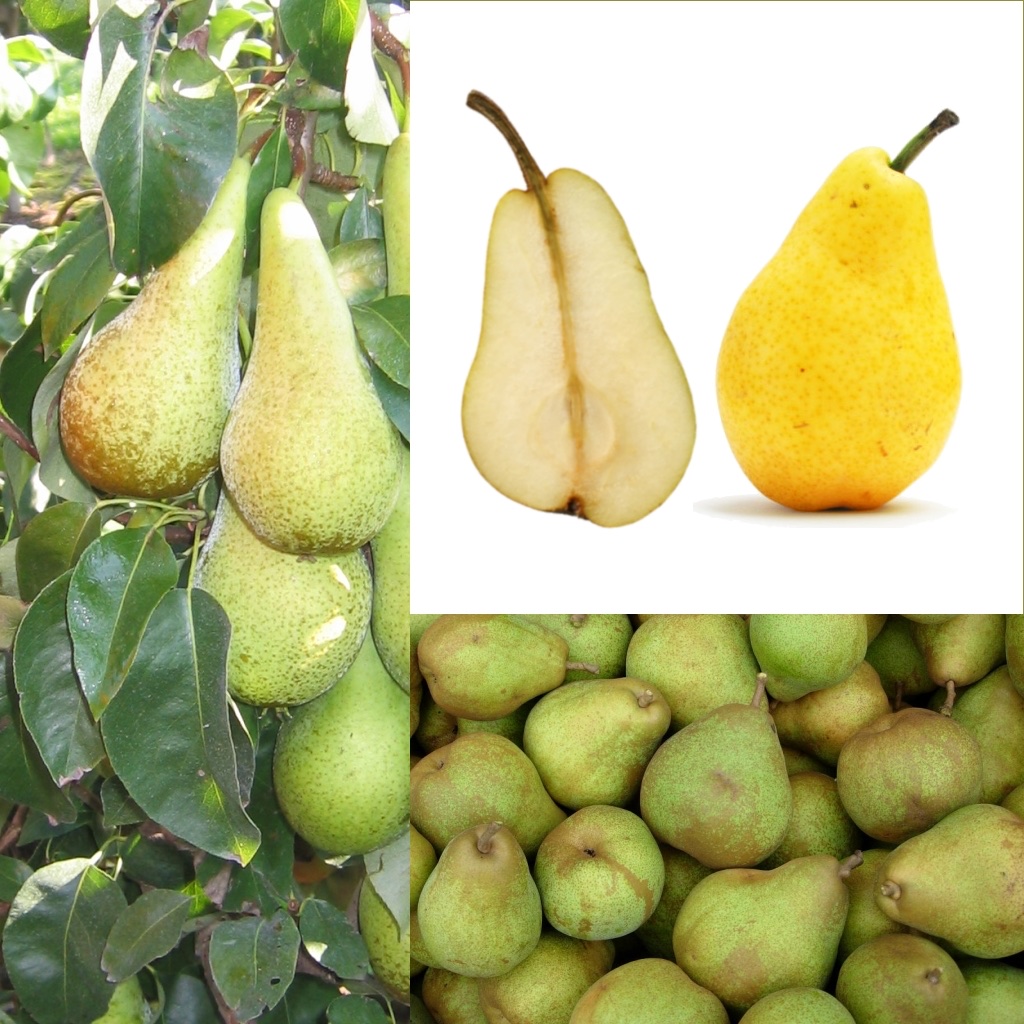
The pear loves Belgium, and Belgium returns the favour: we are one of the leading producers in Europe, and Conférence seems born for our mild autumns. In the garden, a pear trained against a wall or grown as a spindle offers melting fruit that you pick while still firm and let ripen in the kitchen.
- Difficulty
- Intermediate
- Exhibition
- Sun, a south- or west-facing wall
- Watering
- Regular, above all in summer in the first years
- Floor
- Deep, moist, rich, neutral; dislikes active lime
- Spacing
- 3 m between spindles, 5 to 6 m between half-standards, 1 m for a cordon
- Harvest
- 3 to 5 years after planting on quince
Calendar · Belgian climate
When to sow, plant and harvest
| Activity | Jan | Feb | Mar | Apr | May | Jun | Jul | Aug | Sep | Oct | Nov | Dec |
|---|---|---|---|---|---|---|---|---|---|---|---|---|
| Plantation | yes | yes | yes | yes | yes | |||||||
| Harvest | yes | yes | yes |
Step by step
1Choosing
Garden pears are grafted on quince, which gives modest trees that come quickly into fruit: Cognassier de Provence or Adams for a 3 m spindle, Quince C for a cordon or an espalier. On a seedling rootstock, the tree becomes a slow giant. Conférence, partly self-fertile, is the easiest; add Doyenné du Comice, Beurré Hardy or the Belgian Durondeau for pollination and for pleasure. Cooking pears such as Saint-Rémy are part of the Walloon heritage.
2Planting
Plant bare-rooted from November to March, outside frosty spells, in deep, moist soil enriched with compost but with no fertiliser in contact with the roots. The graft union must stay 10 cm clear of the ground. The pear appreciates a south- or west-facing wall, where trained forms, espalier or oblique cordon, thrive and gain in sweetness. Space spindles 3 m apart. Stake, water generously, mulch over a metre across.
3Caring
In winter, prune to open up and shorten the extension growth; in summer, between June and August, pinch vigorous shoots back to three leaves to turn wood into fruit buds, essential pruning for trained forms. Thin in June to one or two fruits per cluster. Water young trees in summer, mulch, give compost in spring. A well trained pear produces for forty years and more.
4Harvesting
The pear is picked before it is ripe, otherwise it goes sleepy at the core. Test by lifting the fruit to the horizontal: if it comes away, it is time. Conférence is harvested in mid-September, Doyenné du Comice in early October, cooking pears at the end of October. Handle with care, as pears bruise more than apples. They finish ripening in a cool fruit store or, for eating soon, in a bowl in the kitchen.
5Storing
Autumn pears keep a few weeks in a cellar at 2-5 °C; bring them out for a few days at room temperature before eating so they become melting. Cooking pears, Saint-Rémy or Catillac, hold until March. Pear and apple syrup, a Liège speciality, makes the most of a surplus, as do pears in wine, purées and preserves in light syrup.
Further reading
Planting and caring for plants properly
How to plant properly
Choosing the rootstock and the form
Almost all garden pears are grafted on quince, which keeps them modest and brings them into production from the third year: Cognassier de Provence or Adams for a spindle or a goblet of 3 to 4 m, Quince C, more dwarfing, for an oblique cordon, an espalier or a container. On a pear seedling rootstock, the tree reaches 10 m, produces after eight years and lives a century: this is the standard of the Walloon meadows. Some varieties, among them Williams and Beurré Clairgeau, are incompatible with quince and need an interstem graft, generally Beurré Hardy; the nursery takes care of it, but check the label.
Ensuring cross-pollination
The pear is self-sterile, except Conférence, which on its own gives long, pipless fruit, and more of them still with a companion. Put together two or three varieties flowering at about the same time: Conférence, Doyenné du Comice, Beurré Hardy, Durondeau and Williams pollinate each other. Triploids, Beurré Alexandre Lucas, Beurré Diel or Catillac, pollinate nobody and require two partners. Cooking pears such as Saint-Rémy flower late and go badly with the early ones. A wild pear or a quince are of no use; a neighbouring pear within 50 m counts fully.
Choosing the spot and the wall
The pear flowers a week before the apple, in early April, and pays dearly for a late frost: avoid hollows and valley bottoms. It likes warmth more than the apple does; a wall facing south or west, which gives back its heat at night, turns an average Doyenné du Comice into an exceptional fruit. Against a wall, plant 30 cm from the brickwork and provide horizontal wires every 40 cm, fixed on vine eyes. The soil must be deep and moist: quince, as a rootstock, dreads active lime, which causes chlorosis, and drought, which makes the fruit drop.
Preparing the hole and the soil
Dig 80 cm square and 60 cm deep, more against a wall where the soil is often poor and dry, cluttered with rubble to be removed. Loosen the sides and work into the soil three spadefuls of mature compost, one of leaf mould and two handfuls of hoof and horn. In clay soil, add coarse sand and plant on a slight mound. The pear on quince tolerates a pH of 6 to 7; in limy soil, be generous with compost and an acid bark mulch. Put in the stake or fix the wires before the tree. Wait a week for the soil to settle.
Planting bare-rooted
From November to March, outside frosty spells, puddle the roots and set the tree with the graft union 10 cm above the ground. For an espalier or a cordon, lean the scion at 45 degrees towards its wire, turning the graft union upwards to stop the graft splitting. Fill in, firm, water with 20 litres, mulch over a metre. Cut back a scion destined for a spindle to 80 cm above the ground, one for an espalier to 40 cm above the first wire, with three good buds below the cut. Oblique cordons are planted every 80 cm to 1 m, espaliers at 3 m, spindles at 3 m.
In a pot or container
A pear on Quince C, trained as a vertical cordon or a narrow spindle, does well in a 70-litre container on a sunny terrace. Conférence is the best choice, as it fruits on its own. Columnar pears, Saphira or Decora, are sold for this purpose. Use a mix of garden soil, potting compost and garden compost over a drainage layer. Water every two days in summer, as the pear drops as soon as the rootball dries out in July. Feed in April and June with a complete organic fertiliser, overwinter the container against a wall or wrap it, repot every three years. Three to five kilos per mature container.
Beginner's mistakes
The first is planting a single pear of a self-sterile variety and being surprised by flowers without fruit. The second is planting against a wall without improving the soil or planning for watering: the foot of a wall is the driest point in the garden. Many people also let a pear on quince grow without a stake or summer pinching, which gives an unbalanced tree that fruits late. Finally, planting a juniper nearby brings pear rust every year, and the mower that wounds the trunk opens the door to canker: keep a mulch and a protective sleeve.
Look after it properly
Watering in the first years
On quince, the pear is sensitive to a shortage of water: for the first three summers, water every week in dry weather, 20 to 30 litres at the base, and more against a south-facing wall where the soil dries out deep down. The sensitive period begins in June and lasts until harvest; water stress in July gives small, gritty fruit that falls before ripening. A mature trained tree still asks for watering every fortnight in a dry summer, so restricted is its root space. On a seedling rootstock in a meadow, only the first summer counts.
Mulching and feeding
A 10 cm mulch over a metre across, renewed every spring, keeps the soil moist and removes competition from grass, which is particularly damaging at the foot of a wall. In March, give two or three spadefuls of mature compost under the mulch, a handful of wood ash, and in limy soil a mulch of pine bark against chlorosis. If the young leaves yellow between the veins, add chelated iron or nettle liquid. Avoid an excess of nitrogen, which gives wood and feeds pear sucker. A clay wash on the trunk in winter protects the bark from swings in temperature.
Pruning: formation, then fruiting
The espalier is built up in tiers: every winter, cut the leader back 40 cm above the last tier to three buds, two of them opposite, which will give the arms, trained first at 45 degrees then lowered to the horizontal the following winter. The cordon is grown on a single leader, leaning. Once the framework is established, fruiting rests on summer pruning: from mid-June to mid-August, pinch every side shoot over 20 cm back to three leaves above the basal cluster, then in winter shorten these same shoots to two buds. The fruiting spurs are renewed every six to eight years by cutting them back to a young bud.
Thinning and supporting
The pear often sets too heavily: after the June drop, keep only one or two fruits per cluster, the best formed, removing those that touch each other or point towards the wall. On a cordon, reckon on one fruit every 10 cm. A well thinned Doyenné du Comice reaches 300 grams; left full, it gives 80-gram pears that fall in August. The branches of a young loaded spindle break in September: prop them with forked poles or tie them to the stake. On trained forms, check that the ties are not cutting into the arms, which thicken fast.
Preventing diseases and pests
Pear rust, orange spots on the leaves from June onwards, invariably comes from a neighbouring juniper: ask for it to be grubbed out or accept it, as it weakens without killing. Pear sucker, whose honeydew blackens the leaves, is treated with kaolin clay at bud burst and soft soap in May; earwigs housed in an upturned pot of straw feast on it. Against scab, the same care as for the apple. Codling moth is trapped with corrugated cardboard on the trunk. Against fireblight, cut 30 cm below any shoot that has dried up into a crook and disinfect the secateurs. Birds peck at ripe Conférence: bag the fruit or put up netting.
Through the season
In February, prune, check the ties and the wires. In March, compost, mulch, paint the trunk if it is not already done. In April, cover the espaliers with fleece on a frosty night and watch for pear sucker. In May, water if the month is dry. In June, thin, begin the summer pinching. In July-August, carry on pinching, water, prop. In September, harvest Conférence around the 15th and Beurré Hardy; in early October, Doyenné du Comice, at the end of October the cooking pears. In November, gather the leaves and remove the mummified fruit. Note the picking date each year to refine your calendar.
Harvesting and storing
The pear is picked at the right moment, not ripe: the still-firm fruit comes away when lifted to the horizontal, the lenticels turn brown and the ground colour of the skin goes from clear green to yellowish green. Picked too late, it goes sleepy at the core in the cellar without anything showing. Handle without pressing with the fingers, set the fruit down in a single layer. Autumn pears ripen within a week in the kitchen; keeping pears wait in the cellar at 2-5 °C, brought out in batches ten days before eating. A pear that gives under thumb pressure near the stalk is ready: too early, it is mealy; too late, it has already gone over.
Obtaining seeds or seedlings
Seeds and seedlings: where to find them
When choosing a fruit tree or shrub, opt for a nursery near you: they stock rootstocks and varieties suited to the local climate, and can advise you on pollination. In Belgium, look for varieties from the Gembloux Research Centre (RGF label); in France, nurseries in the ‘Croqueurs de pommes’ network; elsewhere, collections of regional varieties.
From the vegetable patch to the plate
And then we savour it
What it offers
The pear is rich in gentle fibre and water, with a useful supply of potassium and vitamin C.
In the kitchen, it’s simple
Pears poached in a light vanilla syrup, served warm with a little melted chocolate, make an effortless dessert.
Living well
Waiting patiently for a Doyenné du Comice to melt under your fingers is a lesson in slowness that Belgian cooking knows well.
Also worth a look