fruit tree · Rosacées
AppleMalus domestica
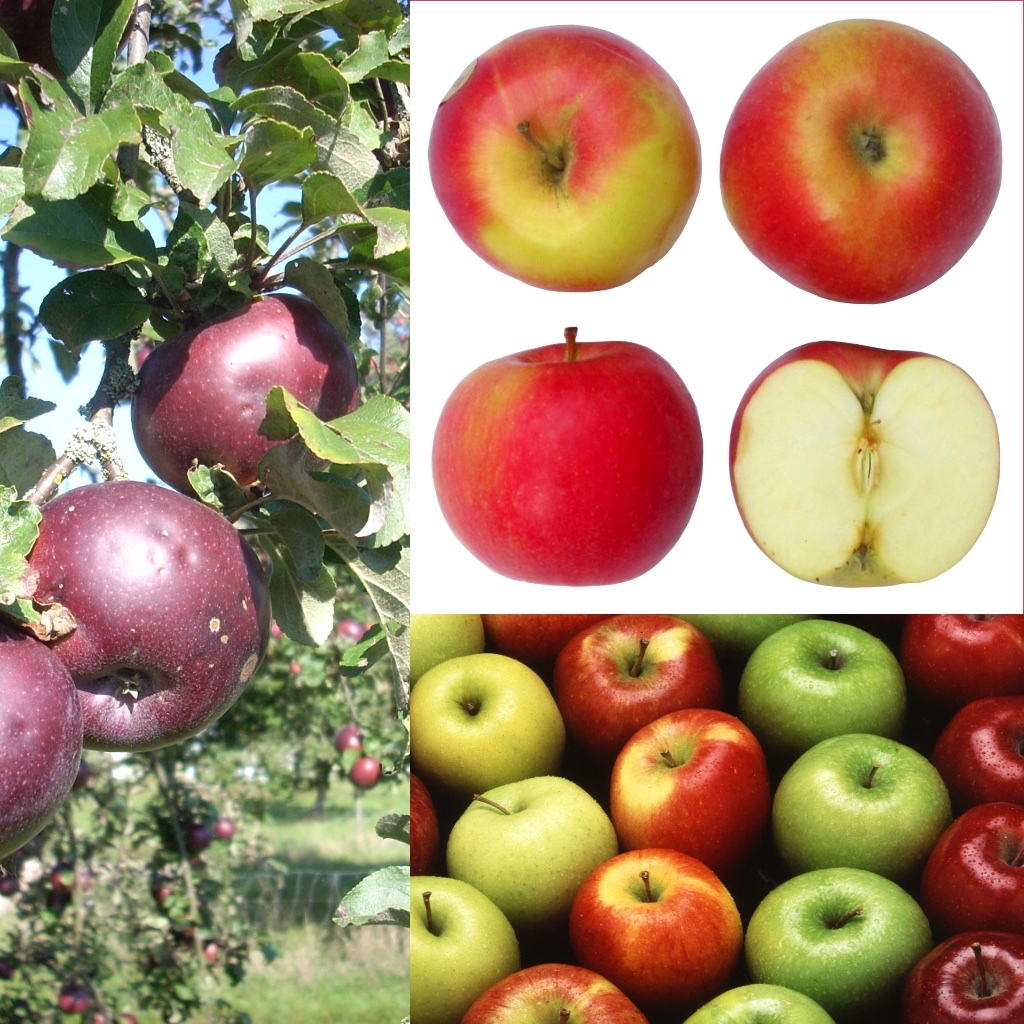
The apple is the tree of the Belgian orchard par excellence: our cold winters, our mild summers and our regular rain give it everything it likes. Whether a standard in a meadow or a spindle against a fence, it will give you back crisp fruit for decades, from August to Christmas.
- Difficulty
- Intermediate
- Exhibition
- Sun
- Watering
- Moderate; essential for the first two summers
- Floor
- Deep, moist, drained, slightly acid to neutral
- Spacing
- 2.5 to 3 m between spindles, 8 to 10 m between standards
- Harvest
- 2 to 4 years after planting for a spindle, 6 to 8 years for a standard
Calendar · Belgian climate
When to sow, plant and harvest
| Activity | Jan | Feb | Mar | Apr | May | Jun | Jul | Aug | Sep | Oct | Nov | Dec |
|---|---|---|---|---|---|---|---|---|---|---|---|---|
| Plantation | yes | yes | yes | yes | yes | |||||||
| Harvest | yes | yes | yes |
Step by step
1Choosing
Start with the rootstock, which sets the adult size: M9 for a 2.5 m spindle in a small garden, MM106 for a half-standard, seedling or M25 for a standard in a meadow. Then choose at least two varieties, because the apple is not self-fertile, making sure their flowering overlaps; triploids such as Belle de Boskoop and Reinette de Blenheim need two pollinators. Prefer old varieties resistant to scab.
2Planting
Plant bare-rooted from November to March, outside frosty spells, in a hole 80 cm square, with no fresh fertiliser in contact with the roots. Puddle the roots, put in a stake before the tree, and set the graft union 10 cm above the ground: buried, the dwarfing rootstock would lose its effect. Firm, water with 20 litres, mulch. Space spindles 2.5 m apart, standards 8 to 10 m apart.
3Caring
Prune in winter, between December and February, outside frosty spells, opening up the crown and shortening the extension growth to encourage fruit buds. In June, thin to one fruit every 10 cm: this is the secret of big apples and regular harvests. Water young trees for the first two summers, mulch at the base and give compost in spring. On a standard, formative pruning for the first five years is enough.
4Harvesting
An apple is ripe when it comes away with a quarter turn without pulling, when its pips are brown and when the first sound fruit falls naturally. Summer varieties such as Transparente blanche are eaten straight away; winter apples are picked in October, still firm, and refine their flavour in the cellar. Harvest in dry weather, setting the fruit down gently rather than throwing it, as any bruise will make it rot.
5Storing
Store keeping apples in a cool, dark cellar, at 4-8 °C, on slatted trays, without touching each other, well away from potatoes. Check every week and remove any fruit that is going over. Belle de Boskoop, Reinette de Blenheim or Court-pendu keep until March. Fragile varieties become purée, pasteurised juice, dried crisps or cider: a mobile press often comes round the Walloon communes in autumn.
Further reading
Planting and caring for plants properly
How to plant properly
Choosing the rootstock and the form
The rootstock decides everything: M27 gives a dwarf tree of 1.5 m for a pot or a cordon, M9 a spindle of 2.5 to 3 m that produces from the second year but demands a stake for life and rich soil, M26 a slightly more self-supporting spindle, MM106 a half-standard of 4 to 5 m for a goblet or the family garden, M25 or a seedling an 8 m meadow standard, slow but good for a century. The rootstock goes with the form: spindle and cordon on M9, espalier on M26, goblet on MM106. A one-year-old bare-rooted scion, a simple grafted whip, can be trained as you please and costs half as much.
Ensuring cross-pollination
The apple is self-sterile: you need at least two varieties flowering at the same time within 50 m, or a neighbour who has them. Nurseries classify varieties into pollination groups A to E; choose two varieties from the same group or from adjacent groups. Reine des Reinettes, Cox's Orange, James Grieve and Elstar are excellent diploid pollinators. Beware of triploids, Boskoop, Reinette de Blenheim, Jonagold, Gravenstein: their pollen is sterile, they pollinate nobody and themselves need two diploid companions. An ornamental flowering crab apple, Malus Evereste or Golden Hornet, pollinates the whole orchard.
Choosing the spot
The apple wants six hours of sun, air that moves to dry the foliage and limit scab, and deep, loamy soil, moist but never waterlogged in winter. Avoid valley bottoms where April frost collects and ground where water stands: a test hole filled with water must empty within a day. Never replant an apple where an old apple or pear stood without changing a cubic metre of soil, as replant sickness would block growth. A spindle goes 2.5 m from a path, a standard 5 m from any building.
Preparing the hole and the soil
Dig a hole 80 cm square and 60 cm deep, several weeks before planting if possible, keeping the topsoil separate from the subsoil. Loosen the sides and the bottom with a fork so the roots do not turn round in circles in a clay bowl. Mix into the topsoil three spadefuls of mature compost and two handfuls of hoof and horn; put neither fresh manure nor mineral fertiliser in contact with the roots. On heavy soil, plant on a slight mound 15 cm high. A stake 2.5 m long, driven in 60 cm before the tree, avoids injuring the roots.
Planting bare-rooted
From November to March, outside frosty spells and waterlogged soil, plant bare-rooted, the best establishment and the best price. Trim back broken roots, puddle them in a slurry of soil and compost, then set the tree so that the graft union, the swelling at the base of the trunk, stays 10 cm above the ground: buried, the scion roots for itself and the dwarf tree becomes a giant. Spread the roots over a small dome of soil, fill in, firm with the foot, water with 20 litres, form a saucer and mulch over a metre across. Tie to the stake in a figure of eight, with a soft tie.
In a pot or container
An apple on M27 or M9, trained as a spindle or a cordon, lives well in a container of 60 to 80 litres, provided it is watered consistently. Columnar forms, Ballerina, Bolero or Polka, are designed for this and give three to five kilos from the third year. Take two varieties or a self-fertile variety such as Elstar or Jonagored, which are less dependent. Compost mix: garden soil, potting compost and garden compost in equal parts, over a drainage layer. Water every two days in summer, feed in April and June, protect the container from frost in winter and repot every three years, trimming the roots.
Beginner's mistakes
The first is buying an apple tree at random in a garden centre without looking at the rootstock or at pollination compatibility, then waiting for fruit that never comes. The second is burying the graft union. Many people plant a spindle on M9 without a stake: it lies down under its first crop. You also see holes bored with an auger in clay, where the tree rots its feet in water. Finally, forgetting to water a young tree in the summer after planting, because it rained in April, is the most frequent cause of an apple tree that sulks for three years.
Look after it properly
Watering in the first years
The first two summers decide everything. Water every week in dry weather from May to September, 20 to 30 litres at the base, poured slowly into the planting saucer, rather than a little every day. A spindle on M9, with its reduced roots, stays dependent all its life and suffers in August in sandy soil: keep a thick mulch and water in a heatwave even when it is mature. The standard on a seedling rootstock, once its roots have gone down, does without water. A generous watering in June while the fruit is swelling limits June drop and improves the size.
Mulching and feeding
Keep the base of the tree free of grass over a metre across for five years: lawn competes seriously with a young apple tree. A 10 cm mulch of wood chippings or hay does this job and feeds the soil. Every spring, in March, spread two or three spadefuls of mature compost and a handful of wood ash under the mulch. A mature apple asks little: an excess of nitrogen gives vigorous shoots, no fruit, and attracts rosy apple aphid. On a standard in a meadow, a late cut and the passage of sheep are enough. Lime is only useful in acid soil, every five years.
Pruning: formation, then fruiting
On a spindle, build a central leader with tiered branches over three winters, cutting the leader back by a third each year above a bud, and tying over-upright laterals down towards the horizontal with ties: bending the wood turns it into fruit. In a goblet, choose four or five evenly spaced main branches in the first year and shorten them by a third for two winters running. Once it is fruiting, winter pruning comes down to opening up, removing water shoots and dead wood, and shortening the current year's shoots to three buds above the round buds, to build up fruiting spurs. In June, summer pruning pinches back shoots that are too long.
Thinning in June
Thinning is the job the beginner neglects and the one that makes fine apples. After the natural June drop, when the fruits are the size of a walnut, keep only one fruit per cluster, the best and best placed, and one fruit every 10 to 15 cm along the branch; always remove the king apple in the middle of the cluster, often misshapen. Cut with fine scissors, without pulling. It hurts the first time, but the tree keeps bigger, better coloured fruit, free of codling moth, and above all it does not exhaust itself: this is the only cure for the biennial habit of a good year every other year.
Preventing diseases and pests
Against scab, gather and compost the leaves in autumn, open up the crown, choose tolerant varieties such as Topaz, Reinette de Blenheim or Reine des Reinettes, and spray a horsetail decoction from April to June in damp weather. Against codling moth, nest boxes for tits, bands of corrugated cardboard wrapped round the trunk in June and then burnt in September, and picking up fallen maggoty fruit. A grease band around the trunk in October blocks the winter moth. Rosy apple aphid is settled with soft soap as soon as the first leaves curl. Canker is cut back to sound wood and painted over with clay.
Through the season
In January-February, prune outside frosty spells, remove mummified fruit. In March, compost and mulch, check the stake ties. In April, cover a spindle with fleece if frost threatens the blossom; watch for aphids. In May, water if the month is dry. In June, thin, put on the trap bands, pinch out water shoots. In July-August, water young trees, harvest the summer varieties. In September-October, harvest, burn the trap bands, put on the grease bands. In November, gather the leaves, plant new trees. Paint the trunks with clay or limewash in December against moss and frost.
Harvesting and storing
Each variety has its window: picked too early, the apple stays green and shrivels; too late, it goes mealy in the cellar. The picking test, a quarter turn without pulling, is backed up by brown pips and the colouring of the shaded side. Pick with the stalk, in dry weather, in the afternoon for preference, and let the fruit dry off overnight outside under cover before it goes to the cellar. Store only perfect apples; the others become juice within the week. In the cellar, a humidity of 85 %, obtained with a bucket of water or a beaten-earth floor, prevents shrivelling. Open the cellar on cold nights to cool it down.
Obtaining seeds or seedlings
Seeds and seedlings: where to find them
When choosing a fruit tree or shrub, opt for a nursery near you: they stock rootstocks and varieties suited to the local climate, and can advise you on pollination. In Belgium, look for varieties from the Gembloux Research Centre (RGF label); in France, nurseries in the ‘Croqueurs de pommes’ network; elsewhere, collections of regional varieties.
From the vegetable patch to the plate
And then we savour it
What it offers
The apple provides soluble fibre, vitamin C and polyphenols, above all in the skin, for a moderate calorie content.
In the kitchen, it’s simple
Quarters of Boskoop fried in butter with a pinch of cinnamon go as well with black pudding as with a scoop of ice cream.
Living well
Biting into an apple picked from its tree in October is tasting a whole season of Belgian sun and rain.
Also worth a look