root vegetable · Amaranthacées
BeetrootBeta vulgaris
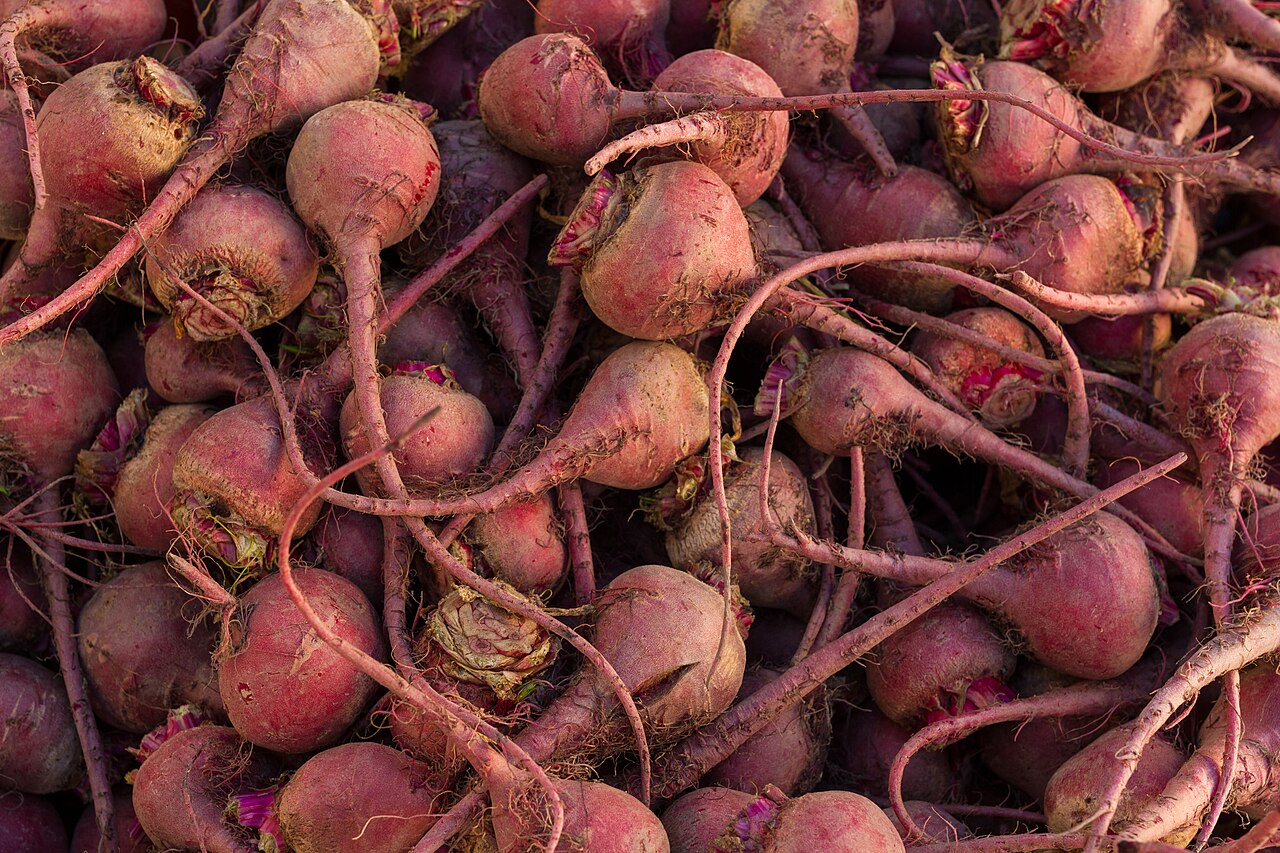
Sweet, colourful and easy, beetroot is sown from April to July and gives red, yellow or striped roots that keep all winter. Its young leaves are edible too. An uncomplicated vegetable that brings colour to the garden and the plate alike.
- Difficulty
- Easy
- Exhibition
- Full sun or partial shade
- Watering
- Regular, without excess, especially in summer
- Floor
- Loose, moisture-retentive, rich in humus, not acidic
- Spacing
- 10 to 15 cm along the row, 30 cm between rows
- Harvest
- 60 to 90 days after sowing
Calendar · Belgian climate
When to sow, plant and harvest
| Activity | Jan | Feb | Mar | Apr | May | Jun | Jul | Aug | Sep | Oct | Nov | Dec |
|---|---|---|---|---|---|---|---|---|---|---|---|---|
| Sowing under cover | yes | |||||||||||
| Sowing in open ground | yes | yes | yes | yes | ||||||||
| Plantation | yes | yes | ||||||||||
| Harvest | yes | yes | yes | yes | yes | yes |
Step by step
1Sowing
Sow outdoors from late April to July, in drills two centimetres deep and thirty centimetres apart, dropping a seed cluster every five centimetres. Each cluster contains several seeds and gives two or three seedlings, which is why thinning is essential. Soaking overnight speeds up germination, which takes ten days. June-July sowings give the storage beetroot, the tastiest.
2Planting out
Beetroot transplants well as a young plant. Sow in soil blocks or module trays under cover from mid-March, one seed cluster per cell, and plant out in late April or early May when the plants have three or four leaves. Set out the whole plugs, possibly with two or three seedlings each, every fifteen centimetres: the roots push apart on their own as they swell. Water well to help them establish.
3Caring
Thin to ten centimetres when the seedlings have four leaves, keeping the most vigorous of each clump; the seedlings removed can be replanted elsewhere or eaten in salads. Hoe and mulch to keep the soil cool. Water regularly in dry weather; uneven growth gives fibrous, ringed roots. Soil well supplied with compost is enough, with no extra fertiliser.
4Harvesting
Harvest from June to November depending on the sowings. Summer beetroot is picked young, from golf-ball to fist size, tender and sweet. For storing, lift in October-November, before serious frosts, with a garden fork in dry weather. Twist the leaves off a few centimetres above the root rather than cutting them flush, so the beetroot does not lose its juice.
5Storing
Storage beetroot keeps for several months in the cellar, in boxes of slightly damp sand, after drying off for a day without being washed. In the fridge, without leaves, it lasts three weeks. Cooked, it keeps for a week in the cold and freezes well diced. Vinegar pickles and lacto-fermentation, with a little horseradish, make an excellent preserve.
Further reading
Planting and caring for plants properly
How to plant properly
Choosing the spot
Beetroot likes sun but accepts light partial shade, which makes it a good candidate for the slightly less favoured beds of the vegetable garden. It prefers soil that stays cool in summer without becoming waterlogged, and dislikes acidic ground: avoid corners where moss takes hold. Place it after a crop manured the previous year, cabbage or squash, or following peas harvested in July. It is a good neighbour to onions, lettuces and dwarf beans, but not to spinach or chard, which belong to the same family and share its pests.
Preparing the soil
Loosen the bed with a broadfork to twenty centimetres and work in two kilos of well-matured compost per square metre; fresh manure, as with all root crops, causes deformities. In acidic soil, an application of wood ash or lime in autumn, a handful per square metre, raises the pH that beetroot appreciates. Break the clods finely and rake to obtain an even seedbed. In clay soils, a slightly raised bed lightened with sand improves drainage and warming, which limits bolting in early sowings.
Sowing at the right time
Wait until the soil reaches 10 °C, which happens around 20 April here: prolonged cold on young plants triggers bolting without a root. To stagger, sow in late April, late May and a last time between 1 and 15 July; this final sowing provides the storage beetroot, the sweetest. Draw drills two centimetres deep and thirty apart and drop a seed cluster every five centimetres, then cover and firm. Soaking the seed overnight in tepid water brings germination down from twelve days to six. Choose a bolt-resistant variety for the April sowing.
Pricking out and planting
Unlike the carrot, beetroot transplants very well, provided it is young. Sow under cover from 15 March, in module trays or pressed soil blocks, one seed cluster per cell, and plant out in late April when the seedlings have three or four leaves, without separating the two or three seedlings in a plug: the roots push each other apart as they swell and give medium-sized beetroot, which is perfect. Space the plugs fifteen centimetres apart, water generously and protect with fleece for the first two weeks if the nights are cold. This method avoids thinning and gains three weeks.
In pots or containers
Beetroot grows happily in a container on a balcony, where its red or golden leaves are decorative too. Allow twenty-five centimetres of depth and a thirty-litre container for a dozen roots, filled with potting compost enriched with a little garden compost. Sow in April or May, one seed every ten centimetres in two lines, or plant out plugs. Water regularly; the compost must not dry out, otherwise the roots become fibrous. Harvest young, at golf-ball size, to leave room for the neighbours. The young leaves are picked as needed for salads.
Beginner's mistakes
Sowing in early April and harvesting flower stalks instead of roots in June. Forgetting that each seed is a cluster of several seeds and not thinning, which gives clumps of tiny roots. Adding fresh manure. Letting the soil dry out in July, then watering heavily: the root splits or forms fibrous rings. Cutting the leaves flush with the crown at harvest, which makes the beetroot bleed and lose its juice in cooking. Letting summer beetroot grow to the size of a cabbage: it turns woody. Sowing the rows too close together, which encourages leaf spot.
Look after it properly
Watering properly
Beetroot tolerates moderately dry soil, but its quality depends on even growth. Water with a spray every two days until germination, then once or twice a week in dry weather, about five litres per square metre, at the base or over the whole bed. The trap is alternation: water stress followed by a heavy watering or a storm splits the roots and forms hard white rings in the flesh. A fine mulch solves most of the problem. In September, space out watering for storage beetroot: less full of water, it keeps better.
Mulching and feeding
As soon as the plants have been thinned and reach ten centimetres, mulch with three to five centimetres of dried grass clippings, chopped straw or hemp mulch: the soil stays cool, watering becomes occasional and the shoulders of the roots do not turn green. No fertiliser is needed in soil supplied with compost. If the leaves pale or growth stalls in midsummer, nettle liquid diluted to 10 % gets things going again. A light dressing of ash at hoeing provides the boron and potash that beetroot needs; a boron deficiency shows as corky black spots in the heart of the root.
Thinning and hoeing
Thin as soon as the seedlings carry four leaves, keeping the most vigorous of each clump every ten centimetres for summer beetroot, fifteen for storage varieties. The seedlings removed can be replanted immediately at the end of the row, which spreads the harvest by a fortnight, or eaten as young leaves. Then hoe shallowly between the rows every two weeks until mulching, without damaging the crowns. Beetroot needs neither pruning nor staking; simply remove yellowed leaves at the base and push a little soil back over shoulders that show above ground.
Preventing diseases and pests
Beetroot is fairly trouble-free. The leaf miner bores pale tunnels in the leaves in May and June: remove and burn affected leaves, and put on insect-proof mesh if you also grow spinach or chard. Leaf spot, small round spots with a red edge, appears on crowded foliage in damp weather: space out, water the soil, remove affected leaves. Flea beetles sometimes riddle young seedlings in dry weather; a spray watering discourages them. Slugs nibble roots that show above ground in very damp mulches: clear the crowns a little in a wet autumn.
Through the season
Mid-March: sowing in modules under cover. Late April: planting out the plugs under fleece, first sowing in place with a bolt-resistant variety. May: thinning, hoeing, second sowing at the end of the month, removal of mined leaves. June: mulching, first summer beetroot at golf-ball size. Early July: storage sowing, regular watering in dry weather. August: harvest of summer beetroot, thinning of the July sowing, watching for leaf spot. September: storage beetroot growing, watering spaced out. October and November: lifting in dry weather before serious frosts, storing in sand.
Harvesting and extending the season
Harvest summer beetroot young, between golf ball and fist, by pulling on the crown or with a fork in heavy soil; every other one first, to let the rest swell. Twist the leaves off three centimetres above the crown rather than cutting them, so the root does not bleed. Storage beetroot is lifted in late October or November, before a serious frost, which it tolerates less well than carrots. To eat fresh for as long as possible, rely on the three staggered sowings and on fleece laid over the last row at the end of October, which gains three weeks of harvest in open ground.
Obtaining seeds or seedlings
Seeds and seedlings: where to find them
A selection of reputable seed suppliers that deliver to your country, listed in order of proximity. Evadya does not receive any commission: these are suppliers we recommend for their reliability.
Semailles
For Belgian artisan seed producer, organic and reproducible seeds, over 250 regional varieties, a planting calendar tailored to the Belgian climate.
Against Small organisation: limited range of hybrid varieties and possible stock shortages during peak season.
Search for ‘beetroot’ on SemaillesKokopelli
For Europe’s largest collection of heirloom, organic and open-pollinated varieties; comprehensive growing guides.
Against No hybrids or seedlings; delivery times can sometimes be long during peak season; prices are slightly higher.
View the shopFerme de Sainte Marthe
For A long-established organic seed supplier, offering seeds and young plants, heirloom varieties, and nutrition and recipe guides.
Against Dispatched from the Loire: postage charges to Belgium and Switzerland; plants are fragile in transit.
Search for ‘beetroot’ on Ferme de Sainte MartheGraines Baumaux
For A vast selection (over 500 tomato varieties), with high-yielding F1 hybrids and heirloom varieties side by side, and plants available in season.
Against Not much organic produce; an old site; catalogue entries rather than growing guides.
Search for ‘beetroot’ on Graines BaumauxVreeken’s Zaden
For A very wide range of Dutch products, competitive prices, and numerous varieties suited to the Benelux climate.
Against Website in Dutch only; limited selection of organic produce.
Search for ‘beetroot’ on Vreeken’s ZadenDe Bolster
For Dutch organic seed producer, seeds suitable for propagation, a good selection for cool climates.
Against A shorter catalogue; website in Dutch.
Search for ‘beetroot’ on De BolsterZollinger Bio
For Swiss organic seeds, varieties suited to high altitudes and microclimates, and a unique phenological calendar.
Against Swiss prices and customs charges from the European Union.
Search for ‘beetroot’ on Zollinger BioBingenheimer Saatgut
For A leading German name in organic and biodynamic produce, offering open-pollinated varieties selected for the home gardener.
Against Website in German; delivery charges apply outside Germany.
Search for ‘beetroot’ on Bingenheimer SaatgutDreschflegel
For A collective of organic growers, specialising in rare and regional varieties, and the preservation of traditional farm seeds.
Against Small quantities; a catalogue that’s more activist than practical; website in German.
Search for ‘beetroot’ on DreschflegelFrom the vegetable patch to the plate
And then we savour it
What it offers
Beetroot provides fibre, potassium, vitamin B9 and antioxidant pigments, the betalains. Its leaves, rich in minerals, are cooked like spinach.
In the kitchen, it’s simple
Grated raw with an apple, lemon and a few walnuts, beetroot makes a crunchy autumn salad; roasted in wedges in the oven, it turns meltingly soft and sweet.
Living well
Cutting open a striped Chioggia beetroot and discovering its pink rings is a small surprise you never tire of sharing.
Also worth a look