root vegetable · Apiacées
ParsnipPastinaca sativa
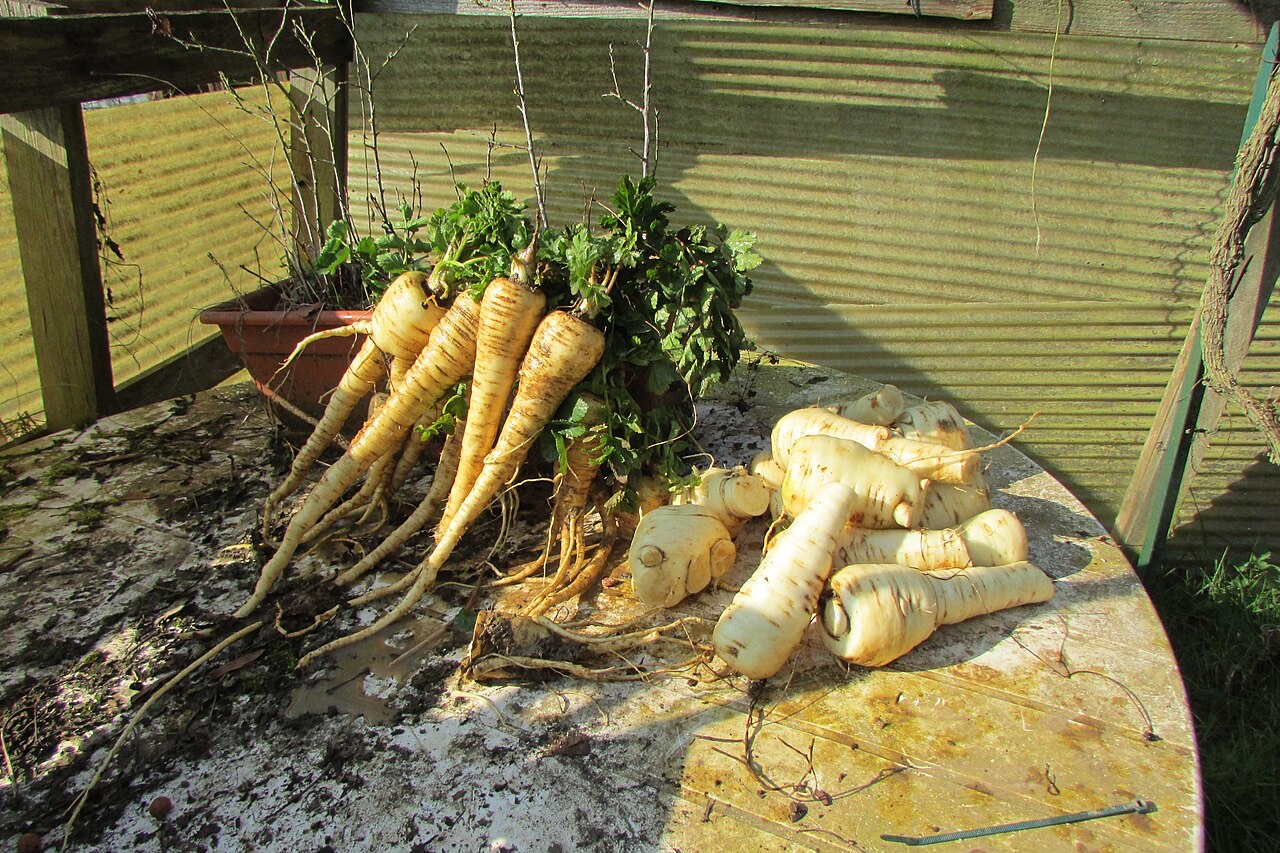
The winter vegetable par excellence, the parsnip is a long ivory root with a sweet, nutty flavour that gets better after the first frosts. It asks for patience, deep soil and a slow germination, but stays in the ground all winter and is harvested as needed.
- Difficulty
- Intermediate
- Exhibition
- Sun or partial shade
- Watering
- Regular until germination, then moderate
- Floor
- Deep, loose, moisture-retentive, free of stones and fresh manure
- Spacing
- 15 to 20 cm along the row, 40 cm between rows
- Harvest
- 150 to 200 days after sowing
Calendar · Belgian climate
When to sow, plant and harvest
| Activity | Jan | Feb | Mar | Apr | May | Jun | Jul | Aug | Sep | Oct | Nov | Dec |
|---|---|---|---|---|---|---|---|---|---|---|---|---|
| Sowing in open ground | yes | yes | yes | |||||||||
| Harvest | yes | yes | yes | yes | yes | yes |
Step by step
1Sowing
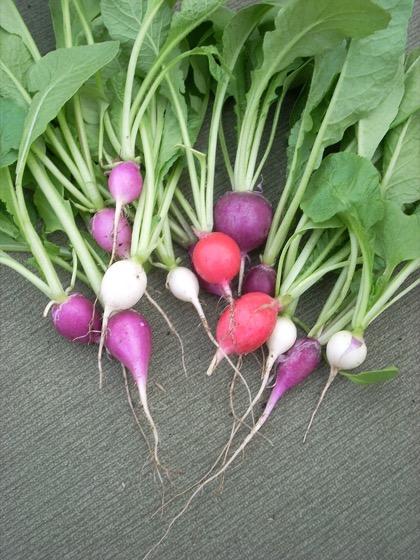
Sow in place from March to May, in soil worked deeply and raked fine, with fresh seed from this year. Draw drills one to two centimetres deep and forty centimetres apart and drop three seeds every fifteen centimetres, or one seed every three centimetres. Cover, firm and keep moist. Germination is slow and erratic, from two to four weeks: sow radishes in the drill to mark the row.
2Planting out
The parsnip is not transplanted; its long taproot would fork. To improve a difficult germination, pre-sprout the seeds between two layers of damp kitchen paper for a week at room temperature, then sow those showing a sprout. In heavy soil, grow on a raised bed loosened deeply with a broadfork and lightened with mature compost, avoiding any fresh manure, which deforms the roots.
3Caring
Thin to fifteen or twenty centimetres as soon as the seedlings have three or four leaves. Hoe carefully at first, as the parsnip starts slowly and suffers from competition, then mulch as soon as the foliage covers the ground. Water during a prolonged dry spell, without excess. No fertiliser is needed in well-stocked soil. Wear gloves to handle the foliage in sunny weather; its sap is photosensitising.
4Harvesting
Harvest from October, and preferably after the first frosts, which make the root sweeter and milder. Lift with a garden fork, pushing the tool in well away from the crown, as the root goes down to thirty centimetres. Pull as needed until March, marking the rows so you can find them under the snow. Lift everything that remains before the plant starts into growth again in spring.
5Storing
The best storage remains in the ground, under a mulch of leaves or straw that stops the soil freezing deeply and makes lifting easier. Once harvested, parsnips keep for several weeks in the cellar in damp sand, or two to three weeks in the fridge in a perforated bag. Diced and blanched for two minutes, they freeze very well for winter soups.
Further reading
Planting and caring for plants properly
How to plant properly
Choosing the spot
The parsnip occupies its bed for almost a year, from March to February: set aside a corner you will not need, in sun or partial shade, in deep, stone-free soil, as the root goes down to thirty centimetres. It tolerates loamy and even clay soils if they are loosened deeply and drained; standing water in winter rots the crown. Like the carrot, it suffers from carrot fly: keep it away from rows of carrots and celery, and rotate over three years with all the umbellifers. Onions or leeks as neighbours protect it a little.
Preparing the soil
Loosen the bed with a broadfork to thirty centimetres, removing stones, perennial roots and hard clods, without turning the soil. Add no manure or young compost: the root would fork. Very mature compost, a shovelful per square metre, spread the previous autumn, is more than enough; the parsnip is not greedy. In clay soil, build a raised bed twenty-five centimetres high lightened with sand and leaf mould, or plan on half-long varieties, which are wider than they are deep. Rake the surface fine and leave to settle for a week before sowing.
Sowing at the right time
Sow between 15 March and 15 May; a single sowing is enough, and an April sowing in soil that has already warmed up often germinates better than a March one. Buy this year's seed, as parsnip viability collapses after twelve months. Draw drills one to two centimetres deep and forty apart, drop three or four seeds every fifteen centimetres, cover with fine soil, firm and water with a spray. Sow a few radishes in the drill to mark the row. Germination takes two to four weeks of patience; the colder the soil, the longer and more uneven it is.
Getting germination right
The parsnip is not transplanted, but its erratic germination can be tamed. Pre-sprout the seeds a week before sowing, between two sheets of damp kitchen paper in a closed box at room temperature, and sow those showing a white tip, one per station, with tweezers or between two damp fingers. After sowing, cover the drill with a plank or fleece to hold the moisture, and water every day with a fine spray in dry weather. Remove the cover as soon as the seedlings are up. If a station is still empty after a month, resow in place: until the end of May, it catches up.
In pots or containers
The parsnip is not the first vegetable you would think of for a balcony, but it does well in a container at least forty centimetres deep, such as a half-barrel or a large grow bag, filled with two thirds potting compost and one third sand, with no fresh compost. Choose a half-long variety, sow in April in stations fifteen centimetres apart, thin to one plant, and water regularly all summer without waterlogging. The container stays outside all winter; frost improves the flavour. A dozen roots per container makes a fine store of soups for the cold months.
Beginner's mistakes
Sowing old seed and waiting in vain. Giving up on the drill, assuming failure after two weeks, when germination often takes three or four. Letting the surface dry out during that long germination. Sowing in manured or stony ground and harvesting three-pronged roots. Not thinning, which gives tiny roots. Letting weeds smother the slow-starting seedlings. Harvesting tasteless roots in September, when frost sweetens them. Handling the foliage with bare hands in full sun and ending up with burns. Forgetting to mark the rows before the snow.
Look after it properly
Watering properly
Water matters most during germination, when the surface must stay moist at all times for three or four weeks: daily fine-spray watering in dry weather, or covering the drill. After that, the parsnip manages with its deep roots: a generous watering every ten days during a prolonged dry spell, ten litres per square metre, is enough. A normal Belgian summer calls for almost no intervention once the soil is mulched. Avoid stops and starts, which split the roots. From September, stop watering altogether: a root less full of water withstands frost better and keeps longer in the ground.
Mulching and feeding
No fertiliser is of any use in well-stocked soil; excess nitrogen gives foliage and hollow roots. As soon as the foliage covers the rows, in June, mulch with five centimetres of dried grass clippings, straw or leaves, which does away with weeding and watering. In October, thicken this mulch to fifteen centimetres with dead leaves held down by fleece or branches: it is not there to protect the parsnip, which is perfectly hardy, but to stop the soil freezing solid, so that you can lift the roots in January without a pickaxe.
Thinning and hoeing
Thin as soon as the seedlings carry three or four leaves, to a single plant per station or every fifteen centimetres along the row, twenty for large Gladiator-type varieties. Work in the evening, pinch rather than pull, then firm and take the seedlings away. The parsnip starts slowly and suffers from competition: hoe and hand-weed every two weeks from May to June, without damaging the crowns. Harvest the marker radishes as soon as they are ready. Wear gloves and long sleeves to touch the foliage in sunny weather; its sap causes photosensitive burns.
Preventing diseases and pests
The carrot fly attacks the parsnip too, its brown tunnels boring into the upper part of the root. Insect-proof mesh from sowing, kept on until October, remains the best defence, along with rotation and onions as neighbours. Parsnip canker, brown patches and cracks on the shoulder of the root, appears in damp soils and on exposed crowns: earth up lightly in August to cover the shoulders, choose a resistant variety, and avoid ground that stays sodden. Slugs and aphids on the foliage are harmless. Late-summer powdery mildew is cosmetic and calls for no action.
Through the season
March: deep preparation of the bed, pre-sprouting of this year's seed. April: sowing in stations with marker radishes, drill covered, daily watering, insect-proof mesh. May: emergence, resowing of empty stations, first hoeing. June: thinning to one plant, hoeing, mulching as soon as the foliage covers the ground. July and August: watering only in drought, light earthing up of the shoulders against canker. September: watering stopped, mesh removed. October: first harvests after the first frosts, thickening of the mulch, marking of the rows. November to February: lifting as needed. March: harvest of everything that remains before regrowth.
Harvesting and extending the season
Wait for the first real frosts, often in late October or November: the cold turns the starch into sugar and gives the parsnip its nutty flavour. Lift with a garden fork pushed in fifteen centimetres from the crown, in mild weather, levering gently so as not to snap the tip. Pull as needed until February: the soil under mulch is the best larder. In clay soils that become waterlogged, lift in December and store in sand. Harvest everything before mid-March, when the plant starts into growth again, as the root turns woody and hollow within a few weeks.
Obtaining seeds or seedlings
Seeds and seedlings: where to find them
A selection of reputable seed suppliers that deliver to your country, listed in order of proximity. Evadya does not receive any commission: these are suppliers we recommend for their reliability.
Semailles
For Belgian artisan seed producer, organic and reproducible seeds, over 250 regional varieties, a planting calendar tailored to the Belgian climate.
Against Small organisation: limited range of hybrid varieties and possible stock shortages during peak season.
Search for ‘parsnip’ on SemaillesKokopelli
For Europe’s largest collection of heirloom, organic and open-pollinated varieties; comprehensive growing guides.
Against No hybrids or seedlings; delivery times can sometimes be long during peak season; prices are slightly higher.
View the shopFerme de Sainte Marthe
For A long-established organic seed supplier, offering seeds and young plants, heirloom varieties, and nutrition and recipe guides.
Against Dispatched from the Loire: postage charges to Belgium and Switzerland; plants are fragile in transit.
Search for ‘parsnip’ on Ferme de Sainte MartheGraines Baumaux
For A vast selection (over 500 tomato varieties), with high-yielding F1 hybrids and heirloom varieties side by side, and plants available in season.
Against Not much organic produce; an old site; catalogue entries rather than growing guides.
Search for ‘parsnip’ on Graines BaumauxVreeken’s Zaden
For A very wide range of Dutch products, competitive prices, and numerous varieties suited to the Benelux climate.
Against Website in Dutch only; limited selection of organic produce.
Search for ‘parsnip’ on Vreeken’s ZadenDe Bolster
For Dutch organic seed producer, seeds suitable for propagation, a good selection for cool climates.
Against A shorter catalogue; website in Dutch.
Search for ‘parsnip’ on De BolsterZollinger Bio
For Swiss organic seeds, varieties suited to high altitudes and microclimates, and a unique phenological calendar.
Against Swiss prices and customs charges from the European Union.
Search for ‘parsnip’ on Zollinger BioBingenheimer Saatgut
For A leading German name in organic and biodynamic produce, offering open-pollinated varieties selected for the home gardener.
Against Website in German; delivery charges apply outside Germany.
Search for ‘parsnip’ on Bingenheimer SaatgutDreschflegel
For A collective of organic growers, specialising in rare and regional varieties, and the preservation of traditional farm seeds.
Against Small quantities; a catalogue that’s more activist than practical; website in German.
Search for ‘parsnip’ on DreschflegelFrom the vegetable patch to the plate
And then we savour it
What it offers
The parsnip provides fibre, potassium, vitamin B9 and vitamin C. More energy-rich than the carrot, it is filling and lends its fragrance to winter dishes.
In the kitchen, it’s simple
Roasted in the oven as thick chips with a drizzle of oil and thyme, or blended into a velouté with an apple, the January parsnip warms up winter evenings.
Living well
Going out to dig up a parsnip from under the frost on a December morning proves that the vegetable garden feeds you even in the depths of winter.
Also worth a look