fruit tree · Rosacées
QuinceCydonia oblonga
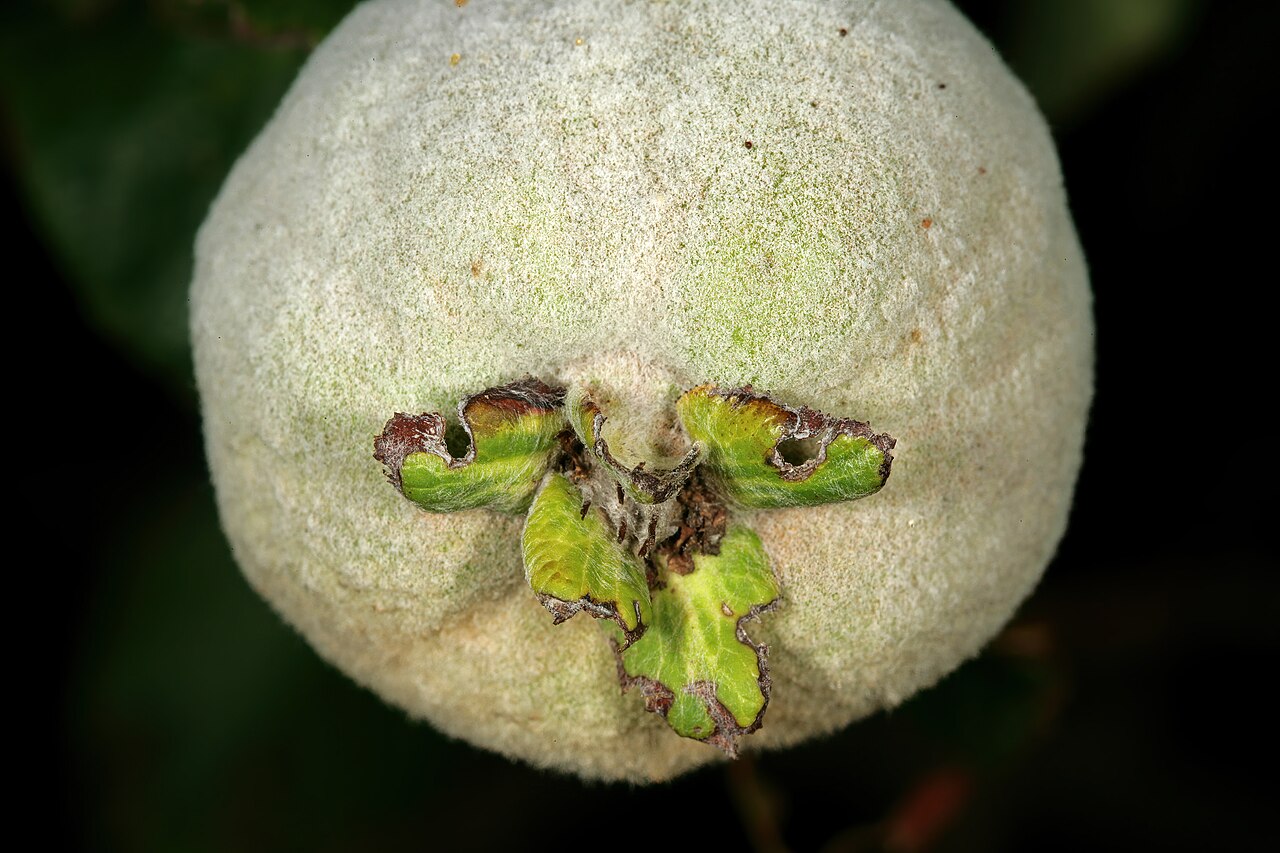
The quince is the forgotten tree of the gardens of long ago: pink blossom in May, downy golden fruit in October, and a fragrance that fills the whole house. Self-fertile, undemanding, of modest size, it gives quinces that you hardly ever find in the shops any more, for jelly, quince paste and autumn purées.
- Difficulty
- Easy
- Exhibition
- Sun, sheltered from the wind
- Watering
- Moderate; moist soil, watering young trees in summer
- Floor
- Deep, moist, heavy tolerated; free of active lime
- Spacing
- 4 to 5 m between trees
- Harvest
- 3 to 5 years after planting
Calendar · Belgian climate
When to sow, plant and harvest
| Activity | Jan | Feb | Mar | Apr | May | Jun | Jul | Aug | Sep | Oct | Nov | Dec |
|---|---|---|---|---|---|---|---|---|---|---|---|---|
| Plantation | yes | yes | yes | yes | yes | |||||||
| Harvest | yes |
Step by step
1Choosing
The quince is self-fertile and stays small, 3 to 5 m: a single tree is enough. Choose a productive variety that is not very prone to brown rot: Champion, with regular round fruit, Vranja, with enormous pear-shaped fruit, Portugal, early and fragrant, or Cydora Robusta, a very healthy German selection. Buy a bare-rooted scion or a two-year-old goblet, grafted on quince, with no cankers on the trunk.
2Planting
Plant from November to March, outside frosty spells, in full sun, in deep, moist soil, even heavy, but free of active lime, which causes chlorosis. Space 4 to 5 m apart. Dig wide, mix in compost, plant with the graft union clear of the ground, stake and water generously. A warm spot sheltered from the wind helps the fruit ripen, as it needs a long autumn.
3Caring
The quince needs very little pruning: in winter, remove dead wood and crossing branches, and open up the centre, never shortening the young shoots that carry the fruit at their tips. Mulch over a wide circle, water young trees in summer and give compost in spring. Remove mummified fruit and dried-up shoots as soon as you see them: this is the main precaution against brown rot.
4Harvesting
Harvest in October, before the hard frosts, when the fruit is golden yellow, its down comes away when rubbed and its fragrance carries a metre. The quince then comes off without effort. Pick by hand, in dry weather, without dropping it: the flesh bruises and browns. Fruit that is still greenish finishes turning yellow within a few weeks in the fruit store.
5Storing
The quince keeps two to three months in a cool, airy cellar, without the fruits touching, away from apples, which it would perfume. It is not eaten raw: jelly, quince paste, purée with apples, quinces roasted in the oven or poached in a spiced syrup, lamb tagine. A single quince in the fruit bowl scents the whole kitchen for weeks.
Further reading
Planting and caring for plants properly
How to plant properly
Choosing the variety and the rootstock
The fruiting quince is grafted on quince, generally Cognassier de Provence or Adams, which keeps it between 3 and 5 m; it is also found on its own roots, a little more vigorous and sometimes suckering. The natural form is the goblet, or a half-standard with a 1.2 m trunk; it lends itself badly to trained forms. All the varieties are self-fertile: a single tree is enough, two increase the crop. Champion, round and regular, tolerates brown rot well; Vranja, enormous and pear-shaped, is the commonest in Belgian nurseries; Portugal, early, turns red on cooking; Cydora Robusta and Leskovac are the healthiest. Prefer a bare-rooted scion or a two-year-old goblet.
Choosing the spot
The quince needs a long autumn to ripen: give it full sun, a place sheltered from the wind, which breaks loaded branches and brings the fruit down, and open, to dry the foliage and the fruit and limit brown rot. A south- or west-facing wall nearby is a bonus, without training it. The soil must be deep and moist, even heavy and clayey, which it tolerates better than the apple, but free of active lime, which makes it go chlorotic. Avoid frost pockets, as its May flowering is usually spared, but not always. Space 4 to 5 m apart, and keep 3 m from a hedge or a wall.
Preparing the hole and the soil
Dig 80 cm square and 50 cm deep, breaking up the sides and the bottom, several weeks in advance if possible. Mix into the topsoil three spadefuls of mature compost, one of leaf mould and a handful of hoof and horn; no fresh manure or mineral fertiliser in contact with the roots. In limy soil, work in composted pine bark and plan for an acid mulch; in very heavy soil, a little coarse sand and planting on a 15 cm mound. Drive in a 2 m stake before the tree, on the side of the prevailing wind, essential for three years for a half-standard.
Planting bare-rooted
From November to March, outside frosty spells, plant bare-rooted after trimming and puddling the roots. Set the graft union 10 cm above the ground, spread the roots, fill in with the fine soil, firm, water with 20 litres, form a saucer and mulch over a metre across. Cut a scion back to 70 or 80 cm on four or five well spaced buds to build a goblet; a goblet already formed is planted as it is, shortening only the over-long main branches by a third. Tie to the stake in a figure of eight with a soft tie. Remove the flowers in the first year.
In a pot or container
The quince is not a container tree, but on Cognassier de Provence, a compact variety such as Champion or Leskovac will last a good ten years in 80 litres on a sunny terrace, with pink blossom in May that justifies the attempt. Compost mix: garden soil, potting compost and garden compost in equal parts, over a drainage layer, avoiding any limy compost. Water every two days in summer, as the quince drops if the rootball dries out in August. Organic fertiliser in April and June, protection for the container in winter, repotting every three years. Reckon on five to ten fruits a year, which is enough for a few jars of jelly.
Beginner's mistakes
The first is confusing the fruiting quince with the Japanese quince, Chaenomeles, an ornamental shrub with small, hard, sour fruit: check the Latin name Cydonia oblonga. The second is planting in limy soil, where the tree yellows from June onwards. Many people also shorten the young shoots every winter, removing the flowers that are born at their tips. You still see quinces planted in a damp, enclosed corner, ravaged by brown rot in the first rainy summer. Finally, leaving mummified fruit on the tree in winter guarantees reinfection the following spring.
Look after it properly
Watering in the first years
For the first two summers, water every week in dry weather, 20 litres at the base, from May to September. The quince is an autumn fruit that swells in August and September: a shortage of water at that point gives small, hard fruit that drops, while a heavy watering after a long drought splits it. So water regularly rather than all at once. When mature, the quince, whose roots are fairly shallow, still appreciates a generous watering every fortnight in a dry summer, especially in light soil. Mulched in moist clay soil, it is content with the Belgian climate.
Mulching and feeding
A 10 cm mulch over a metre across, renewed every spring, keeps the soil cool and holds off the grass for five years. In March, two or three spadefuls of mature compost and a handful of wood ash under the mulch are enough; avoid fresh manure and nitrogen fertilisers, which give soft shoots prone to fireblight and brown rot. In limy soil, a mulch of pine bark, a dressing of granulated sulphur in spring and chelated iron in case of yellowing prevent chlorosis. A wash of clay or limewash on the trunk in winter limits moss and cankers.
Pruning: formation, then light maintenance
Build the goblet over three winters: choose four or five well spaced main branches, shorten them by a third for two winters running above an outward-facing bud, remove the shoots in the centre and the water shoots. After that, the quince fruits at the tips of the previous year's shoots: maintenance pruning comes down, every winter between December and February in dry weather, to removing dead and diseased wood, branches that cross or turn back towards the centre, and suckers from the base. Never cut back all the young shoots. Every five or six years, cut an ageing main branch back to a young lateral to renew it.
Thinning and supporting
In good years, the quince overloads and its 300 to 800-gram fruits break the branches in September. Towards the end of June, after the natural drop, thin to one fruit per cluster and one fruit every 15 to 20 cm, removing first the misshapen or spotted fruit and any that touch each other; this is the most effective protection against brown rot, which spreads by contact. At the end of August, prop over-laden branches with forked poles or tie them to the trunk. A well thinned tree gives bigger, more fragrant quinces, and produces every year instead of running to a biennial habit.
Preventing brown rot and other troubles
Brown rot, brown spots that spread over the whole fruit in concentric rings, then grey mummies on the tree, is the scourge of damp autumns. Pick off every affected fruit as soon as it appears, remove all the mummies in winter, burn the dried-up shoots, cutting 15 cm below the affected area, open up by pruning and thinning, and spray a horsetail decoction from May to July. Quince leaf blight spots the leaves reddish brown in a rainy summer: gather the fallen leaves. Against fireblight, cut 30 cm below any shoot blackened into a crook and disinfect the secateurs. Birds and codling moth leave it alone.
Through the season
In January, prune in dry weather, remove the mummies, paint the trunk. In March, compost and mulch, check the stake. In May, admire the pink blossom and let the bees work; horsetail decoction after rain. In June, water if the month is dry, thin at the end of the month. In July, horsetail again, gather the spotted fruit. In August, prop, water in drought. In September, watch for brown rot, remove affected fruit. In October, harvest, preferably after a first light frost, which brings out the fragrance. In November, gather the leaves, plant, clear away any remaining mummies.
Harvesting and storing
The quince is picked in October, before serious frosts, when the grey down fades, when the fruit turns from green to golden yellow and when it comes away without forcing; a fruit you have to tear off is not ready and will have no fragrance. Pick with both hands, set the fruit down gently in crates lined with paper, in a single layer, without letting it fall: bruised flesh browns and rots within a week. Wipe off the down with a dry cloth. Fruit that is still greenish finishes turning yellow within three weeks in the fruit store. Keep them away from apples and pears, which they would perfume, and check every week for brown spots.
Obtaining seeds or seedlings
Seeds and seedlings: where to find them
When choosing a fruit tree or shrub, opt for a nursery near you: they stock rootstocks and varieties suited to the local climate, and can advise you on pollination. In Belgium, look for varieties from the Gembloux Research Centre (RGF label); in France, nurseries in the ‘Croqueurs de pommes’ network; elsewhere, collections of regional varieties.
From the vegetable patch to the plate
And then we savour it
What it offers
The quince is rich in pectin, fibre and vitamin C; cooked, it keeps a good fibre content.
In the kitchen, it’s simple
Homemade quince paste, cut into cubes and rolled in sugar, is served with a hard cheese or at the end of the meal.
Living well
Making quince jelly on an October Sunday scents the house for the whole week and fills the cupboard for winter.
Also worth a look