legume · Fabacées
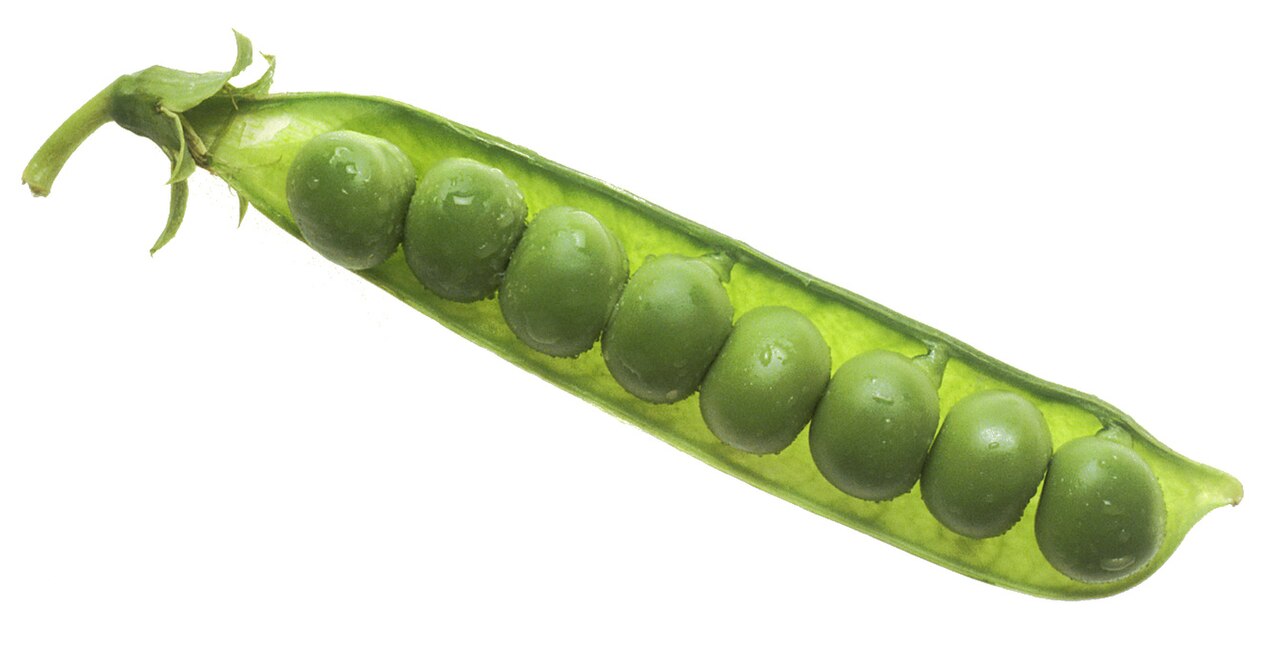
Garden peaPisum sativum
The pea likes cool conditions and is sown as soon as the ground can be worked, often in March here. It occupies the vegetable patch in spring and frees up the space in July, with the soil enriched. Shelled and eaten raw in the garden, its sweet peas have no equivalent in the shops.
- Difficulty
- Easy
- Exhibition
- Sun or light partial shade
- Watering
- Moderate, more sustained at flowering and while the pods form
- Floor
- Moisture-retentive, loose, on the chalky side, no fresh manure
- Spacing
- 3 cm along the row, double rows 60 cm apart
- Harvest
- 70 to 90 days after sowing
Calendar · Belgian climate
When to sow, plant and harvest
| Activity | Jan | Feb | Mar | Apr | May | Jun | Jul | Aug | Sep | Oct | Nov | Dec |
|---|---|---|---|---|---|---|---|---|---|---|---|---|
| Sowing under cover | yes | |||||||||||
| Sowing in open ground | yes | yes | yes | |||||||||
| Plantation | yes | yes | ||||||||||
| Harvest | yes | yes | yes |
Step by step
1Sowing
Sow outdoors from March, once the soil is no longer sodden, and until May to stagger the crop. Draw a drill three to four centimetres deep and drop a seed every three centimetres, or in stations of five seeds every twenty centimetres. Round-seeded varieties withstand cold better than wrinkled ones, which are sweeter and best kept for April. Protect from pigeons and voles with netting or twiggy branches.
2Planting out
A sowing in pots or in a length of guttering under cover in February, transplanted in March, keeps the peas safe from the rodents and pigeons that dig up the seeds. Plant the ten-centimetre seedlings without disturbing the roots, in double rows twenty centimetres apart. Put the supports in straight away: twiggy branches, wire mesh or netting stretched between posts, at a height suited to the variety, from sixty centimetres to more than one metre fifty.
3Caring
Earth the plants up lightly when they reach ten centimetres to steady them, then guide the tendrils towards the supports. Hoe between the rows and mulch before the heat arrives to keep the soil cool. Water little until flowering, then regularly once the pods form, at the base. No nitrogen feed is of any use; the plant takes care of that itself. Remove plants affected by powdery mildew at the end of the crop.
4Harvesting
Harvest from June to early August, depending on the sowing date, when the pods are well filled but still smooth and light green. A lumpy, dull pod holds floury peas. Pick every two days, holding the stem with one hand and pinching off the pod with the other. Start at the bottom of the plant. Mangetout are picked earlier, when the peas are only just beginning to show.
5Storing
The sugar in peas turns to starch from the moment they are picked: eat them the same day, or shell and freeze them without delay after a one-minute blanching. Stored this way, they keep for a year without losing flavour. In sterilised jars they also keep, but are less tender. After harvesting, leave the roots in the ground; they return nitrogen to the soil for the next crop.
Further reading
Planting and caring for plants properly
How to plant properly
Choosing the spot
The pea is a cool spring vegetable: it grows between 10 and 20 °C and suffers as soon as July heats up. Choose a bed that is sunny in March but is not the hottest corner of the garden in June; light afternoon shade suits it. The soil must drain quickly: ground that stays waterlogged after the March rains rots the seeds. Run the rows north to south so the supports do not shade the neighbours. Avoid proximity to onions and garlic, and leave three years before returning to the same spot.
Preparing the soil
The pea is content with moderately rich soil, provided it is loose and not too acidic. Prepare the bed in autumn by loosening with a broadfork, then cover it with dead leaves or a mulch that you remove in February to let the soil warm up. Mature compost, a shovelful per square metre, is enough; fresh manure is out. In the heavy, acidic soils of the Ardennes or the Condroz, a handful of lime or wood ash per square metre in autumn noticeably improves germination. Rake to a fine tilth before sowing to draw even drills.
Sowing at the right time
Sow as soon as the ground can be worked without sticking to your boots, often between 5 and 20 March in Belgium, with a hardy round-seeded variety. Wrinkled-seeded varieties, which are sweeter, are sown from April. Stagger three sowings a fortnight apart until mid-May; after that, July heat hardens the peas and powdery mildew takes hold. Draw drills four centimetres deep and drop a seed every three centimetres, in paired rows twenty centimetres apart, with sixty centimetres between each pair. Sow into drained soil, without watering afterwards if the ground is moist.
Pricking out and planting
If pigeons and voles are emptying your rows, sow under cold cover in February in a length of PVC guttering filled with compost, one seed every three centimetres. Three weeks later, when the plants are eight to ten centimetres tall, dig a drill of the same cross-section in the bed and slide the contents of the gutter into it in one piece: the roots are not disturbed. This method gives a fortnight's head start and a perfect row. Then put the supports in immediately, before the tendrils go looking for something to hold, and firm the soil around the base to anchor the plants.
In pots or containers
On a cool balcony, dwarf peas and mangetout grow well in a trough at least thirty centimetres deep, twenty-five to thirty litres for fifteen plants. Sow from March, one seed every four centimetres in two lines, in ordinary potting compost without fertiliser. Put in twiggy branches, a trellis or netting fixed to the railing as soon as the seedlings are up. Water regularly from flowering, as the compost dries out quickly. A trough gives two or three pickings, a pleasure rather than a store, but the green shoots can also be eaten in salads, which more than justifies the space.
Beginner's mistakes
Sowing in sodden ground: the seeds rot before they come up. Waiting until May to sow, and harvesting hard peas in the middle of a heatwave. Forgetting the supports, or putting them in when the plants are already collapsing, which breaks the stems. Sowing a lone row of a climbing variety with no support, or a dwarf variety with two-metre supports. Giving a nitrogen feed, pointless and harmful. Letting the pigeons help themselves without netting. Harvesting too late, when the pods are lumpy and dull. Pulling up the plants after harvest instead of cutting them at the neck and leaving the nitrogen-rich roots in place.
Look after it properly
Watering properly
Until flowering, spring peas are generally satisfied with Belgian rain; a watering every ten days is enough if March and April are dry. From the appearance of the flowers, and then while the pods fill, demand soars: water generously twice a week, five to ten litres per metre of row, at the base and in the morning. A shortage of water at this point gives poorly filled pods. Do not wet the foliage, especially towards the end of the crop when powdery mildew threatens. A mulch laid before the first heat greatly reduces the need for watering.
Mulching and feeding
The pea needs no fertiliser: its roots carry nodules that fix nitrogen from the air, and soil that is too rich favours leaves at the expense of pods. Excess nitrogen is in fact the leading cause of a disappointing harvest. Do mulch, on the other hand, as soon as the plants reach fifteen centimetres and the soil has warmed up, around mid-April, with five centimetres of dried grass clippings, straw or leaves: the mulch keeps the coolness the pea demands and delays the arrival of powdery mildew in June. After harvesting, cut the stems at ground level and leave the roots in place.
Supporting and earthing up
When the plants reach ten centimetres, earth them up lightly by drawing soil over three centimetres of stem, which anchors them against wind. Then put the supports in without delay: hazel or hornbeam branches for dwarf varieties, wide-mesh wire or netting stretched between posts for climbers, up to one metre fifty. The tendrils cling on their own, but guide the stems for the first few days by placing them against the support. A row that flops over gets damaged, goes mouldy and is awkward to harvest. A string stretched along each side of the row, at mid-height, completes the support for heavily laden rows.
Preventing diseases and pests
Pigeons and voles are the first thieves: stretch a net or lay thorny branches over the row from sowing until the plants are fifteen centimetres tall. Powdery mildew arrives with the June heat: sow early, mulch, water at the base and spray milk diluted to 10 % at the first spots; pull up badly affected plants rather than let them spread it. Against the pea moth, the little maggot in the pods, early sowing remains the best defence, as the harvest falls before it lays its eggs in late June. Green aphids are dislodged with a jet of water or soft soap.
Through the season
February: sowing in guttering under cold cover, preparing the bed. Early March: first sowing in place of a round-seeded variety, pigeon netting. Late March and mid-April: following sowings, wrinkled varieties. April: earthing up, putting in supports, guiding the stems, mulching around mid-April. May: first sowing in flower, regular watering, watching for aphids. June: harvest every two days, sustained watering, vigilance against powdery mildew. Early July: last harvests, stems cut at ground level. Mid-July: the freed bed takes turnips, beans or autumn salads, which benefit from the nitrogen left by the roots.
Harvesting and extending the season
Harvest every two days, in the morning, starting with the lowest pods: they should be nicely plump but still smooth, glossy and light green. Hold the stem with one hand and pinch off the pod with the other. Mangetout are picked flat, as soon as the peas can barely be made out. Diligent picking extends flowering by a week or two. To stretch the season, rely above all on staggering the sowings from March to mid-May, and on a late variety for the last one. In the milder areas of Flanders or Hainaut, a sowing of round peas around the end of October, under fleece, gives a very early harvest in May.
Obtaining seeds or seedlings
Seeds and seedlings: where to find them
A selection of reputable seed suppliers that deliver to your country, listed in order of proximity. Evadya does not receive any commission: these are suppliers we recommend for their reliability.
Semailles
For Belgian artisan seed producer, organic and reproducible seeds, over 250 regional varieties, a planting calendar tailored to the Belgian climate.
Against Small organisation: limited range of hybrid varieties and possible stock shortages during peak season.
Search for ‘garden pea’ on SemaillesKokopelli
For Europe’s largest collection of heirloom, organic and open-pollinated varieties; comprehensive growing guides.
Against No hybrids or seedlings; delivery times can sometimes be long during peak season; prices are slightly higher.
View the shopFerme de Sainte Marthe
For A long-established organic seed supplier, offering seeds and young plants, heirloom varieties, and nutrition and recipe guides.
Against Dispatched from the Loire: postage charges to Belgium and Switzerland; plants are fragile in transit.
Search for ‘garden pea’ on Ferme de Sainte MartheGraines Baumaux
For A vast selection (over 500 tomato varieties), with high-yielding F1 hybrids and heirloom varieties side by side, and plants available in season.
Against Not much organic produce; an old site; catalogue entries rather than growing guides.
Search for ‘garden pea’ on Graines BaumauxVreeken’s Zaden
For A very wide range of Dutch products, competitive prices, and numerous varieties suited to the Benelux climate.
Against Website in Dutch only; limited selection of organic produce.
Search for ‘garden pea’ on Vreeken’s ZadenDe Bolster
For Dutch organic seed producer, seeds suitable for propagation, a good selection for cool climates.
Against A shorter catalogue; website in Dutch.
Search for ‘garden pea’ on De BolsterZollinger Bio
For Swiss organic seeds, varieties suited to high altitudes and microclimates, and a unique phenological calendar.
Against Swiss prices and customs charges from the European Union.
Search for ‘garden pea’ on Zollinger BioBingenheimer Saatgut
For A leading German name in organic and biodynamic produce, offering open-pollinated varieties selected for the home gardener.
Against Website in German; delivery charges apply outside Germany.
Search for ‘garden pea’ on Bingenheimer SaatgutDreschflegel
For A collective of organic growers, specialising in rare and regional varieties, and the preservation of traditional farm seeds.
Against Small quantities; a catalogue that’s more activist than practical; website in German.
Search for ‘garden pea’ on DreschflegelFrom the vegetable patch to the plate
And then we savour it
What it offers
The fresh pea is a legume rich in plant protein, fibre and vitamins C and B9. It also provides slow-release carbohydrates and good satiety for few calories.
In the kitchen, it’s simple
Just dropped into boiling water for two minutes, then tossed in butter with fresh mint and spring onions, they are the June dish par excellence.
Living well
Shelling peas in the sun, nibbling every third one, is a childhood pleasure that is never forgotten.
Also worth a look