fruiting vegetable · Cucurbitacées
CucumberCucumis sativus
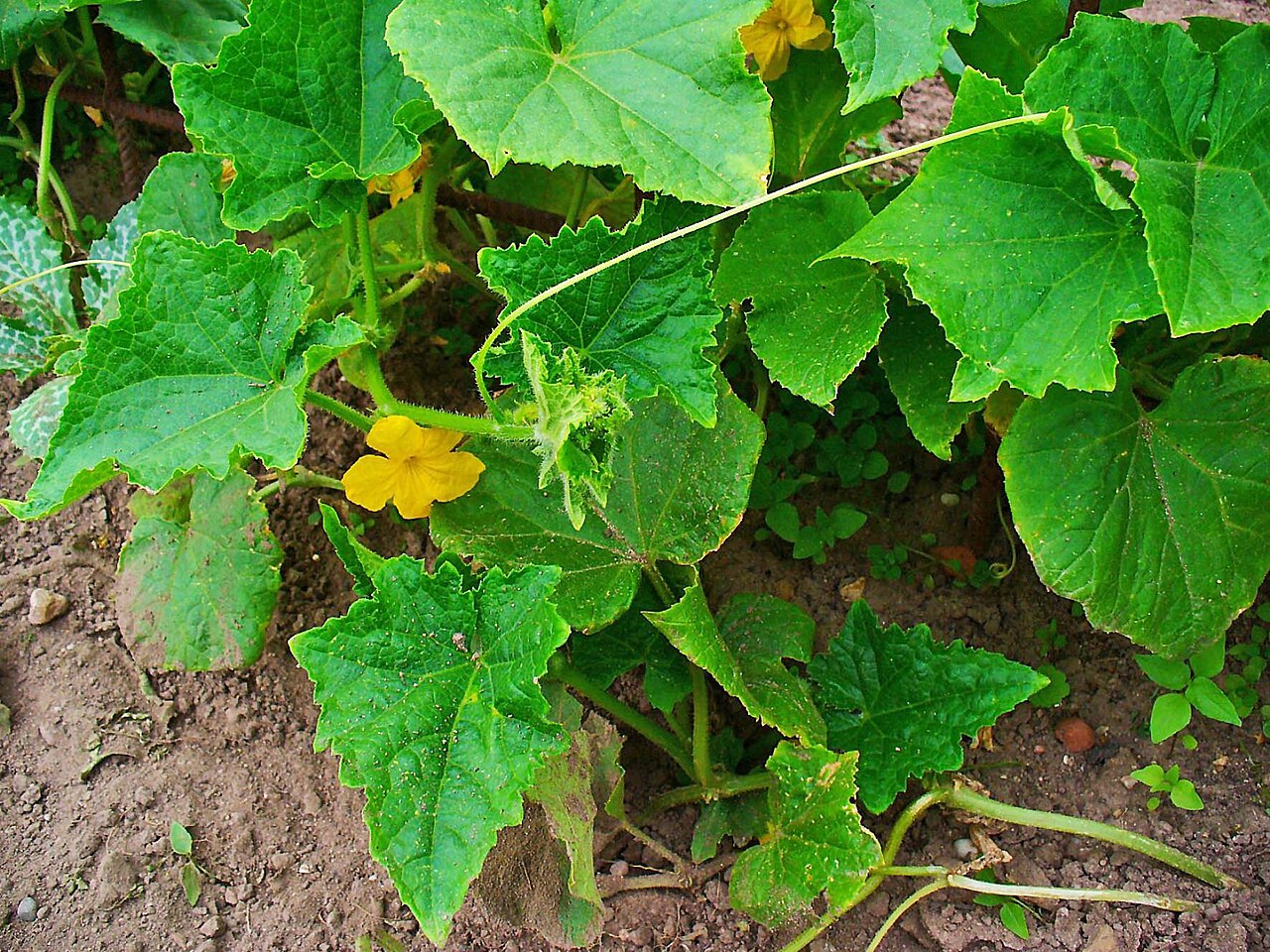
Cool and crunchy, a home-grown cucumber has nothing in common with the plastic-wrapped kind: its fragrant flesh is best enjoyed almost plain. A heat-loving plant, it does best under cover in Belgium, but hardy varieties and gherkins are happy in a warm, sunny corner of the vegetable garden.
- Difficulty
- Intermediate
- Exhibition
- Full sun, warm and sheltered
- Watering
- Regular and abundant, water that is not ice-cold, at the base
- Floor
- Rich in humus, light, moisture-retentive and well drained
- Spacing
- 40 cm along a trained row, 1 m between rows
- Harvest
- 50 to 70 days after planting out
Calendar · Belgian climate
When to sow, plant and harvest
| Activity | Jan | Feb | Mar | Apr | May | Jun | Jul | Aug | Sep | Oct | Nov | Dec |
|---|---|---|---|---|---|---|---|---|---|---|---|---|
| Sowing under cover | yes | yes | ||||||||||
| Sowing in open ground | yes | yes | ||||||||||
| Plantation | yes | yes | ||||||||||
| Harvest | yes | yes | yes |
Step by step
1Sowing
Sow in individual pots from mid-April, in warmth, at 22 °C or more: the seed will not germinate in cold compost. Place two seeds two centimetres deep, on their edge, and keep the stronger plant. Germination takes five to eight days. Do not sow too early; a plant that becomes drawn while waiting to be planted out establishes poorly. Outdoors, sow in stations in late May, under a cloche for the first few days.
2Planting out
Plant after mid-May, once the soil has warmed up, in a hole enriched with well-matured compost. Handle the root ball with care; cucumber roots hate being disturbed. Put a support in place from the start: netting, trellis or a string stretched up to the ridge of the greenhouse. Growing vertically saves space, airs the plant and gives straight, clean fruit. Water with tepid water and mulch straight away.
3Caring
Water often, with water at room temperature, never letting the soil dry out: water stress makes the fruit bitter. Guide the stem onto its support and pinch it out above the fifth or sixth leaf to encourage fruiting side shoots. In a greenhouse, ventilate on every warm day to limit powdery mildew and red spider mite. Diluted nettle liquid every three weeks keeps the plant vigorous.
4Harvesting
Harvest from July to September, as soon as the fruit has reached its size without yellowing, cutting the stalk with a knife. Pick often, every two or three days: a fruit left too long turns bitter, fills with seeds and exhausts the plant. Gherkins are picked very small, between three and six centimetres, almost daily in high season. In the morning, the fruit is at its crunchiest.
5Storing
A cucumber keeps for just under a week in the salad drawer, wrapped in a cloth so it does not go soft. It does not freeze; the flesh turns limp and watery. To keep surpluses, make quick pickles with vinegar and dill, ready in two days, or lacto-fermented gherkins in jars, which keep all winter in a cool place.
Further reading
Planting and caring for plants properly
How to plant properly
Choosing the spot
The cucumber wants constant warmth, even more than the tomato. In Belgium, a greenhouse, polytunnel or tall cold frame are its best allies; failing that, give it the foot of a south-facing wall, sheltered from cool winds, where heat builds up in the afternoon. Plan from the outset to grow it vertically on a trellis or netting: it takes up less room, airs the foliage and gives straight fruit. Avoid the spot where last year's courgettes, melons or squashes grew, as they share its diseases. In a greenhouse, keep it away from the tomatoes: it likes a more humid atmosphere than they do.
Preparing the soil
Two to three weeks before planting, open up a hole thirty centimetres in every direction for each plant and fill it with equal parts soil and mature compost, forming a small mound. The gentle fermentation of the compost warms the soil, which the cucumber particularly appreciates. In clay soil, lighten with coarse sand or leaf mould: the cucumber's shallow roots suffocate in compacted, waterlogged ground. A black film or dark mulch laid ten days before planting gains a few precious degrees in the soil.
Sowing at the right time
Sow between 20 April and 10 May for growing under cover, around 5 May for outdoors. The seed needs 22 to 25 °C to germinate: stand the pots on a radiator, in an indoor propagator or on a heat mat, and take them off the heat as soon as they come up to avoid legginess. So-called parthenocarpic varieties, free of bitterness, fruit without pollination and are perfectly suited to the greenhouse. Outdoors, prefer a short cucumber or a gherkin, which are more tolerant. A second sowing in late June, planted out in July, takes over when the first plants tire in September.
Pricking out and planting
Plant out a young plant with two or three true leaves, never an older one that has already begun to trail. Remove it from its pot carefully, keeping the root ball intact, set it on the prepared mound with the neck slightly raised, and water with tepid water. In a greenhouse, plant from mid-May; outdoors, wait until late May and put a cloche or fleece over it for the first week. Fix the string or trellis straight away, then guide the stem by winding it gently clockwise. Protect the neck from slugs, which are very fond of young plants.
In pots or containers
A cucumber in a pot on a warm balcony easily gives a dozen fruits. Choose a container of twenty-five to thirty litres, potting compost enriched with a third of garden compost, and a sturdy support fixed to the wall or railing: the plant climbs to two metres. Compact varieties, often sold for balconies, are content with a fifteen-litre pot. The ideal aspect is south or south-west, sheltered from wind, which dries out the foliage. The compost must stay moist at all times: in July, water every morning with tepid water and use a saucer. A liquid feed every ten days keeps production going.
Beginner's mistakes
Sowing in early April and ending up with a tangled fifty-centimetre plant that never recovers. Planting into soil at 12 °C: the cucumber sulks, yellows and gets eaten by slugs. Watering with cold water from the hose, which causes a shock and makes the fruit bitter. Letting a plant that should climb sprawl on the ground, with twisted, rotten fruit as the result. Growing ordinary and parthenocarpic cucumbers side by side in the greenhouse, which gives fruit swollen with seeds. Leaving a fruit to yellow on the plant, which stops the next ones from forming.
Look after it properly
Watering properly
The cucumber drinks a lot and often. Water at the base, with water that is not ice-cold, every two days in hot weather, every day in a greenhouse in full production, giving three to five litres per plant. Regularity matters more than quantity: soil that dries out and then gets sodden produces bitter, pinched or hollow fruit. A drip line or an upturned bottle works wonders. In a greenhouse, water the paths too and mist the foliage in the morning during hot spells to keep up the ambient humidity that deters red spider mite. Avoid wetting the leaves in the evening, though.
Mulching and feeding
Mulch from planting in the greenhouse, and as soon as the soil has warmed outdoors, with five to eight centimetres of straw or dried grass clippings. On a terrace, a hemp or flax mulch does just as well. The cucumber produces fast and quickly exhausts its reserves: give nettle liquid diluted to 10 % every fortnight at the start of the season, then comfrey liquid or an organic feed rich in potash from the first fruits. A ring of mature compost laid around the base in July revives a flagging plant. Avoid excess nitrogen feeds; they make the fruit watery.
Training and pinching
Train the main stem up its support by winding it around the string each week or tying it to the trellis with a soft tie. Remove flowers and side shoots on the first forty centimetres so the plant can settle in. Above that, cut back the side stems after the second leaf beyond a fruit; this balances growth and production. When the main stem reaches the ridge of the greenhouse or the top of the support, cut off its tip: the side branches take over. Remove yellowed lower leaves and misshapen fruit, which draw sap for nothing. On ordinary varieties, do not remove the male flowers.
Preventing diseases and pests
In a greenhouse, powdery mildew and red spider mite are the two scourges of summer. Ventilate generously every day from 20 °C, mist in hot spells, water the paths and space the plants out: dry, stuffy air opens the door to them. Spray milk diluted to 10 % or a horsetail decoction at the first white spots. Against red spider mite, a shower over the foliage in the morning and soft soap on the undersides of the leaves. Aphids are drowned with diluted soft soap. A plant that wilts suddenly is often suffering from stem rot at the neck: water away from the stem and raise the mound higher the following year.
Through the season
Late April: sowing in warmth on a radiator. Mid-May: planting in the greenhouse with string and mulch; late May outdoors under a cloche. June: weekly training, removal of low shoots, nettle liquid, first daily watering in hot weather. Late June: second sowing for the relay. July: harvest every two days, daily ventilation of the greenhouse, misting, comfrey liquid, watching for red spider mite. August: pinching out the tip at the ridge, milk sprays against powdery mildew, planting out the relay plants. September: the young plants produce until the first cold snaps. October: pulling up, cleaning and disinfecting the supports.
Harvesting and extending the season
Harvest early in the morning, with a knife, never pulling on the stem, as soon as the fruit is full-sized and the skin is still good and green and firm. In a greenhouse, picking is almost daily in July and August. A forgotten fruit yellows, fills with seeds and tells the plant to stop: remove it without regret. The relay sowing planted in July extends the harvest into October, especially under cover. During the first cool nights, close the greenhouse in the evening and cover outdoor plants with fleece. Gherkins are picked daily at four or five centimetres, which keeps them producing endlessly.
Obtaining seeds or seedlings
Seeds and seedlings: where to find them
A selection of reputable seed suppliers that deliver to your country, listed in order of proximity. Evadya does not receive any commission: these are suppliers we recommend for their reliability.
Semailles
For Belgian artisan seed producer, organic and reproducible seeds, over 250 regional varieties, a planting calendar tailored to the Belgian climate.
Against Small organisation: limited range of hybrid varieties and possible stock shortages during peak season.
Search for ‘cucumber’ on SemaillesKokopelli
For Europe’s largest collection of heirloom, organic and open-pollinated varieties; comprehensive growing guides.
Against No hybrids or seedlings; delivery times can sometimes be long during peak season; prices are slightly higher.
View the shopFerme de Sainte Marthe
For A long-established organic seed supplier, offering seeds and young plants, heirloom varieties, and nutrition and recipe guides.
Against Dispatched from the Loire: postage charges to Belgium and Switzerland; plants are fragile in transit.
Search for ‘cucumber’ on Ferme de Sainte MartheGraines Baumaux
For A vast selection (over 500 tomato varieties), with high-yielding F1 hybrids and heirloom varieties side by side, and plants available in season.
Against Not much organic produce; an old site; catalogue entries rather than growing guides.
Search for ‘cucumber’ on Graines BaumauxVreeken’s Zaden
For A very wide range of Dutch products, competitive prices, and numerous varieties suited to the Benelux climate.
Against Website in Dutch only; limited selection of organic produce.
Search for ‘cucumber’ on Vreeken’s ZadenDe Bolster
For Dutch organic seed producer, seeds suitable for propagation, a good selection for cool climates.
Against A shorter catalogue; website in Dutch.
Search for ‘cucumber’ on De BolsterZollinger Bio
For Swiss organic seeds, varieties suited to high altitudes and microclimates, and a unique phenological calendar.
Against Swiss prices and customs charges from the European Union.
Search for ‘cucumber’ on Zollinger BioBingenheimer Saatgut
For A leading German name in organic and biodynamic produce, offering open-pollinated varieties selected for the home gardener.
Against Website in German; delivery charges apply outside Germany.
Search for ‘cucumber’ on Bingenheimer SaatgutDreschflegel
For A collective of organic growers, specialising in rare and regional varieties, and the preservation of traditional farm seeds.
Against Small quantities; a catalogue that’s more activist than practical; website in German.
Search for ‘cucumber’ on DreschflegelFrom the vegetable patch to the plate
And then we savour it
What it offers
More than 95 % water, the cucumber is very refreshing and low in calories. It provides potassium, a little vitamin K and fibre, especially if you keep the skin on.
In the kitchen, it’s simple
Cut into thin slices with whole-milk yoghurt, garlic, dill and a drizzle of olive oil, it becomes the tzatziki of hot August evenings, served with toasted bread.
Living well
Nothing refreshes like a cucumber picked at dawn and crunched while still cool from the night, even before breakfast.
Also worth a look
Other vegetables
Tomato
Solanum lycopersicum
Courgette
Cucurbita pepo
Sweet pepper
Capsicum annuum
Aubergine
Solanum melongena