herb · Lamiacées
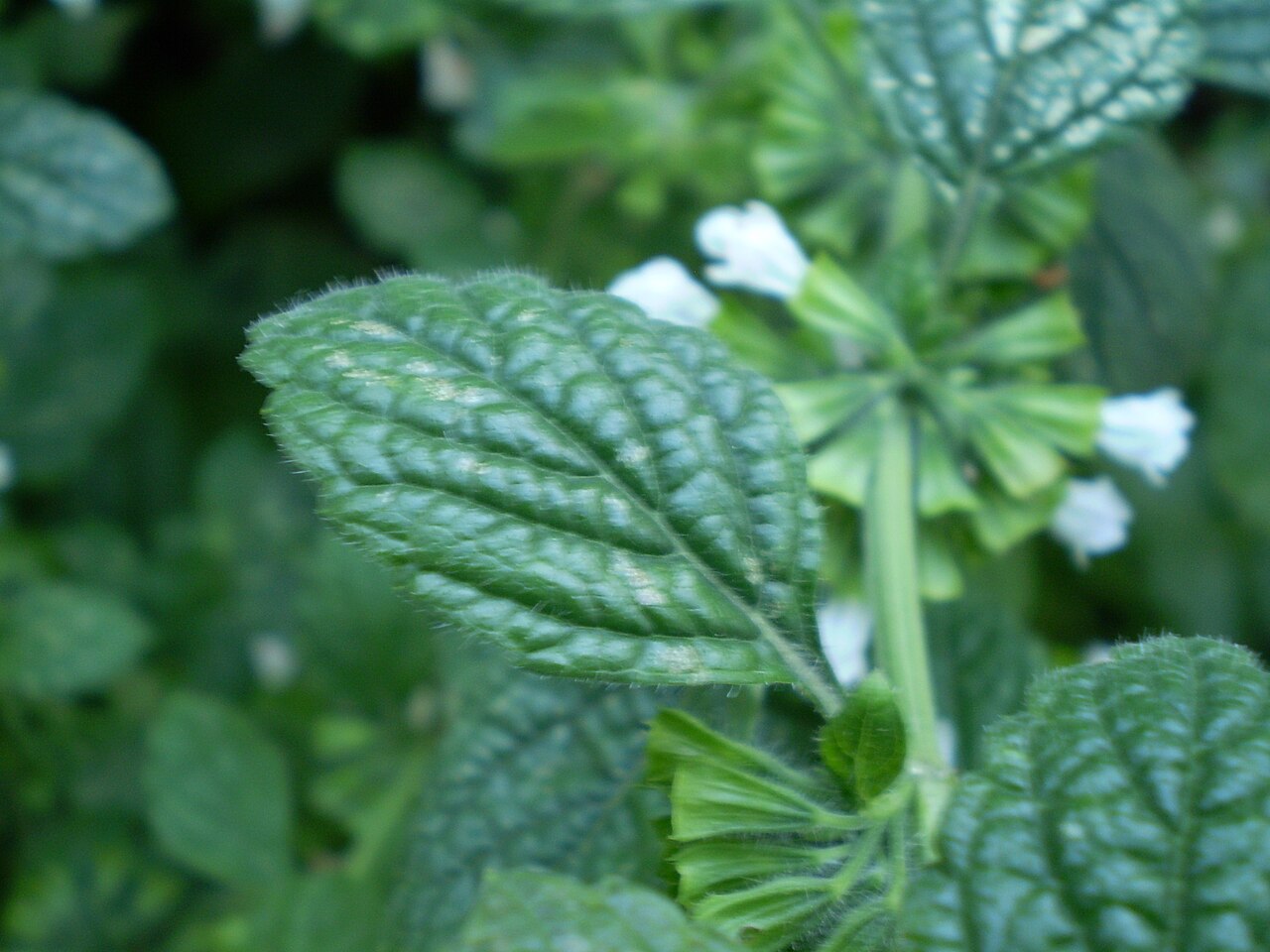
MintMentha spicata, Mentha × piperita
Mint grows everywhere, and even too much: it is the only herb you need to hold back rather than encourage. Planted in a sunken pot or a container, it offers its fresh leaves from May to October for herbal teas, tabbouleh, peas and desserts, and returns faithfully every spring.
- Difficulty
- Easy
- Exhibition
- Partial shade or sun that does not scorch
- Watering
- Regular, soil always moist; in a pot, almost daily watering in summer.
- Floor
- Any moist, rich soil, even heavy; tolerates damp.
- Spacing
- 30 to 40 cm, preferably in a container.
- Harvest
- 60 to 90 days after planting.
Calendar · Belgian climate
When to sow, plant and harvest
| Activity | Jan | Feb | Mar | Apr | May | Jun | Jul | Aug | Sep | Oct | Nov | Dec |
|---|---|---|---|---|---|---|---|---|---|---|---|---|
| Sowing under cover | yes | yes | ||||||||||
| Sowing in open ground | yes | yes | ||||||||||
| Plantation | yes | yes | yes | yes | yes | |||||||
| Harvest | yes | yes | yes | yes | yes | yes |
Step by step
1Sowing
Sowing is possible from March to May, in a seed tray indoors or in place, on the surface of moist compost, but it gives variable, slow plants, as mints hybridise freely. Most gardeners prefer a piece of rhizome or a cutting taken from a neighbour, which reproduces exactly the mint they want, peppermint, spearmint or Moroccan.
2Planting
Plant from March to May or in September-October a piece of rhizome or a plant, in a pot of at least 30 cm, a container or a sunken bucket with holes whose rim stands 5 cm proud of the soil. Use rich potting compost mixed with garden compost. Water generously. A cool, shady corner, near a tap, suits it perfectly. Keep the varieties apart, otherwise they mix.
3Caring
Water regularly, especially in a pot, and mulch. Cut off the stems that escape from the container and pull up runaway rhizomes as soon as you see them. Cut the clump back to 5 cm in July, after the first flowering, to get new tender shoots. Every spring, repot or divide, throwing away the exhausted centre and replanting the pieces from the edge in fresh compost.
4Harvesting
Pick the stems 5 cm above the ground or pinch the leafy tips as you go, from May until the frosts. The leaves are most fragrant just before flowering, in June-July: that is the moment for the big harvest for drying. Cut in the morning, in dry weather. The more you cut, the denser and more tender the clump regrows.
5Storing
A bunch in a glass of water in a cool place lasts a week. The leaves dry very well, in bunches hung in the shade or spread on a rack, then keep for a year in a jar for herbal teas. Frozen whole or chopped into ice cubes, they keep their freshness for sauces and drinks. Homemade mint syrup keeps several months in the fridge.
Further reading
Planting and caring for plants properly
How to plant properly
Choosing the spot
Mint likes coolness: a corner in partial shade, or in morning sun only, in soil that stays moist, suits it better than a scorching terrace. Near a tap, under a downpipe, on the north side of a hedge or by the edge of a pond, it thrives. But wherever it is, it must be contained: its rhizomes run underground a metre a season and cross a vegetable bed in one summer. So choose a container from the outset, or a spot enclosed by paving and a path, away from the vegetable garden. Isolate each variety, otherwise they mix.
Preparing the container
Most practical is a large pot of 30 cm or more, a basin or a bucket with holes in the bottom, sunk into the garden leaving the rim 5 cm proud, which blocks the rhizomes without depriving the plant of moisture. Fill with a mix of half potting compost, half garden compost or garden soil, as mint is hungry. In free open ground, mark out a square with metal or rigid plastic edging driven in to 30 cm. An old washing machine drum, a salvaged tub or a deep window box also do the job perfectly.
Choosing the variety and the plant
Mints hybridise freely and sowing gives plants with an unpredictable scent: always start from a piece of rhizome or a cutting of a plant whose leaves you have tasted. Spearmint, or Moroccan mint Nanah, is the best for tea and tabbouleh; peppermint, stronger, suits herbal teas and desserts; chocolate mint and bergamot mint amuse children. A garden centre plant should be chosen dense and good and green, without orange rust under the leaves. A single variety per container, two or three containers for variety.
Cuttings rather than seed
Mint multiplies effortlessly. In spring or summer, take a 10 cm stem tip, remove the lower leaves and stand it in a glass of water on the window: white roots appear within a week, and the cutting can be planted as soon as they reach 3 cm. A 10 cm piece of rhizome, with two or three buds, laid 3 cm deep in a pot of moist compost in March or September, gives a clump in two months. If you are set on sowing, do it in March indoors, on the surface, at 20 °C, without covering.
Planting and watering
Plant from March to May or in September-October, one plant or piece per 30 cm container, or every 30 to 40 cm in an edged square. Bury the root ball slightly deeper than it was, firm and water generously, two litres. The rhizomes settle in within a few weeks and the first cut comes about two months later. Mulch the surface with 3 cm of compost or dried grass clippings to hold moisture. If you plant in summer, shade for the first few days and water daily. Label the container with the variety name, as they all look alike in spring.
In a pot on the balcony
On a balcony, mint is the most rewarding herb, provided the pot is at least 25 cm and not in full afternoon sun. Rich compost, a layer of clay pebbles at the bottom, a saucer that can stay a little damp, unlike the other herbs. Watering is almost daily in summer and a liquid organic feed every fortnight supports the cutting. Every spring, remove from the pot, throw away the exhausted centre and replant the rhizomes from the edge in fresh compost: a pot that is not renewed fills with roots and gives nothing but thin stems.
Beginner's mistakes
Planting mint in free open ground, in the middle of the vegetable garden, "just one little plant", is the mistake everyone makes once and regrets for ten years. The second is putting several varieties in the same container: after two seasons, the most vigorous has invaded everything and the scent has become ordinary. The third is placing it in dry, scorching sun, where it yellows and catches rust. Finally, leaving the same pot four years without division makes the clump die back from the centre. Contain, separate, water, divide: four steps, and mint is the easiest of herbs.
Look after it properly
Watering generously
Mint is a plant of riverbanks and knows no such thing as too much water as long as the bottom does not stagnate. In contained open ground, water five litres per clump twice a week without rain, more in a heatwave; in a pot, every day in summer, morning or evening, until the water runs out of the bottom. A thirsty mint collapses, yellows from the bottom, loses its scent and gets covered in rust. It picks up within an hour of a copious watering, but every wilt costs it leaves. A pot standing in a saucer of damp gravel keeps cool while you are away.
Mulching and feeding
Mulch the surface of the container or the square with 3 to 5 cm of compost, dried grass clippings or shredded leaves to hold moisture and feed continuously. Mint is hungry: nettle liquid diluted to 10 % every three weeks from May to August, or a liquid organic feed every fortnight in a pot, keeps the leaves broad and a good green. A handful of compost scratched in at the base each spring rounds this off. Without food, the clump becomes drawn after the first cut and the leaves shrink. Stop feeding in September so the rhizomes prepare for winter.
Cutting back and dividing
Cut the clump back to 5 cm above the ground at least twice in the season: a first time in June, just before flowering, when the scent is at its peak, for the big harvest for drying; a second in August to get tender shoots until October. After each cut-back, water and feed. Cut without mercy the stems that escape from the container and pull out runaway rhizomes as soon as they show. Every spring, in March, remove from the pot or dig up, throw away the woody centre and replant the vigorous pieces from the edge in fresh soil: that is the secret of a mint that is always young.
Preventing diseases and pests
Mint rust, orange pustules under the leaves and on the stems, appears on clumps stressed by drought or too dense. Cut back to the ground, put the waste in the bin, water; if it comes back, start again from healthy cuttings in fresh soil. Aphids lodge on the young shoots and go with a jet of water or soft soap at 5 %. Caterpillars and flea beetles sometimes riddle the leaves in June, without harm. Slugs gnaw the regrowth after a cut-back: evening collection. Avoid full sun and drought, the causes of almost all its troubles.
Through the season
March, division and repotting, compost, first shoots. April-May, first pickings, nettle liquid, watching for escaping rhizomes. June, big harvest for drying and cut-back before flowering. July, diligent watering, flowering on the stems left for the bees. August, second cut-back, feeding. September-October, tender pickings, cuttings in a glass of water for winter, end of feeding. November, the top growth dies; cut to the ground, mulch with dead leaves. December-February, nothing, except a pot brought in for a few fresh leaves. Mint is completely hardy and starts again from its rhizomes from mid-March.
Harvesting and overwintering
Pick from May until the first frosts, in the morning in dry weather, pinching the stem tips above a pair of leaves, which makes the plant branch. The leaves are most fragrant just before flowering. In winter, mint disappears completely below ground and needs no protection at all, even at -15 °C; a pot stays outside, against a wall. For fresh leaves in December, bring in during October a few rooted cuttings or a small piece of rhizome in a 15 cm pot, on a bright, cool window, at 15 °C: they give modestly until February, then go back to the garden.
Obtaining seeds or seedlings
Seeds and seedlings: where to find them
A selection of reputable seed suppliers that deliver to your country, listed in order of proximity. Evadya does not receive any commission: these are suppliers we recommend for their reliability.
Semailles
For Belgian artisan seed producer, organic and reproducible seeds, over 250 regional varieties, a planting calendar tailored to the Belgian climate.
Against Small organisation: limited range of hybrid varieties and possible stock shortages during peak season.
Search for ‘mint’ on SemaillesKokopelli
For Europe’s largest collection of heirloom, organic and open-pollinated varieties; comprehensive growing guides.
Against No hybrids or seedlings; delivery times can sometimes be long during peak season; prices are slightly higher.
View the shopFerme de Sainte Marthe
For A long-established organic seed supplier, offering seeds and young plants, heirloom varieties, and nutrition and recipe guides.
Against Dispatched from the Loire: postage charges to Belgium and Switzerland; plants are fragile in transit.
Search for ‘mint’ on Ferme de Sainte MartheGraines Baumaux
For A vast selection (over 500 tomato varieties), with high-yielding F1 hybrids and heirloom varieties side by side, and plants available in season.
Against Not much organic produce; an old site; catalogue entries rather than growing guides.
Search for ‘mint’ on Graines BaumauxVreeken’s Zaden
For A very wide range of Dutch products, competitive prices, and numerous varieties suited to the Benelux climate.
Against Website in Dutch only; limited selection of organic produce.
Search for ‘mint’ on Vreeken’s ZadenDe Bolster
For Dutch organic seed producer, seeds suitable for propagation, a good selection for cool climates.
Against A shorter catalogue; website in Dutch.
Search for ‘mint’ on De BolsterZollinger Bio
For Swiss organic seeds, varieties suited to high altitudes and microclimates, and a unique phenological calendar.
Against Swiss prices and customs charges from the European Union.
Search for ‘mint’ on Zollinger BioBingenheimer Saatgut
For A leading German name in organic and biodynamic produce, offering open-pollinated varieties selected for the home gardener.
Against Website in German; delivery charges apply outside Germany.
Search for ‘mint’ on Bingenheimer SaatgutDreschflegel
For A collective of organic growers, specialising in rare and regional varieties, and the preservation of traditional farm seeds.
Against Small quantities; a catalogue that’s more activist than practical; website in German.
Search for ‘mint’ on DreschflegelFrom the vegetable patch to the plate
And then we savour it
What it offers
A herb rich in menthol and antioxidants, traditionally enjoyed as an infusion after the meal.
In the kitchen, it’s simple
Fresh mint tea, new peas with butter and mint, or Wépion strawberries in a salad with a few snipped leaves.
Living well
A handful of crushed mint in a teapot, shared on the terrace on a summer evening, always invites the conversation to go on a little longer.
Also worth a look