herb · Apiacées
ParsleyPetroselinum crispum
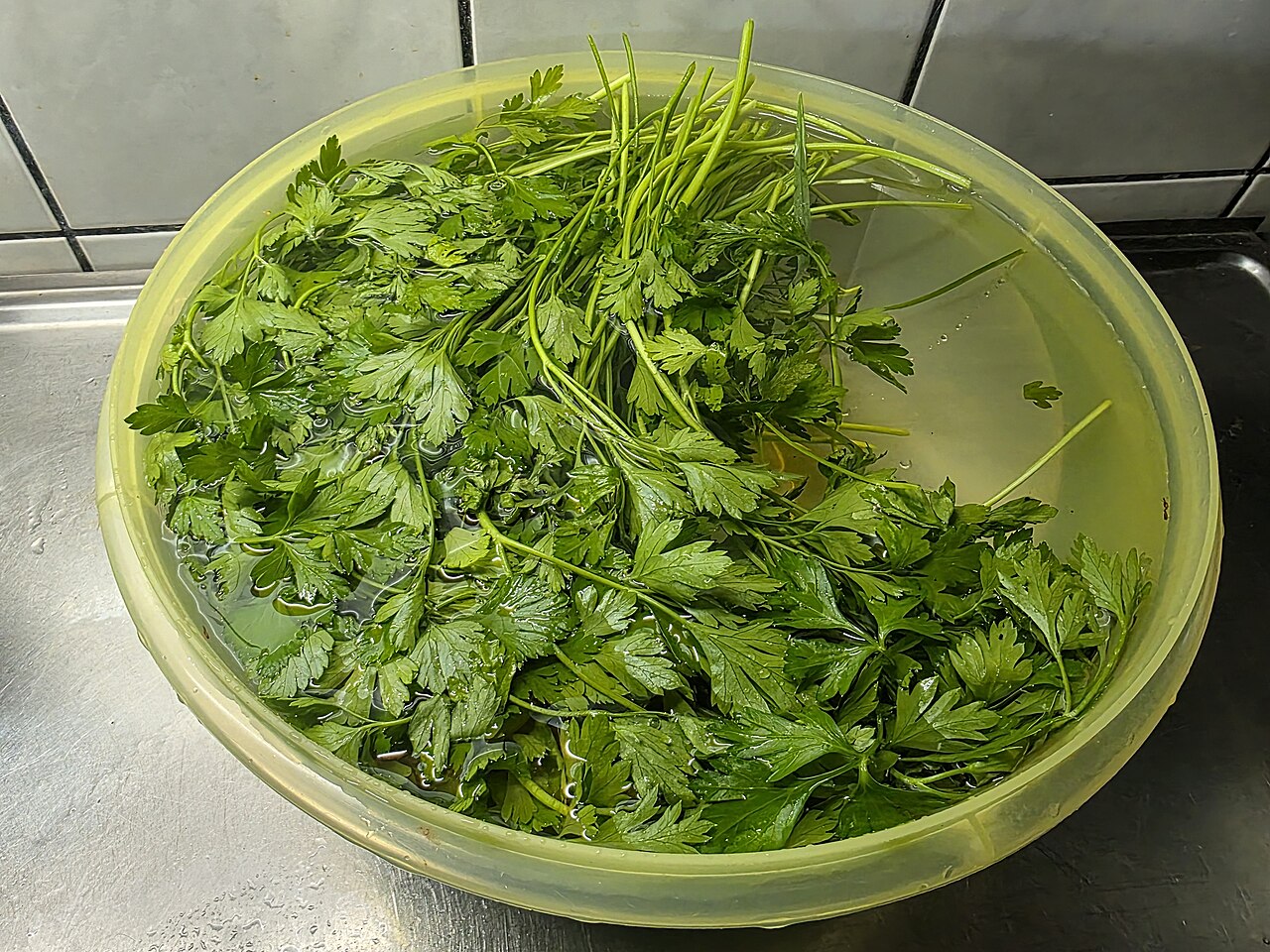
Curly or flat-leaved, parsley is the most used herb in our kitchens and one of the easiest to grow, provided you grant it the patience of a slow germination. A biennial, it supplies its leaves in the first year and through to the following spring, in open ground as well as in a pot.
- Difficulty
- Easy
- Exhibition
- Sun or partial shade
- Watering
- Regular, soil always moist; it yellows in drought.
- Floor
- Rich, deep, moist, well-drained soil, enriched with mature compost.
- Spacing
- 20 cm between plants, 25 to 30 cm between rows.
- Harvest
- 70 to 90 days.
Calendar · Belgian climate
When to sow, plant and harvest
| Activity | Jan | Feb | Mar | Apr | May | Jun | Jul | Aug | Sep | Oct | Nov | Dec |
|---|---|---|---|---|---|---|---|---|---|---|---|---|
| Sowing under cover | yes | yes | ||||||||||
| Sowing in open ground | yes | yes | yes | yes | yes | yes | ||||||
| Plantation | yes | yes | yes | yes | yes | yes | ||||||
| Harvest | yes | yes | yes | yes | yes | yes | yes | yes | yes | yes | yes |
Step by step
1Sowing
Sow from March to August in place, in rows 25 cm apart, one centimetre deep, in fine soil. Germination is slow, three to four weeks: soak the seeds overnight in lukewarm water and mix them with radish seeds, which mark the row and come up quickly. Keep the soil moist without a break until germination.
2Planting out
Parsley is best sown in place, as its taproot copes badly with transplanting. Pot-grown plants do establish well, though, if the root ball stays intact, every 20 cm, from April to September. In a pot, choose a container at least 20 cm deep and rich compost. A plant near the kitchen door is always the most used.
3Caring
Thin to 15 or 20 cm, hoe and mulch to keep the soil cool, and water regularly in summer. Diluted nettle liquid in June revives a tired plant. Cut regularly, even when you do not need it, to renew the foliage. Before winter, cover the rows with a fleece or dead leaves. In the spring of the second year, remove the flower stems or leave one for seed.
4Harvesting
Pick the outer stems at the base, with a knife or by snapping them, sparing the heart, as soon as the plant has eight to ten leaves. Harvest in the morning by preference. A complete cut 3 cm above the ground every month or two regenerates the clump. Picking continues all winter outside frosty spells, then resumes in March until flowering, when the leaves lose their flavour.
5Storing
A bunch in a glass of water or in a bag in the fridge lasts a week. Chopped parsley freezes very well, as ice cubes of water or oil, or flat in a bag: it keeps all its flavour. Drying, in the shade or a very low oven, leaves it with little scent. The stems of flat-leaved parsley, highly aromatic, can be kept frozen for stocks.
Further reading
Planting and caring for plants properly
How to plant properly
Choosing the spot
Parsley grows in sun as well as partial shade, and it is actually in light afternoon shade that it keeps its most tender leaves in July. Choose a corner of deep, moist soil, as close as possible to the kitchen door: a plant you have to fetch from the bottom of the garden ends up unused. Avoid sowing it where carrots, celery or parsley grew last year, to escape carrot fly and soil-borne diseases. A row along the edge of the tomato bed or at the foot of the leeks is ideal.
Preparing the soil
Parsley forms a long taproot: loosen to 25 cm with a broadfork and remove stones. Work in two to three kilos of mature compost per square metre, without fresh manure, and rake the surface very fine, as the seed is small and germination slow. In our loams that crust over in the rain, cover the drill with sieved compost rather than soil. On acid soil, a handful of wood ash is welcome. In a pot, use rich compost lightened with a quarter of sand, in a container at least 20 cm deep.
Sowing at the right time
Sow in open ground from late March to late August, when the soil is above 8 °C; the two best moments here are early April and late July. Soak the seeds overnight in lukewarm water, then sow them in drills 1 cm deep and 25 cm apart, one seed every 2 cm, mixed with a few radish seeds that mark the row and come up in three days. Cover with fine compost, firm and keep moist without a break for the three to four weeks of germination. A February sowing indoors, at 18 °C, gives plants for April.
Choosing the plant
If you lack patience, a plant from the garden centre or market saves a month. Choose a pot whose leaves are good and green and upright, with no yellowing at the base, and whose roots are not yet coming out of the drainage hole. Supermarket pots, very dense, can be divided into three or four clumps after a soak in lukewarm water and replanted straight away at 15 cm. Flat-leaved parsley, Commun or Géant d'Italie, is the most fragrant; curly parsley withstands cold and carrot fly better; Hamburg parsley is sown only in place, in March, for its winter roots.
Transplanting and planting
Transplant plants sown indoors or bought from April to September, in the evening, every 20 cm in rows 25 to 30 cm apart. Remove from the pot keeping the root ball intact, as a broken taproot makes the plant languish, and set the crown exactly at soil level. Firm, water half a litre per plant, and mulch lightly with dried grass clippings after a week. Seedlings from a sowing in place are thinned to 15 to 20 cm as soon as they have four leaves; the pulled plants can be transplanted elsewhere, with less success but no harm.
In a pot or window box
Parsley is excellent in a pot, provided it has depth: 20 cm at least, 30 cm preferably, a pot 20 cm across for one clump or a 50 cm window box for three. Rich compost, drainage with clay pebbles, a bright but not scorching position, east- or west-facing on a balcony. Sow directly in the pot or transplant a divided plant. Water as soon as the surface dries, every two days in summer, and feed every fortnight with liquid organic fertiliser. A pot brought into a cool room in November gives parsley until Christmas.
Beginner's mistakes
The first disappointment is the sowing that "does not come up": it does come up, but in four weeks, and the gardener has often scratched at the soil in the meantime or let the row dry out. Soak, sow with radishes, water every day. The second is sowing too densely without thinning, which gives puny clumps. The third is cutting the heart at harvest or stripping the plant bare before winter. Finally, in the second year, parsley flowers from May: do not persist, resow in April and July every year so as always to have a young row in production.
Look after it properly
Watering just right
Parsley yellows as soon as it is thirsty, and this yellowing cannot be reversed on the affected leaves. Water regularly in summer, six to eight litres per square metre twice a week without rain, at the base and preferably in the evening or early morning, to keep the soil permanently moist. In a pot, watering is daily in July-August. Avoid excess in a closed pot, as the taproot rots in sodden compost: empty the saucer after each watering. In spring and autumn, our rain is enough, except under cover or a cold frame, where you need to water every week.
Mulching and feeding
After thinning, mulch the row with 3 cm of dried grass clippings or flax shives, keeping the crowns clear. Parsley likes nitrogen to renew its leaves: nettle liquid diluted to 10 % every three weeks, from May to September, or a handful of compost at the base each month, maintains a strong green colour and quick regrowth after each cut. In a pot, a liquid organic feed every fortnight is essential. A pale, thin parsley is asking for food; a dark parsley that grows little is asking for water or light.
Cutting to renew
Always pick the outer stems, cut at the base or snapped with a sharp movement, leaving the five or six stems of the heart from which the new leaves grow. Even when you do not need it, take a handful a week; a plant that is not cut ages and collapses. Every month or two, cut the whole clump back to 3 cm, water with liquid feed, and let it start again: within three weeks you have fresh, tender foliage. In the spring of the second year, cut off the flower stems as they appear to gain a few weeks, then let one plant run up to harvest its seed.
Preventing diseases and pests
Carrot fly, whose larvae mine the root and make the plants yellow and then die back, is kept at bay by insect-proof mesh laid from sowing and by neighbouring onions or leeks. Aphids lodge in the heart of the clumps in hot weather; a jet of water, then soft soap at 5 %, deal with them. Septoria leaf spot marks the leaves with brown in a wet summer: give air, remove affected leaves, water at the base, horsetail decoction. Slugs attack young sowings, to be protected with ash or a coarse mulch. A three-year rotation remains the best prevention.
Through the season
Early April, first sowing in place with radishes, or transplanting the February plants. May, thinning, mulching, first liquid feed. June to September, regular picking, watering, liquid feed every three weeks, one complete cut-back in summer. Late July, second sowing for winter, in partial shade. October, removal of yellow leaves and last cut-back before the cold. November, fleece or cold frame over the July row, dead leaves around the plants, a pot brought into a cool, bright room. December to March, picking outside frosty spells under the fleece. The following April, the ageing row flowers: you start again.
Harvesting and overwintering
The first picking comes ten to twelve weeks after sowing, when the plant has eight to ten leaves. Parsley withstands -10 °C without serious harm and starts again after each thaw; under a double fleece, a cold frame or a low tunnel, it can be picked all winter in most of our regions. Curly parsley is hardier than flat-leaved. A late July sowing, well rooted before November, is the key to a well-supplied winter. For the indoor kitchen, lift a clump with its root ball in October, pot it up in a cool, bright room, and pick until February.
Obtaining seeds or seedlings
Seeds and seedlings: where to find them
A selection of reputable seed suppliers that deliver to your country, listed in order of proximity. Evadya does not receive any commission: these are suppliers we recommend for their reliability.
Semailles
For Belgian artisan seed producer, organic and reproducible seeds, over 250 regional varieties, a planting calendar tailored to the Belgian climate.
Against Small organisation: limited range of hybrid varieties and possible stock shortages during peak season.
Search for ‘parsley’ on SemaillesKokopelli
For Europe’s largest collection of heirloom, organic and open-pollinated varieties; comprehensive growing guides.
Against No hybrids or seedlings; delivery times can sometimes be long during peak season; prices are slightly higher.
View the shopFerme de Sainte Marthe
For A long-established organic seed supplier, offering seeds and young plants, heirloom varieties, and nutrition and recipe guides.
Against Dispatched from the Loire: postage charges to Belgium and Switzerland; plants are fragile in transit.
Search for ‘parsley’ on Ferme de Sainte MartheGraines Baumaux
For A vast selection (over 500 tomato varieties), with high-yielding F1 hybrids and heirloom varieties side by side, and plants available in season.
Against Not much organic produce; an old site; catalogue entries rather than growing guides.
Search for ‘parsley’ on Graines BaumauxVreeken’s Zaden
For A very wide range of Dutch products, competitive prices, and numerous varieties suited to the Benelux climate.
Against Website in Dutch only; limited selection of organic produce.
Search for ‘parsley’ on Vreeken’s ZadenDe Bolster
For Dutch organic seed producer, seeds suitable for propagation, a good selection for cool climates.
Against A shorter catalogue; website in Dutch.
Search for ‘parsley’ on De BolsterZollinger Bio
For Swiss organic seeds, varieties suited to high altitudes and microclimates, and a unique phenological calendar.
Against Swiss prices and customs charges from the European Union.
Search for ‘parsley’ on Zollinger BioBingenheimer Saatgut
For A leading German name in organic and biodynamic produce, offering open-pollinated varieties selected for the home gardener.
Against Website in German; delivery charges apply outside Germany.
Search for ‘parsley’ on Bingenheimer SaatgutDreschflegel
For A collective of organic growers, specialising in rare and regional varieties, and the preservation of traditional farm seeds.
Against Small quantities; a catalogue that’s more activist than practical; website in German.
Search for ‘parsley’ on DreschflegelFrom the vegetable patch to the plate
And then we savour it
What it offers
A herb very rich in vitamin C, vitamin K, iron and beta-carotene, to be eaten generously and fresh.
In the kitchen, it’s simple
Persillade on mussels or mushrooms, parsley butter on a jacket potato, or a handful of chopped flat-leaved parsley in a vegetable soup.
Living well
Stepping out to cut three sprigs of parsley before serving is the simplest of gestures that connect the meal to the garden.
Also worth a look