fruiting vegetable · Cucurbitacées
Winter squash and pumpkinsCucurbita maxima, C. moschata, C. pepo
Red Kuri, butternut, the bright red Rouge vif d'Étampes pumpkin or spaghetti squash: trailing squashes are the spectacle of autumn. Above all they ask for space, compost and a summer without too much cold rain, and in return give fruit that decorates the kitchen and then feeds you until spring.
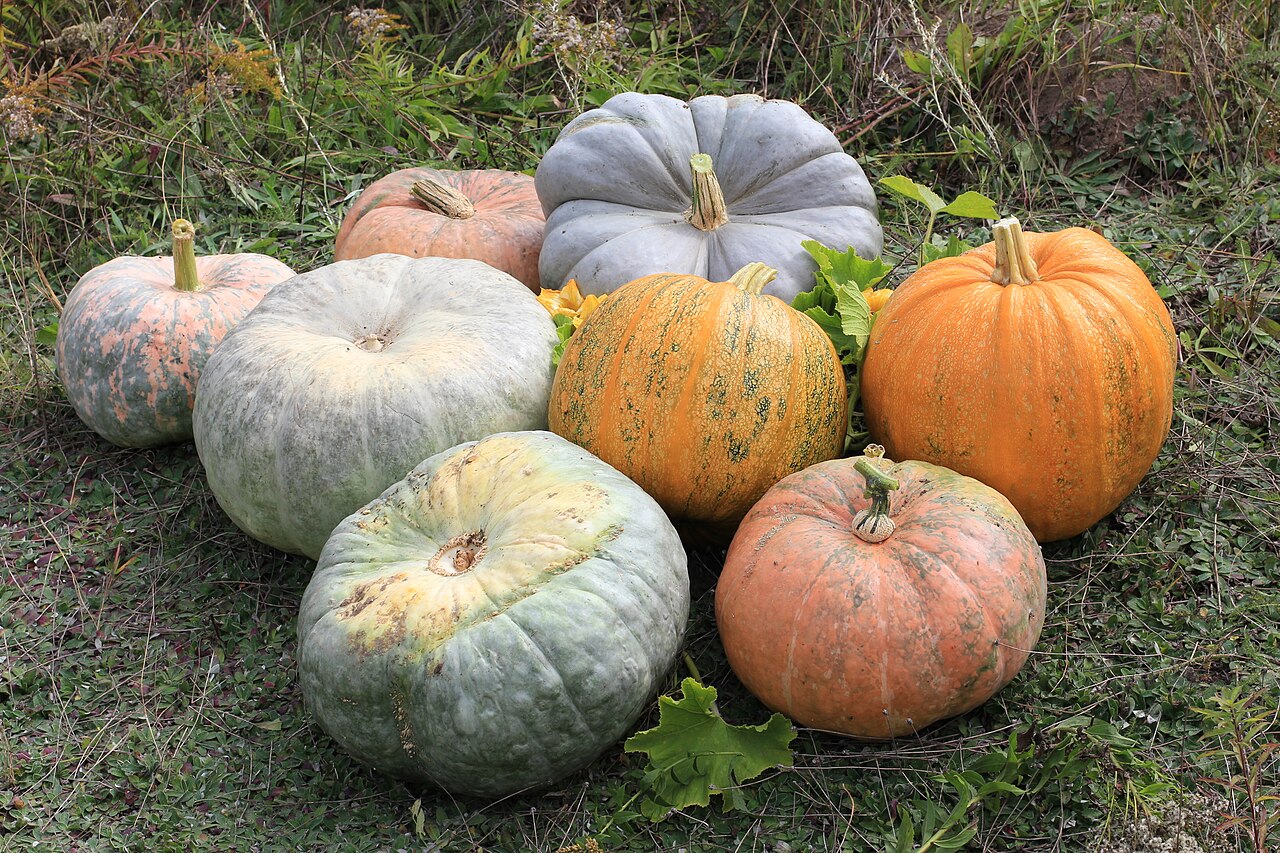
- Difficulty
- Easy
- Exhibition
- Sun, sheltered from wind
- Watering
- Copious at the base, once or twice a week in summer, without wetting the foliage.
- Floor
- Very rich, deep, warmed soil; a heap of mature compost or an old manure pile works wonders.
- Spacing
- 1.5 to 2 m each way for trailing types, 1 m for bush varieties.
- Harvest
- 100 to 130 days.
Calendar · Belgian climate
When to sow, plant and harvest
| Activity | Jan | Feb | Mar | Apr | May | Jun | Jul | Aug | Sep | Oct | Nov | Dec |
|---|---|---|---|---|---|---|---|---|---|---|---|---|
| Sowing under cover | yes | yes | ||||||||||
| Sowing in open ground | yes | |||||||||||
| Plantation | yes | yes | ||||||||||
| Harvest | yes | yes |
Step by step
1Sowing
Sow from mid-April to early May in 8 cm pots, indoors, at 20 °C, one seed per pot set on its edge 2 cm deep. Germination takes a week. Place the plants in full light so they do not become leggy. In open ground, a direct sowing after 15 May, in a station of two or three seeds under a cloche, succeeds in mild years.
2Planting out
Plant after the Ice Saints, in mild weather, using three-week-old plants with two true leaves. Dig a generous hole, add two spadefuls of mature compost, plant without burying the crown and water abundantly. Leave 1.5 to 2 m between plants. An old compost heap or the edge of a sunny hedge are perfect spots, which free up the vegetable garden.
3Caring
Mulch thickly from planting to keep the soil cool and keep the fruit off damp ground. Water at the base without wetting the leaves. For trailing types, pinch out the main stem after the fifth leaf, then the side branches two leaves beyond each fruit, and limit to three or four fruits per plant. Slip a tile or a small board under each fruit as soon as it starts to swell.
4Harvesting
Harvest from mid-September to mid-October, before the frosts, when the stalk is dry and corky, the foliage withered and the skin hard under a fingernail. Cut with secateurs, keeping 5 cm of stalk, and never carry the squash by it. Leave them to cure for about ten days in the sun or in a warm, airy room to harden the skin.
5Storing
Store the squashes on slatted shelves or paper, not touching, in a dry room between 12 and 18 °C, never in a damp cellar or the fridge. Red Kuri and butternut keep five to six months, red pumpkins two or three. Check once a month and cook first any fruit whose stalk is weakening. The cooked flesh freezes as purée.
Further reading
Planting and caring for plants properly
How to plant properly
Choosing the spot
Squashes need warmth, space and light: give them the sunniest spot in the garden, protected from cold winds by a hedge, a wall or a row of climbing beans. They take up three to four square metres per plant; rather than sacrificing a bed in the vegetable garden, set them on an old compost heap, at the foot of a composter, along a fence they will climb, or on a little-used lawn they will cover. Avoid damp hollows where cold air lingers in spring and shady corners, where the fruit never ripens.
Preparing the soil
Squash is the hungriest plant in the vegetable garden. For each plant, dig a hole 40 cm each way at the end of April, fill it with a mix of half soil and half mature compost or well-rotted manure, a good barrowload per position, and shape a slight mound that will warm up faster. In our clay soils, this mound also prevents the roots from suffocating during a wet June. Cover the mound with cardboard or black plastic a fortnight before planting to gain a few degrees. No chemical fertiliser is needed, the compost is more than enough.
Sowing at the right time
Sow between 15 April and 5 May, indoors, in 8 to 10 cm pots filled with potting compost. Push each seed in on its edge, point downwards, 2 cm deep, one per pot. At 20 °C, germination takes five to eight days. As soon as the seed leaves unfold, place the plants behind the brightest window or in the greenhouse, otherwise they become drawn within three days. An earlier sowing, in March, gives plants that are too large and fragile before they can be put outside. Direct sowing in stations after 15 May also works, but with a fortnight's delay.
Hardening off and planting
Put the pots outside by day for a week from 10 May, in light shade at first, then in sun, bringing them in at night. Plant after the Ice Saints, around 20 May, on a mild, overcast day, using three-week-old plants carrying two or three true leaves. Make a hole at the top of the mound, remove from the pot without breaking the root ball, set it in without burying the stem, and close up. Water three litres at the base, then place a cloche or a cut-down five-litre bottle over it for the first ten nights, which are often chilly here.
Spacing and training
Allow 1.5 to 2 m between plants for trailing pumpkins and Red Kuri, 1 m for bush varieties such as some spaghetti squashes or Jack Be Little. In a small garden, train the light-fruited varieties, Red Kuri or butternut, up a wire fence, a pergola or an old ladder: a two-kilo fruit can be supported by a string shopping bag. You can also direct the trailing stems by gently coiling the vines around the plant in a spiral as they grow. Plant at least three plants to ensure cross-pollination between male and female flowers.
In a container or on the balcony
On a terrace, only the small varieties are worth the trouble: Jack Be Little, Sweet Dumpling, Uchiki Kuri or bush spaghetti squash. You need a container of at least 50 litres per plant, filled with two thirds potting compost and one third garden compost, with wide drainage holes, placed facing due south against a wall. Let the plant trail or climb along the balustrade. Watering becomes daily in July-August, and a weekly liquid organic feed replaces the missing nourishing soil. Three or four fruits per plant is a fine target, not to be exceeded.
Beginner's mistakes
Sowing too early, in March, produces metre-long plants that languish on the windowsill. Planting in early May in soil at 10 °C halts growth for weeks. Burying the stem at planting causes the crown to rot. Forgetting that squashes of the Cucurbita pepo family, such as courgettes and patty pans, cross with each other has no consequence for this year's harvest, but makes any saved seed useless. Finally, planting ten plants in a hundred-square-metre garden is the most common mistake: three well-fed plants give a dozen fruits, plenty to get through the winter.
Look after it properly
Watering copiously at the base
A mature squash loses several litres a day through its leaves in August. Water abundantly, ten litres per plant, once or twice a week in the absence of rain, always at the crown and never on the leaves, at the end of the day. Deep, spaced-out watering is better than small daily amounts, which keep the roots near the surface. Foliage that droops in the heat of the day is normal if it perks up in the evening; if it is still wilted in the morning, the plant is thirsty. Reduce water from mid-September so that the fruit concentrates its sugars and hardens its skin.
Mulching and feeding
From planting, mulch generously, 8 to 10 cm deep, with straw, hay, dried grass clippings or wood chippings, over the whole area the vines will cover. This mulch keeps the soil cool, smothers weeds under foliage that makes hoeing impossible, and above all keeps the fruit off damp ground. A squash fed with compost at planting then needs only comfrey liquid diluted to 10 % every fortnight from July to the end of August, rich in potash for swelling. Excess nitrogen would give enormous leaves and few fruits.
Pinching out and limiting
On trailing types, pinch out the main stem above the fifth leaf when it reaches 60 cm: two or three side branches will develop, carrying the female flowers. Then, as soon as a fruit has set and is the size of a fist, cut its stem two leaves beyond. Limit to three fruits per plant for large pumpkins, four to six for Red Kuri and butternut, and remove late fruit set after mid-August, which will not have time to ripen and will weaken the others. Bush varieties need no pruning at all. Place a tile or a small board under each fruit as soon as it forms.
Preventing diseases and pests
Powdery mildew arrives almost every year at the end of August, felting the leaves in white: space the plants out, water at the base, and spray at the first symptoms with skimmed milk diluted to 10 % or a tablespoon of bicarbonate of soda per litre of water, once a week. After mid-September, let it be, the fruit is formed. Slugs devour young plants: a cloche for the first few weeks, evening collection, well-developed plants. In cold, wet weather in June, the female flowers abort for lack of pollinators: hand-pollinate in the morning with a male flower stripped of its petals, rubbing it on the stigma.
Through the season
Late April, sowing indoors and preparing the compost mounds. Around 20 May, planting under cloches and mulching. June, pinching out the main stem, watching for slugs, hand pollination if the weather is dull. July, guiding the vines, pinching beyond the fruit, first comfrey liquid. August, tiles under the fruit, limiting to three or four fruits, copious watering, dealing with powdery mildew. Early September, stopping the liquid feeds, reducing water, removing leaves that shade the fruit so it colours up. Late September to mid-October, harvest before the first forecast frost.
Harvesting and extending the season
A squash is ripe when its stalk is dry and corky, its skin resists a fingernail and sounds hollow, and the foliage yellows. Here, that falls between mid-September and mid-October; never wait for a frost, even a light one, which compromises storage. Cut with secateurs, keeping 5 to 8 cm of stalk, and handle the fruit like an egg, never carrying it by the stalk. Then leave the squashes ten to fifteen days in the sun or in a conservatory, between 20 and 25 °C, so they heal over and harden their skin. A fruit that has dropped before ripening should be eaten within the month.
Obtaining seeds or seedlings
Seeds and seedlings: where to find them
A selection of reputable seed suppliers that deliver to your country, listed in order of proximity. Evadya does not receive any commission: these are suppliers we recommend for their reliability.
Semailles
For Belgian artisan seed producer, organic and reproducible seeds, over 250 regional varieties, a planting calendar tailored to the Belgian climate.
Against Small organisation: limited range of hybrid varieties and possible stock shortages during peak season.
Search for ‘winter squash and pumpkins’ on SemaillesKokopelli
For Europe’s largest collection of heirloom, organic and open-pollinated varieties; comprehensive growing guides.
Against No hybrids or seedlings; delivery times can sometimes be long during peak season; prices are slightly higher.
View the shopFerme de Sainte Marthe
For A long-established organic seed supplier, offering seeds and young plants, heirloom varieties, and nutrition and recipe guides.
Against Dispatched from the Loire: postage charges to Belgium and Switzerland; plants are fragile in transit.
Search for ‘winter squash and pumpkins’ on Ferme de Sainte MartheGraines Baumaux
For A vast selection (over 500 tomato varieties), with high-yielding F1 hybrids and heirloom varieties side by side, and plants available in season.
Against Not much organic produce; an old site; catalogue entries rather than growing guides.
Search for ‘winter squash and pumpkins’ on Graines BaumauxVreeken’s Zaden
For A very wide range of Dutch products, competitive prices, and numerous varieties suited to the Benelux climate.
Against Website in Dutch only; limited selection of organic produce.
Search for ‘winter squash and pumpkins’ on Vreeken’s ZadenDe Bolster
For Dutch organic seed producer, seeds suitable for propagation, a good selection for cool climates.
Against A shorter catalogue; website in Dutch.
Search for ‘winter squash and pumpkins’ on De BolsterZollinger Bio
For Swiss organic seeds, varieties suited to high altitudes and microclimates, and a unique phenological calendar.
Against Swiss prices and customs charges from the European Union.
Search for ‘winter squash and pumpkins’ on Zollinger BioBingenheimer Saatgut
For A leading German name in organic and biodynamic produce, offering open-pollinated varieties selected for the home gardener.
Against Website in German; delivery charges apply outside Germany.
Search for ‘winter squash and pumpkins’ on Bingenheimer SaatgutDreschflegel
For A collective of organic growers, specialising in rare and regional varieties, and the preservation of traditional farm seeds.
Against Small quantities; a catalogue that’s more activist than practical; website in German.
Search for ‘winter squash and pumpkins’ on DreschflegelFrom the vegetable patch to the plate
And then we savour it
What it offers
Flesh rich in beta-carotene, fibre and potassium, sweet and low in calories.
In the kitchen, it’s simple
Red Kuri velouté with nutmeg, unpeeled, or diced butternut roasted in the oven with thyme and a drizzle of honey, alongside a Sunday roast.
Living well
Lining up your squashes on the windowsill in October is decorating the house with the pride of a successful season.
Also worth a look
Other vegetables
Tomato
Solanum lycopersicum
Courgette
Cucurbita pepo
Cucumber
Cucumis sativus
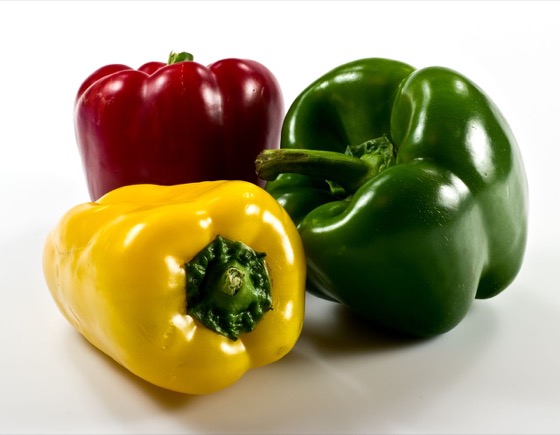
Sweet pepper
Capsicum annuum