soft fruit · Rosacées
BlackberryRubus fruticosus
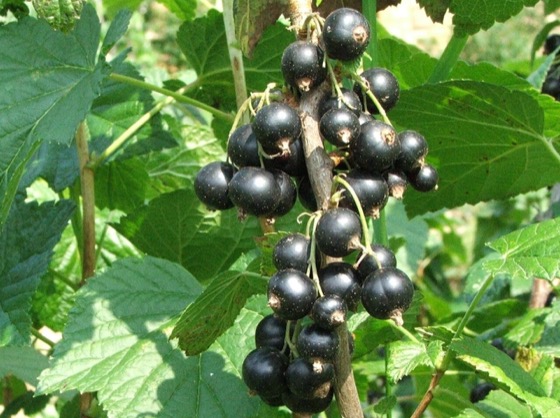
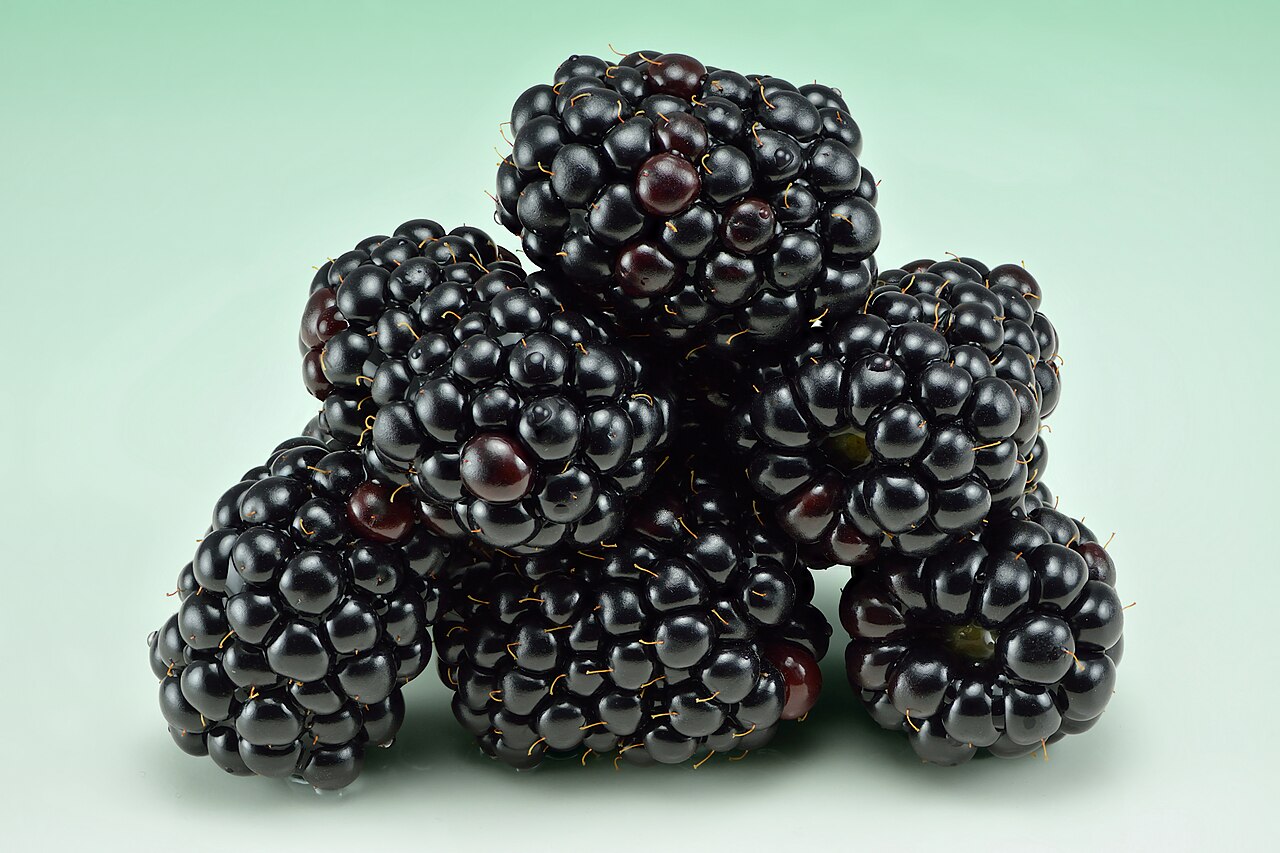
The garden blackberry, thornless and far larger than its cousin in the hedgerows, produces kilos of black, juicy fruit at the end of summer without any effort. Trained on a wire, it clothes a wall or a fence, and asks only for an annual pruning that anyone can manage.
- Difficulty
- Easy
- Exhibition
- Sun or partial shade
- Watering
- Regular in summer; copes well with drought once established
- Floor
- Any ordinary soil, moist, drained, enriched with compost
- Spacing
- 2 to 3 m between plants
- Harvest
- First harvest the year after planting, full production from the 3rd year
Calendar · Belgian climate
When to sow, plant and harvest
| Activity | Jan | Feb | Mar | Apr | May | Jun | Jul | Aug | Sep | Oct | Nov | Dec |
|---|---|---|---|---|---|---|---|---|---|---|---|---|
| Plantation | yes | yes | yes | yes | yes | |||||||
| Harvest | yes | yes |
Step by step
1Choosing
Prefer a thornless variety, such as Thornfree, Loch Ness or Chester, where picking and pruning are done without gloves. Navaho grows upright and suits small spaces. Thornless varieties are a little later than thorned ones, but in Belgium they still ripen in August and September. Hybrids such as the Tayberry, a cross between blackberry and raspberry, bring a different fragrance. All are self-fertile; a single plant is enough.
2Planting
Plant from November to March, outside frosty spells, or in spring from a container, in ordinary soil loosened and enriched with compost. Allow 2 to 3 m between plants, as a mature blackberry is vigorous. Put up three horizontal wires at 50 cm, 1 m and 1.5 m on sturdy posts or along a wall. Cut the stem back to 30 cm after planting and mulch thickly to keep the soil cool.
3Caring
The blackberry fruits on the previous year's canes. Train the current year's young shoots on one side of the support and the fruiting canes on the other: pruning then becomes perfectly clear. After the harvest, cut down to ground level the canes that have produced. In February, shorten the side shoots to 30 cm. Water in dry spells while the fruit swells. Watch the tips that touch the ground, as they root straight away.
4Harvesting
The blackberry is ready when it is black, glossy and then slightly matt, and comes away without effort along with its core. Unlike the raspberry, it does not separate from it, and the core is edible. Pick every two or three days from August to October, in dry weather, in the morning. Red fruit does not ripen after picking. Wear a hat: wasps are just as fond of well-ripened blackberries.
5Storing
The blackberry keeps two to three days in a cool place, longer if picked firm. It freezes very well, spread flat then bagged, and gives intense jams, jellies and coulis. The classic blackberry and apple jelly sets by itself thanks to the pectin in the apples. A blackberry vinegar, or a syrup, keeps the flavour of the last fine days all year round.
Further reading
Planting and caring for plants properly
How to plant properly
Choosing the variety to suit the space
Garden blackberries fall into two habits. Trailing varieties, Thornfree, Chester, Loch Ness or Black Satin, throw out canes of 3 to 4 m that need training and 2.5 to 3 m between plants. Upright or semi-upright varieties, Navaho, Ouachita or Loch Tay, stay more compact, hold on two wires and make do with 1.5 m. For a fence or a wall, the trailing type gives the biggest yield; for a border or a hedge, take an upright one. Hybrids such as Tayberry or Loganberry are managed like a trailing blackberry and ripen in July. A single plant is enough.
Choosing the spot and the support
The blackberry accepts partial shade but gives sweeter fruit in the sun, against a fence facing south or west, or on a row in the vegetable garden. Avoid windy spots that break the young canes, and the neighbourhood of old raspberry or potato plantings, which share its root diseases. Plan the support before planting: two posts 2 m tall driven in 50 cm, 3 m apart, with three galvanised wires stretched at 60 cm, 1.20 m and 1.70 m. Against a wall, wires on vine eyes set 40 cm from the wall let the air circulate and limit grey mould.
Preparing the soil
The blackberry makes do with ordinary soil but produces for a long time in the same place: give it a good start. Dig a hole 50 cm each way, loosen the bottom and work in two spadefuls of mature compost and a handful of hoof and horn. On clay soil, add coarse sand and raise the planting by a few centimetres; on sandy soil, be generous with the compost and plan a thick mulch. Weed out perennials thoroughly, as it will be hard to work under the canes later. A pH of 6 to 7 is perfect, with no liming.
Planting and cutting back
Bare-rooted, plant from November to March outside frosty spells, after soaking the roots; from a container, up to May. Set the crown level with the soil, 30 cm from the foot of the support, spreading the roots well. Fill in, firm, water with ten litres. Then cut the stem or stems back to 25 or 30 cm: in spring the plant will send up vigorous new canes, far more productive than the original stem. Mulch 10 cm deep with wood chippings or straw. In the first year, guide the canes onto the wires as they grow so they do not flop.
In a pot or container
An upright, compact variety such as Navaho, Loch Tay or the dwarf Little Black Prince thrives in a 50-litre container on a sunny terrace, with a fan-shaped stake or a small trellis. Fill with a mix of potting compost, garden soil and compost, over a drainage layer. Water regularly from May to September, never letting it dry out while the fruit ripens, and give a complete organic fertiliser in April. Train three or four canes per container, cut to the ground after fruiting. Repot every two or three years, trimming the rootball.
Beginner's mistakes
The first is underestimating the vigour: a Thornfree a metre from a path takes over everything, and its canes that touch the ground root within a season. Plan the space and the support before planting, not afterwards. The second is not cutting the plant back, which gives a single, thin stem. You also see blackberries planted on the north side of a wall, where the fruit stays sour and ripens in October. Finally, forgetting which cane has fruited and cutting the wrong ones in winter wipes out the harvest: train the young shoots on one side and the fruiting canes on the other.
Look after it properly
Watering in the first years
The blackberry is the most drought-resistant of the soft fruits thanks to its deep roots, but a one- or two-year-old plant does not yet have that advantage: water every week in dry weather, ten litres at the base, from April to September. Once mature, it only asks for water from July to the end of the harvest, while the fruit swells: without watering in a dry year, the blackberries stay small and go hard. Water at the base, never over the foliage, so as not to encourage grey mould. A drip line under the mulch is the simplest solution along a row.
Mulching and feeding
A permanent mulch 10 cm deep of wood chippings, straw or hay does away with the chore of weeding under the canes and keeps the soil cool in August. Every spring, in March, spread two spadefuls of mature compost per plant under the mulch and a handful of wood ash for potash. The blackberry stays modest in its needs: an excess of manure or nitrogen produces canes five metres long, soft and prone to disease. Diluted comfrey liquid in June, rich in potash, helps the fruit to swell. No feeding after July.
Training and pruning
The blackberry fruits on the previous year's canes. Adopt alternate training: in May, tie the current year's new shoots to one side of the support, or gather them in a bundle in the middle, while the fruiting canes occupy the other side in a fan. As soon as the harvest ends, in September, cut down to ground level the canes that have produced and spread the young ones in their place. In February, shorten each cane you have kept to 2.5 m and its side shoots to 30 cm, that is eight to ten buds. Keep six to eight canes per plant, no more. Remove suckers that stray from the row.
Preventing diseases and pests
The thornless blackberry is sturdy; its main trouble is grey mould in a wet summer, which is prevented by open training, watering at the base and picking ripe or damaged fruit regularly. Rust, as orange pustules under the leaves, is limited by cutting out the old canes as soon as the harvest ends and gathering up fallen leaves. Drosophila suzukii attacks ripe fruit from August to October: harvest every two days, leave nothing to rot on the ground, and cover the late varieties with a fine mesh net. Birds often make do with wild blackberries, but a net is still useful.
Through the season
In February, prune the canes you have kept and their side shoots, then apply compost and ash. In April, renew the mulch. In May and June, train the young shoots as they grow, before they flop or root. In July, water in dry weather and lay a net if need be. From August to October, pick every two or three days. In September, as soon as the harvest ends, cut out the spent canes and spread the new ones along the wires. In the Ardenne, cover the canes with a fleece in December in severe cold or tie them in a bundle at the foot of the support.
Harvesting and storing
The blackberry goes from red to glossy black, then to a slightly matt black: it is at that matt stage, a day or two after the gloss, that it is really sweet and comes away without effort. Pick in the morning, in dry weather, into a shallow container, as the fruit underneath is crushed by its own weight. A blackberry picked wet goes mouldy within a day. In the fridge, count on two to three days; in the freezer, spread on a tray first. The last blackberries of October, small and sharp, are perfect in a blackberry and apple jelly that sets on its own.
Obtaining seeds or seedlings
Seeds and seedlings: where to find them
A selection of reputable seed suppliers that deliver to your country, listed in order of proximity. Evadya does not receive any commission: these are suppliers we recommend for their reliability.
Semailles
For Belgian artisan seed producer, organic and reproducible seeds, over 250 regional varieties, a planting calendar tailored to the Belgian climate.
Against Small organisation: limited range of hybrid varieties and possible stock shortages during peak season.
Search for ‘blackberry’ on SemaillesFerme de Sainte Marthe
For A long-established organic seed supplier, offering seeds and young plants, heirloom varieties, and nutrition and recipe guides.
Against Dispatched from the Loire: postage charges to Belgium and Switzerland; plants are fragile in transit.
Search for ‘blackberry’ on Ferme de Sainte MartheVreeken’s Zaden
For A very wide range of Dutch products, competitive prices, and numerous varieties suited to the Benelux climate.
Against Website in Dutch only; limited selection of organic produce.
Search for ‘blackberry’ on Vreeken’s ZadenFrom the vegetable patch to the plate
And then we savour it
What it offers
The blackberry provides fibre, vitamin C, vitamin K and anthocyanins, for very few calories.
In the kitchen, it’s simple
A blackberry and apple crumble, or simply warm blackberries from the garden over a scoop of vanilla ice cream, sums up the end of summer.
Living well
Picking blackberries in the garden without getting scratched is the pleasure of holiday lanes rediscovered, only better.
Also worth a look