legume · Fabacées
Broad beanVicia faba
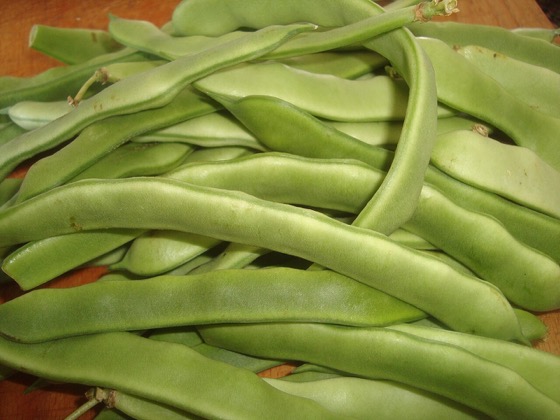
Robust and unfussy, the broad bean is the first legume to occupy the vegetable garden at the end of winter. Its black and white flowers fill the air with scent in April, its velvety pods arrive in June. An ancient vegetable making a strong comeback, tender and delicate when picked young.
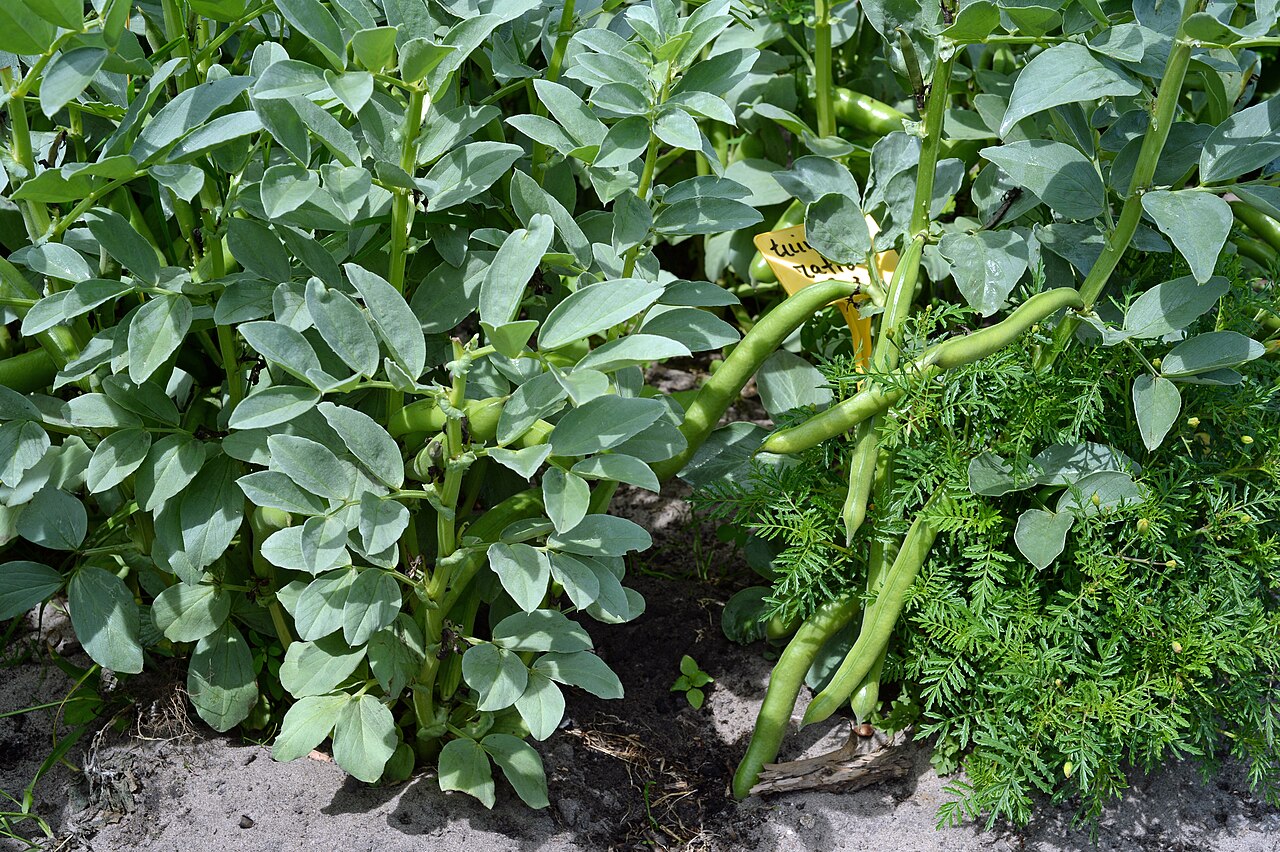
- Difficulty
- Easy
- Exhibition
- Sun or partial shade
- Watering
- Moderate, more sustained at flowering if the spring is dry
- Floor
- Deep, moisture-retentive, clay or loam, tolerates heavy soils
- Spacing
- 10 to 15 cm along the row, 40 cm between rows
- Harvest
- 90 to 120 days after a spring sowing
Calendar · Belgian climate
When to sow, plant and harvest
| Activity | Jan | Feb | Mar | Apr | May | Jun | Jul | Aug | Sep | Oct | Nov | Dec |
|---|---|---|---|---|---|---|---|---|---|---|---|---|
| Sowing in open ground | yes | yes | yes | yes | yes | |||||||
| Harvest | yes | yes |
Step by step
1Sowing
Sow directly in place from mid-February to April, as soon as the ground can be worked, or in October-November to overwinter in our mild climate. Push the large seeds in five centimetres deep, every ten to fifteen centimetres, in single or double rows forty centimetres apart. Germination takes two to three weeks in cool weather. Soaking overnight speeds it up. Protect from crows with netting.
2Planting out
The broad bean is sown in place and needs no transplanting, but a sowing in pots under cold cover in late January, planted out in late February, gets around rodents and waterlogged soils. In that case, plant the young plants without breaking the root ball, at the same depth, in loosened soil with no fresh manure. Put posts at the ends of the rows from the start so you can stretch a supporting string later on.
3Caring
Hoe between the rows and earth up the plants when they reach twenty centimetres, to anchor them against wind. Stretch one or two strings along the rows; stems heavy with pods flop over easily. Water only during a prolonged dry spell, especially at flowering. As soon as the first pods form, pinch out the tips of the stems: this speeds up ripening and deprives black aphids of their favourite part.
4Harvesting
Harvest from June to July, starting with the lowest pods. To eat them whole, pick them very young, at seven or eight centimetres. For fresh beans, wait until the pods are plump but still green and supple, with beans the size of a fingernail. Overripe, they turn floury. Snap the pods off with a sharp downward tug. Leave the roots in the ground after the crop.
5Storing
Fresh broad beans in the pod keep for three days in a cool place. Shelled and skinned after a one-minute blanching, they freeze perfectly and keep their sweetness. For dried beans, let the pods ripen and dry on the plant, shell them, then dry the beans for another week before storing them in an airtight jar safe from bean weevils, possibly after three days in the freezer.
Further reading
Planting and caring for plants properly
How to plant properly
Choosing the spot
The broad bean is undemanding about light and warmth: a sunny or lightly shaded bed suits it, and it particularly likes the heavy clay or loam soils so common in Belgium. What it fears is wind, which flattens its tall stems laden with pods: place it in the shelter of a hedge or wall, or plan a support. It is perfect for opening up a new plot, improves the soil for the next vegetable and gets on well with potatoes. Do not put it back in the same place for three or four years, and keep it away from onions.
Preparing the soil
The broad bean tolerates heavy soils, but it wants ground loosened deeply for its taproots. Loosen with a broadfork in autumn to twenty-five centimetres, without turning, and work in a shovelful of mature compost per square metre. No nitrogen feed is of any use, as the plant fixes its own nitrogen, but it likes slightly chalky soil: in acidic ground, a handful of wood ash or lime per square metre in autumn helps. For a February sowing, cover the bed with fleece or cardboard a fortnight beforehand so the soil is drained and workable.
Sowing at the right time
Two possible windows in Belgium. The spring sowing, between 15 February and the end of March as soon as the ground is no longer sodden, remains the safest everywhere. The autumn sowing, from 20 October to 15 November, with a hardy variety such as Aguadulce, overwinters without trouble in Flanders, Brabant and Hainaut, and gives a harvest three weeks earlier that beats the black aphids; it is riskier in the Ardennes. Sow five centimetres deep, one seed every ten to fifteen centimetres, in double rows twenty centimetres apart, with sixty centimetres between the pairs.
Pricking out and planting
The broad bean tolerates transplanting surprisingly well when young. If your soil stays sodden in February or if crows and voles are raiding the rows, sow in seven-centimetre pots under cold cover in late January, one seed per pot, and plant out the ten-centimetre plants in late February or early March, without breaking the root ball, at the same spacing as a direct sowing. Firm well around the base. This method is also ideal for filling gaps in a direct-sown row. Drive in the support posts at the ends of the rows at planting, rather than damaging the roots later.
In pots or containers
The broad bean does well in a deep container on a cool balcony, provided you choose a dwarf variety such as The Sutton, which stays under fifty centimetres. Allow a thirty-litre container thirty centimetres deep for eight to ten plants, ordinary potting compost without fertiliser, and sow from February, or in November on a sheltered balcony. Water moderately until flowering, then regularly. Place the container out of the wind or run a string around it. The harvest is more of a pleasure than a store, but the scented flowers and the bees that visit them already justify the space.
Beginner's mistakes
Sowing in waterlogged ground, where the large seeds rot. Waiting until April, which hands the tender tips to the black aphids right at flowering. Sowing too close or in single rows without support, then finding the stems flattened after a May storm. Feeding with manure or nitrogen fertiliser, to no purpose. Forgetting to pinch out the tips as soon as the first pods appear. Harvesting too late, with floury, thick-skinned beans in the pods. Pulling up the plants at the end instead of cutting them at the neck. Letting the crows dig up the seeds for want of a net in the first two weeks.
Look after it properly
Watering properly
Sown in February or November, the broad bean finds all it needs in Belgian rain until April, and its deep roots go looking for water. The only critical period is flowering and pod filling, from mid-April to June: if the spring is dry, water generously once or twice a week then, ten litres per metre of row, at the base. A shortage of water at this stage makes the flowers drop. Do not wet the foliage; rust and botrytis develop on damp leaves. Once harvesting begins, stop watering altogether.
Mulching and feeding
Like all legumes, the broad bean makes its own nitrogen and needs no fertiliser; feeding it would make the growth soft and more attractive to aphids. Mulch from mid-April, when the plants are twenty centimetres tall and the soil has warmed up, with five centimetres of dried grass clippings, leaves or straw: cool soil prolongs flowering and reduces watering in May. After harvesting, cut the stems at ground level and leave the roots in the soil; their nodules release nitrogen for the leeks, cabbages or turnips that follow from July.
Earthing up, supporting, pinching
When the plants reach twenty centimetres, hoe and earth them up by five centimetres to anchor them. Tall varieties exceed a metre and flop under the weight of the pods: drive in a post every two metres on each side of the row and stretch two strings, at forty and eighty centimetres, to hold the stems. As soon as the first pods form at the bottom, usually in early May, pinch out the top five to ten centimetres of each stem. This concentrates the sap on the pods, brings the harvest forward by ten days and removes the tender part that black aphids colonise first.
Preventing diseases and pests
The black aphid is the enemy in May: early sowing and pinching out the tips deal with most of it. Add a spray of soft soap diluted to 5 % on the colonies, and let ladybirds and hoverflies do their work, drawn in by a few simple flowers nearby. Against crows and voles, a net over the sowing for the first two weeks. Rust appears at the end of the crop in damp weather as orange pustules: space well, do not wet the leaves, and pull up affected plants after harvest without composting them. Chocolate spots on the foliage are a botrytis encouraged by damp and a lack of potash.
Through the season
Late October or November: autumn sowing in mild areas. Late January: sowing in pots under cold cover. Mid-February to March: spring sowing in place, crow netting, posts at the row ends. April: earthing up, support strings, mulching, scented flowering. Early May: pinching out the tips as soon as the first pods appear, watching for aphids, watering if the spring is dry. June: harvest from the bottom up, every three or four days. Early July: end of harvest, cutting at the neck, next crop on the enriched bed. August: sorting and drying seed for next year, three days in the freezer against bean weevils.
Harvesting and extending the season
Harvest from the bottom up, in two or three passes a few days apart. For broad beans to crunch whole, pick the pods at seven or eight centimetres. For the beans, wait until the pod is plump but supple, still green and glossy, with beans the size of a fingernail whose scar is still white or green; black, it signals a floury bean. Snap the pod off with a sharp downward tug. To spread the harvest, combine an autumn sowing with two spring sowings three weeks apart. The last pods, left to dry on the plant, provide next year's seed.
Obtaining seeds or seedlings
Seeds and seedlings: where to find them
A selection of reputable seed suppliers that deliver to your country, listed in order of proximity. Evadya does not receive any commission: these are suppliers we recommend for their reliability.
Semailles
For Belgian artisan seed producer, organic and reproducible seeds, over 250 regional varieties, a planting calendar tailored to the Belgian climate.
Against Small organisation: limited range of hybrid varieties and possible stock shortages during peak season.
Search for ‘broad bean’ on SemaillesKokopelli
For Europe’s largest collection of heirloom, organic and open-pollinated varieties; comprehensive growing guides.
Against No hybrids or seedlings; delivery times can sometimes be long during peak season; prices are slightly higher.
View the shopFerme de Sainte Marthe
For A long-established organic seed supplier, offering seeds and young plants, heirloom varieties, and nutrition and recipe guides.
Against Dispatched from the Loire: postage charges to Belgium and Switzerland; plants are fragile in transit.
Search for ‘broad bean’ on Ferme de Sainte MartheGraines Baumaux
For A vast selection (over 500 tomato varieties), with high-yielding F1 hybrids and heirloom varieties side by side, and plants available in season.
Against Not much organic produce; an old site; catalogue entries rather than growing guides.
Search for ‘broad bean’ on Graines BaumauxVreeken’s Zaden
For A very wide range of Dutch products, competitive prices, and numerous varieties suited to the Benelux climate.
Against Website in Dutch only; limited selection of organic produce.
Search for ‘broad bean’ on Vreeken’s ZadenDe Bolster
For Dutch organic seed producer, seeds suitable for propagation, a good selection for cool climates.
Against A shorter catalogue; website in Dutch.
Search for ‘broad bean’ on De BolsterZollinger Bio
For Swiss organic seeds, varieties suited to high altitudes and microclimates, and a unique phenological calendar.
Against Swiss prices and customs charges from the European Union.
Search for ‘broad bean’ on Zollinger BioBingenheimer Saatgut
For A leading German name in organic and biodynamic produce, offering open-pollinated varieties selected for the home gardener.
Against Website in German; delivery charges apply outside Germany.
Search for ‘broad bean’ on Bingenheimer SaatgutDreschflegel
For A collective of organic growers, specialising in rare and regional varieties, and the preservation of traditional farm seeds.
Against Small quantities; a catalogue that’s more activist than practical; website in German.
Search for ‘broad bean’ on DreschflegelFrom the vegetable patch to the plate
And then we savour it
What it offers
The fresh broad bean is rich in plant protein, fibre, vitamin B9 and iron. It keeps you full for a long time for a moderate calorie intake.
In the kitchen, it’s simple
Shelled, blanched and skinned, young broad beans are eaten raw with a pinch of salt and a piece of goat's cheese, or crushed on toasted bread with mint.
Living well
The scent of broad beans in flower on an April morning is the first sign that the vegetable garden is coming back to life after winter.
Also worth a look