legume · Fabacées
French bean (dwarf bean)Phaseolus vulgaris
The dwarf bean is a safe bet: sown directly into the ground as soon as the soil is warm, it produces fine, crunchy pods within two months. By staggering sowings until mid-July, you harvest without a break from July to October, and the soil comes out of it enriched with nitrogen.
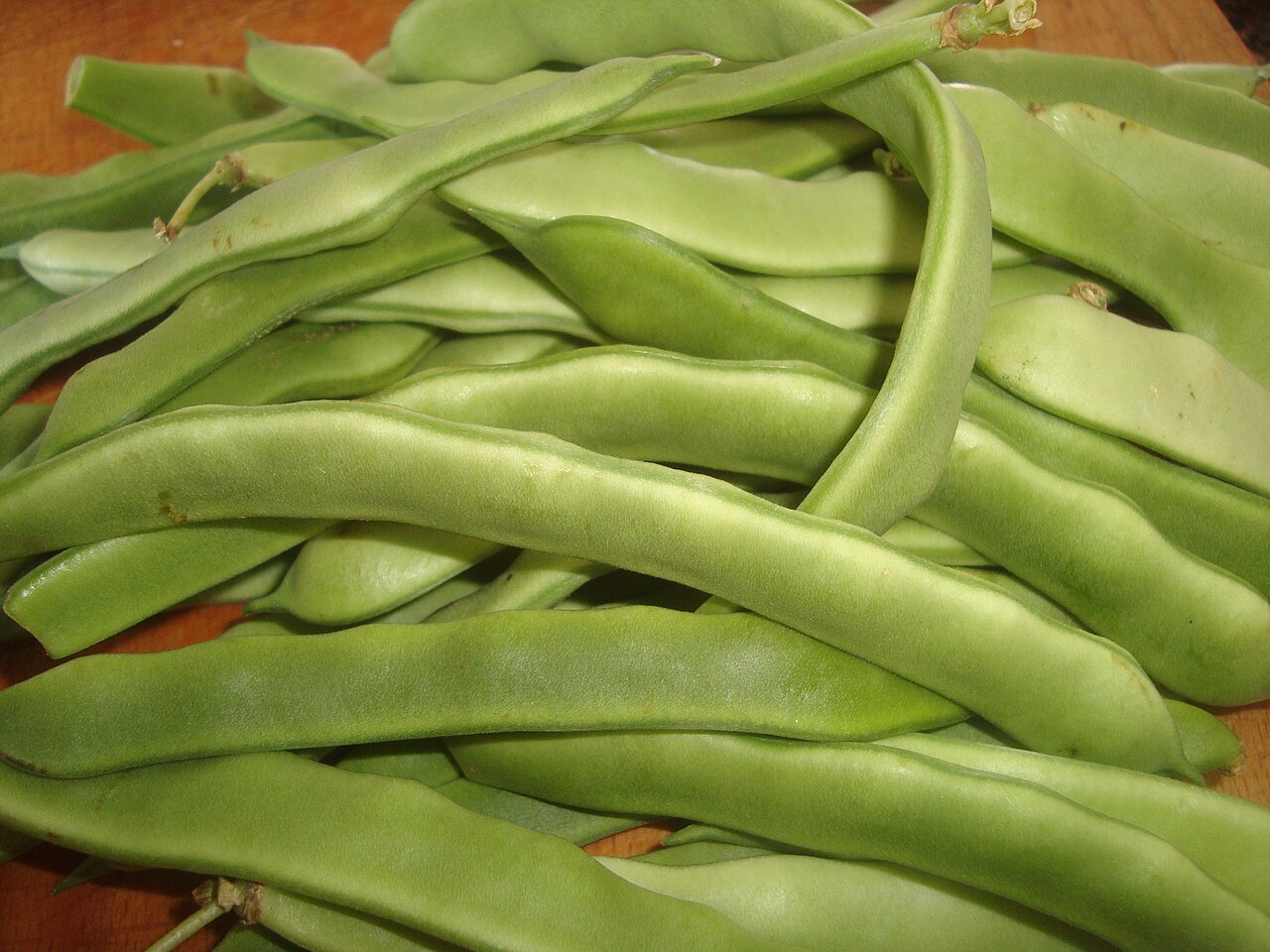
- Difficulty
- Easy
- Exhibition
- Full sun
- Watering
- Moderate until flowering, then regular, at the base
- Floor
- Light, loose, warmed through, no fresh manure
- Spacing
- Stations every 40 cm, rows 50 cm apart
- Harvest
- 55 to 70 days after sowing
Calendar · Belgian climate
When to sow, plant and harvest
| Activity | Jan | Feb | Mar | Apr | May | Jun | Jul | Aug | Sep | Oct | Nov | Dec |
|---|---|---|---|---|---|---|---|---|---|---|---|---|
| Sowing in open ground | yes | yes | yes | |||||||||
| Harvest | yes | yes | yes | yes |
Step by step
1Sowing
Sow outdoors from mid-May, once the soil has warmed up, and repeat every two or three weeks until mid-July. Sow in stations of five or six seeds spaced forty centimetres apart, three centimetres deep, or in a row, one seed every eight centimetres. Soaking the seeds for a few hours speeds up germination, which takes a week to ten days. Protect the sowings from pigeons and slugs with netting or a cloche.
2Planting out
Beans are sown in place and transplant badly, but a sowing in pots under cover in late April, planted out in mid-May, gains a fortnight and escapes the slugs. In that case, plant the whole root ball without untangling the roots, in loosened soil free of fresh manure: too much nitrogen gives foliage at the expense of pods. Water and earth up lightly when the plants reach fifteen centimetres.
3Caring
Hoe and weed regularly between the rows, then earth up the plants lightly to steady them and encourage rooting. Water moderately until flowering, then more generously once the pods form, always at the base: wetting the foliage encourages disease. A light mulch keeps the soil cool. Beans need no fertiliser; they fix nitrogen from the air themselves thanks to the nodules on their roots.
4Harvesting
Harvest the pods young and slender, before the seeds start to show, about two months after sowing. Go round every two or three days, preferably in the morning when the pods are crisp. Hold the stem with one hand and pinch off the pod with the other so as not to uproot the plant. Regular picking extends production over three to four weeks per sowing. Forgotten pods can be left to mature for dried beans.
5Storing
Freshly picked, beans keep for three or four days in the fridge in a damp cloth. For winter, freezing is the simplest method: top and tail, blanch for three minutes in boiling water, cool in iced water, dry and freeze flat before bagging. Sterilising in jars works well too. Lacto-fermentation gives crunchy, tangy beans.
Further reading
Planting and caring for plants properly
How to plant properly
Choosing the spot
The dwarf bean likes full sun, in a corner that warms up fast and where the air moves to dry the foliage quickly after rain. Avoid cold hollows and the shade cast by hedges or rows of potatoes. It is happy to follow a hungry vegetable, cabbage, squash or leek, that has left the soil clean and depleted in nitrogen: it fixes its own thanks to its roots. Do not put it near onions, garlic or leeks, with which it gets on badly, and wait three years before putting it back in the same place.
Preparing the soil
Beans need loose, warmed soil with no fresh manure. In April, loosen the bed with a broadfork, break up the clods and rake to a fine tilth. Very mature compost, a shovelful per square metre, is more than enough; too much fresh organic matter gives exuberant foliage and few pods. In Belgian clay soils, which stay cold and sticky in May, sow on a slightly raised bed lightened with sand, or cover the soil with fleece or black film ten days before sowing to gain the few degrees that decide whether the seed comes up.
Sowing at the right time
The rule in Belgium: not before 15 May outdoors, and only if the soil is above 12 °C, which a kitchen thermometer pushed five centimetres into the ground in the morning will tell you. In cold, wet soil, the seed rots within a week. Then sow every fortnight until 15 July: each sowing gives three to four weeks of harvest, and staggering ensures continuous picking until October. Sow on the morning of a mild day, in drills three centimetres deep, one seed every eight centimetres or in stations of five seeds every forty. Soak the seed for a few hours only, never a whole night.
Pricking out and planting
A sowing in pots or module trays under cold cover around 25 April, planted out on 15 May at three or four leaves, offers two valuable advantages: a fortnight's head start and plants too big for slugs to raze. Sow three seeds per pot and plant the whole clump, without separating, every thirty centimetres, with the neck at soil level. Water at planting and then wait: beans do not like wet feet when they start off. This method is also handy for filling a gap in a direct-sown row where a few seeds have failed.
In pots or containers
The dwarf bean is one of the easiest vegetables to grow on a sunny balcony. A trough forty centimetres long and twenty-five deep, around twenty litres, takes six to eight plants and gives two or three pickings of a couple of handfuls. Use ordinary potting compost with a little garden compost added, no nitrogen feed, and sow directly in place in late May, two seeds every ten centimetres. Water regularly from flowering, as the compost dries out quickly in July. A second sowing in a second trough three weeks later keeps things going. Climbing varieties in pots need a sturdy support and twice the volume.
Beginner's mistakes
Sowing in early May after three days of fine weather, and watching the seeds rot or come up patchily. Sowing everything at once and harvesting ten kilos in a fortnight, then nothing. Enriching generously with manure and harvesting leaves. Watering abundantly from sowing, which rots the seed and attracts slugs. Forgetting the net against pigeons, which dig up the seeds and snip off the seed leaves. Sowing too deep in heavy soil. Not collecting slugs in the evening after sowing. Handling wet plants, which spreads anthracnose and rust from row to row.
Look after it properly
Watering properly
Until flowering, beans get by almost entirely on rain: a watering every eight or ten days in dry weather is enough, as the roots go down in search of water. Once the flowers appear, and especially while the pods are swelling, water generously, five to eight litres per metre of row twice a week, at the base and in the morning. A shortage of water at this stage aborts the flowers and gives stringy pods. Never wet the foliage, as moisture on the leaves spreads disease, and do not work between the rows while they are wet.
Mulching and feeding
No fertiliser is needed: the root nodules fix nitrogen from the air, and soil that is too rich harms the harvest. At most, you can add a little mature compost at sowing in poor soil. Once the plants are fifteen centimetres tall and earthed up, spread a light mulch of dried grass clippings or chopped straw four to five centimetres deep: it keeps the soil cool in July, limits weeding and stops soil splashing onto the pods. Do not mulch any earlier; slugs hide in it and the soil would stay cold.
Hoeing, earthing up, supporting
Hoe for the first time as soon as the plants have two true leaves, shallowly so as not to damage the roots, then earth up lightly when they reach fifteen centimetres: draw three or four centimetres of soil around the stems. This earthing up anchors the plants against wind, encourages new roots and keeps the pods off the ground. A second hoeing three weeks later is enough before the foliage covers the ground. Dwarf varieties need no stakes; heavily laden rows can be supported by a string stretched between two posts on either side.
Preventing diseases and pests
Slugs are the first danger, on seedlings only: collect them with a head torch on the first three evenings, and put on a cloche or a ring of dry ash. Against pigeons, netting or strings stretched over the row until the third leaf. Black aphids colonise the tips in July: pinch out the affected ends and spray soft soap diluted to 5 %. Rust and anthracnose, orange or brown spots in damp weather, are prevented by spacing the rows, not wetting the foliage and not touching damp plants. Pull up affected plants and do not compost them.
Through the season
Late April: sowing in pots under cold cover for the impatient. Mid-May: first sowing in place, pigeon netting, slug patrol. Late May and mid-June: second and third sowings. June: hoeing, earthing up at fifteen centimetres, light mulching. Early July: first sowing in flower, regular watering; last sowing around the 15th. Mid-July: first harvest, picking every two days. August: harvests in succession, pinching out aphid-infested tips, watching for rust after storms. September: harvest of the July sowings, watering stopped. October: last pods, stems cut at ground level leaving the roots in place.
Harvesting and extending the season
Pick in the morning, every two or three days, slender pods that snap cleanly, before the seeds make bumps. Hold the stem with one hand and pinch off the pod with the other so as not to uproot the plant. The more you pick, the more the plant flowers: a well-tended row produces for three to four weeks. The real secret to harvesting until the frosts is staggered sowing until 15 July, possibly topped up by a sowing on 25 July under fleece in a mild area. At the end of the season, let the last pods ripen on the plant: the dried beans keep all winter and provide next year's seed.
Obtaining seeds or seedlings
Seeds and seedlings: where to find them
A selection of reputable seed suppliers that deliver to your country, listed in order of proximity. Evadya does not receive any commission: these are suppliers we recommend for their reliability.
Semailles
For Belgian artisan seed producer, organic and reproducible seeds, over 250 regional varieties, a planting calendar tailored to the Belgian climate.
Against Small organisation: limited range of hybrid varieties and possible stock shortages during peak season.
Search for ‘french bean (dwarf bean)’ on SemaillesKokopelli
For Europe’s largest collection of heirloom, organic and open-pollinated varieties; comprehensive growing guides.
Against No hybrids or seedlings; delivery times can sometimes be long during peak season; prices are slightly higher.
View the shopFerme de Sainte Marthe
For A long-established organic seed supplier, offering seeds and young plants, heirloom varieties, and nutrition and recipe guides.
Against Dispatched from the Loire: postage charges to Belgium and Switzerland; plants are fragile in transit.
Search for ‘french bean (dwarf bean)’ on Ferme de Sainte MartheGraines Baumaux
For A vast selection (over 500 tomato varieties), with high-yielding F1 hybrids and heirloom varieties side by side, and plants available in season.
Against Not much organic produce; an old site; catalogue entries rather than growing guides.
Search for ‘french bean (dwarf bean)’ on Graines BaumauxVreeken’s Zaden
For A very wide range of Dutch products, competitive prices, and numerous varieties suited to the Benelux climate.
Against Website in Dutch only; limited selection of organic produce.
Search for ‘french bean (dwarf bean)’ on Vreeken’s ZadenDe Bolster
For Dutch organic seed producer, seeds suitable for propagation, a good selection for cool climates.
Against A shorter catalogue; website in Dutch.
Search for ‘french bean (dwarf bean)’ on De BolsterZollinger Bio
For Swiss organic seeds, varieties suited to high altitudes and microclimates, and a unique phenological calendar.
Against Swiss prices and customs charges from the European Union.
Search for ‘french bean (dwarf bean)’ on Zollinger BioBingenheimer Saatgut
For A leading German name in organic and biodynamic produce, offering open-pollinated varieties selected for the home gardener.
Against Website in German; delivery charges apply outside Germany.
Search for ‘french bean (dwarf bean)’ on Bingenheimer SaatgutDreschflegel
For A collective of organic growers, specialising in rare and regional varieties, and the preservation of traditional farm seeds.
Against Small quantities; a catalogue that’s more activist than practical; website in German.
Search for ‘french bean (dwarf bean)’ on DreschflegelFrom the vegetable patch to the plate
And then we savour it
What it offers
The French bean is light, rich in fibre, vitamin B9 and minerals such as manganese and potassium. Cooked al dente, it keeps its colour and vitamins.
In the kitchen, it’s simple
Cooked for eight minutes in salted boiling water, refreshed, then tossed in a pan with garlic, parsley and a little butter, they go with everything all summer long.
Living well
Topping and tailing beans together around the kitchen table on a July evening is one of those slow gestures that bring people together.
Also worth a look