leaf vegetable · Astéracées
Chicory (witloof)Cichorium intybus var. foliosum
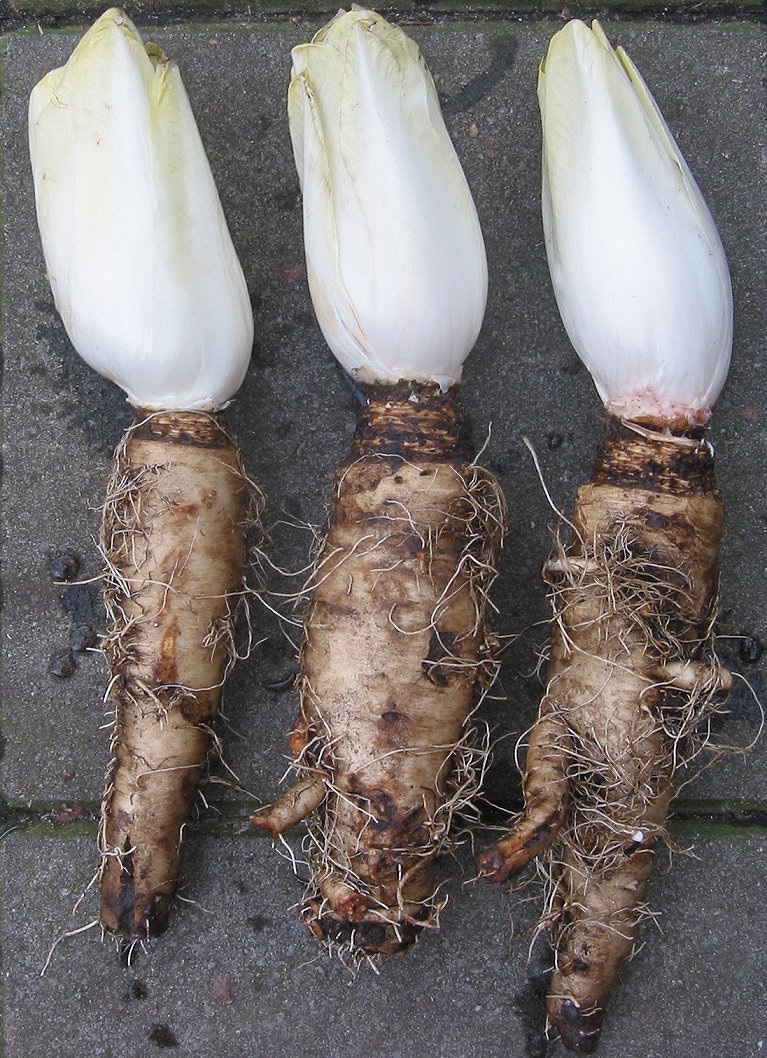
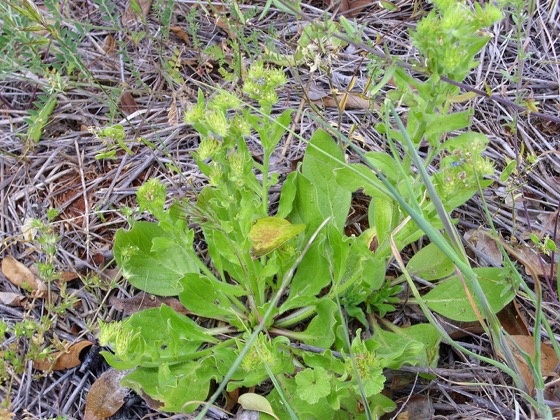
Chicon, or witloof, is the Belgian vegetable par excellence, born in Brabant in the nineteenth century. Its two-stage cultivation, roots in the garden then forcing in darkness in the cellar, fascinates as much as it rewards: white, crunchy, slightly bitter heads (chicons), to harvest all winter.
- Difficulty
- Intermediate
- Exhibition
- Sun
- Watering
- Moderate in summer for the root; when forcing, a moist but never sodden medium.
- Floor
- Deep, loose, loamy soil, without stones or fresh manure, for straight roots.
- Spacing
- 10 to 12 cm along the row, 30 cm between rows.
- Harvest
- 150 days in the ground, then 3 to 5 weeks of forcing.
Calendar · Belgian climate
When to sow, plant and harvest
| Activity | Jan | Feb | Mar | Apr | May | Jun | Jul | Aug | Sep | Oct | Nov | Dec |
|---|---|---|---|---|---|---|---|---|---|---|---|---|
| Sowing in open ground | yes | yes | ||||||||||
| Plantation | yes | yes | yes | |||||||||
| Harvest | yes | yes | yes | yes | yes |
Step by step
1Sowing
Sow from mid-May to mid-June, no earlier, otherwise the plants bolt. Choose deep soil, finely loosened, not manured this year. Mark out rows 30 cm apart, sow thinly one centimetre deep, firm and water. Germination in ten days. Thin to 10 or 12 cm when the plants have three leaves: a well-fed root gives a fine chicon.
2Planting out
Setting up for forcing takes the place of planting. Lift the roots in October-November, cut the leaves 3 cm above the crown and leave to dry off for a week. Discard forked or overly thin roots, trim the others to 20 cm. Stand them close together, upright, in a bucket or box filled with moist soil or sand, crowns level with the surface, and cover to make complete darkness.
3Caring
In the garden, hoe and weed without mercy, water only in prolonged drought. When forcing, keep total darkness and a temperature of 12 to 18 °C: the cellar, the garage or a cool cupboard will do. Keep the medium slightly moist by watering from below or with a fine spray, without wetting the forming heads, which would cause rot.
4Harvesting
Three to five weeks after setting up for forcing, when the heads measure 12 to 15 cm and are firm and tight, snap them off sharply at the base or cut them level with the crown. Harvest in small quantities and leave the roots in place: they often give a second, smaller but delicious flush. Start a new batch every three weeks.
5Storing
Chicons keep for a week in the fridge, wrapped in newspaper or a dark cloth: light turns them green and bitter. Lifted roots awaiting forcing keep for several months heeled in to sand in the cellar, or in a clamp in the garden, covered with straw. Cooked, braised chicons freeze well for gratins.
Further reading
Planting and caring for plants properly
How to plant properly
Choosing the spot
The first phase of the chicon, growing the root, wants full sun and deep, loose soil, uniform to at least thirty centimetres, without stones or a hard pan: that is the condition for a straight, fleshy root. Our Brabant and Hesbaye loams are perfect; compact clays give forked roots, dry sands thin ones. Choose a bed that has not received manure this year and has carried no chicory, endive or lettuce for three years. The spot where last year's leeks, cabbages or potatoes grew, already cleared, suits it very well.
Preparing a deep soil, without fresh manure
The previous autumn or in early spring, loosen the soil to thirty centimetres with a broadfork or a spade, removing stones, roots and compact clods. Add no manure or fresh compost: they make the roots fork and swell the foliage at the expense of the taproot. A bed manured for the previous crop is ideal; at a pinch, a little very mature sieved compost. Before sowing, refine the surface with the rake to five centimetres and let the soil settle for two weeks. Settled soil gives even taproots; fluffed-up soil, roots that dive down in a zigzag.
Sowing between mid-May and mid-June
The date matters more than anything: sown before 15 May, the chicon goes through cold nights and bolts in summer, root lost. Sown after 20 June, the root stays too thin to be forced. Mark out rows thirty centimetres apart, sow thinly, one seed every two centimetres, one centimetre deep, firm and water with a spray. Germination takes eight to twelve days. Choose a variety suited to forcing in soil without a covering layer, such as Witloof de Bruxelles or Zoom, or an early variety such as Hâtive de Malines for a first forcing from November.
Thinning without hesitation
When the seedlings have three or four leaves, towards the end of June, thin to ten or twelve centimetres along the row, keeping the most vigorous. This is the step beginners neglect, for fear of waste, and it decides everything: a crowded root stays a pencil impossible to force, a well-spaced root reaches four to five centimetres across at the crown in October, the ideal size. Never transplant the removed plants; a disturbed taproot forks. A second pass in July to remove weak plants and weeds is worthwhile.
Lifting and preparing the roots
Lift the roots between mid-October and mid-November, after one hundred and fifty days of growth and preferably after a first white frost, which prepares them for forcing. Lift with a garden fork without breaking the taproots. Cut the foliage three centimetres above the crown, without cutting into the heart, and leave the roots to dry off for a week in the air, in a heap, sheltered from rain and frost. Discard those under three centimetres across, the forked and the damaged, and trim the others to twenty centimetres. A rest of one to three weeks in the cool is essential to wake the bud.
Setting up for forcing in the cellar
Choose a twenty-litre bucket, a box or a large basin with holes in the bottom. Pour in ten centimetres of garden soil or moist sand, stand the roots upright, close together, crowns at the same height, fifteen or so per bucket, and fill in between them with soil or sand, firming, until the crowns are level with the surface. Water to moisten without soaking. Cap with a second bucket turned upside down, an opaque box or a black bag stretched over hoops, leaving a little air: the darkness must be total, as the slightest light turns the heads green and bitter. Put the whole thing in the cellar, between 12 and 18 °C.
Beginner's mistakes
Sowing in April to 'get ahead' ends in flowering. Not thinning gives unusable roots. Manuring the bed makes the taproots fork. Forcing without a prior rest produces loose heads. Forcing too warm, above 20 °C next to a boiler, gives leggy, open chicons in ten days; too cold, below 8 °C, nothing grows. Watering onto the forming heads, or letting the bucket stand in water, triggers crown rot. Finally, leaving a chink of light under the cover ruins a month's work: check for complete darkness with the lamp switched off.
Look after it properly
Watering the roots in the garden
In summer, witloof chicory is frugal: its roots dive down in search of water. Water only after three weeks without rain, in July-August, ten litres per square metre at the base, in the morning, never more than once a week. Excess water gives big foliage and a hollow root. Do not wet the foliage, which is prone to powdery mildew in late summer. From September, no more watering at all: the root ripens and stores its reserves all the better as the soil dries. A bed mulched thinly in July, after the last hoeing, generally does away with watering in our climate.
Hoeing, weeding, not feeding
From emergence to the end of July, hoe between the rows every fortnight and pull weeds by hand along the row: young chicon grows slowly and gets smothered. No plant liquid, no nitrogen fertiliser; they make the root fork and go soft; at a pinch, a handful of wood ash per square metre in June for potash. From August, the foliage covers the soil and the work stops. Remove plants that run to flower, recognisable by their upright stem, and throw them away: their root will never force.
Managing the forcing in the cellar
Check the bucket every three days. The ideal temperature lies between 12 and 16 °C: at 15 °C, allow three to four weeks, at 12 °C five to six, which lets you spread the harvest by playing with the location, cold cellar or cool room. Keep the medium as moist as a wrung-out sponge, watering down the side of the bucket or from below, never onto the crowns. Air for five minutes at each visit to avoid condensation, which rots the tips. A second forcing, on the same roots, gives smaller but fine heads; after that, compost the roots.
Preventing rots, aphids and sclerotinia
In the garden, the chicon is little troubled: a few aphids on the foliage in June, which a jet of water settles, sometimes powdery mildew in September, of no consequence to the root. Slugs nibble the seedlings in May-June: evening hunts and ash in dry weather. The real enemies wait in the cellar. Sclerotinia and soft rot settle on damaged roots or a sodden medium: sort strictly, dry off well, water little, air, remove without delay any root that goes soft. The lettuce root aphid, a white powder on the taproot, is prevented by a three-year rotation and sorting at lifting.
Through the season
In April, prepare and refine the bed. In late May, sow. In June, thin, hoe, hunt slugs. In July, hoe one last time, mulch thinly, water if needed. In August-September, let it grow, remove bolters, stop watering. In mid-October, lift, dry off, sort, cut the leaves. In November, heel the waiting roots in to sand in a cold cellar, and start the first bucket. From December to February, start a bucket every three weeks, harvest, restart the second forcings. In March, force the last roots, faster now that the cellar is warming up.
Harvesting and extending the season
Harvest when the heads measure twelve to fifteen centimetres and close nicely to a point, before they open at the top. Snap them off sharply at the base or cut level with the crown, in the half-light, and put the cover back at once. Wrapped in dark paper in the fridge, they last a week. For chicons from November to March, store the roots heeled in to sand in a cold cellar or in a clamp in the garden under twenty centimetres of straw, and force them in batches of fifteen every three weeks. A red chicon such as Carmen, milder, is forced the same way and brightens up winter salads.
Obtaining seeds or seedlings
Seeds and seedlings: where to find them
A selection of reputable seed suppliers that deliver to your country, listed in order of proximity. Evadya does not receive any commission: these are suppliers we recommend for their reliability.
Semailles
For Belgian artisan seed producer, organic and reproducible seeds, over 250 regional varieties, a planting calendar tailored to the Belgian climate.
Against Small organisation: limited range of hybrid varieties and possible stock shortages during peak season.
Search for ‘chicory (witloof)’ on SemaillesKokopelli
For Europe’s largest collection of heirloom, organic and open-pollinated varieties; comprehensive growing guides.
Against No hybrids or seedlings; delivery times can sometimes be long during peak season; prices are slightly higher.
View the shopFerme de Sainte Marthe
For A long-established organic seed supplier, offering seeds and young plants, heirloom varieties, and nutrition and recipe guides.
Against Dispatched from the Loire: postage charges to Belgium and Switzerland; plants are fragile in transit.
Search for ‘chicory (witloof)’ on Ferme de Sainte MartheGraines Baumaux
For A vast selection (over 500 tomato varieties), with high-yielding F1 hybrids and heirloom varieties side by side, and plants available in season.
Against Not much organic produce; an old site; catalogue entries rather than growing guides.
Search for ‘chicory (witloof)’ on Graines BaumauxVreeken’s Zaden
For A very wide range of Dutch products, competitive prices, and numerous varieties suited to the Benelux climate.
Against Website in Dutch only; limited selection of organic produce.
Search for ‘chicory (witloof)’ on Vreeken’s ZadenDe Bolster
For Dutch organic seed producer, seeds suitable for propagation, a good selection for cool climates.
Against A shorter catalogue; website in Dutch.
Search for ‘chicory (witloof)’ on De BolsterZollinger Bio
For Swiss organic seeds, varieties suited to high altitudes and microclimates, and a unique phenological calendar.
Against Swiss prices and customs charges from the European Union.
Search for ‘chicory (witloof)’ on Zollinger BioBingenheimer Saatgut
For A leading German name in organic and biodynamic produce, offering open-pollinated varieties selected for the home gardener.
Against Website in German; delivery charges apply outside Germany.
Search for ‘chicory (witloof)’ on Bingenheimer SaatgutDreschflegel
For A collective of organic growers, specialising in rare and regional varieties, and the preservation of traditional farm seeds.
Against Small quantities; a catalogue that’s more activist than practical; website in German.
Search for ‘chicory (witloof)’ on DreschflegelFrom the vegetable patch to the plate
And then we savour it
What it offers
A very low-calorie vegetable, rich in water and fibre, a source of folate (vitamin B9) and potassium; its bitterness comes from intybin.
In the kitchen, it’s simple
Chicons au gratin, rolled in ham and coated in béchamel, or raw in a salad with walnuts, Roquefort and a honey vinaigrette.
Living well
Going down to the cellar in January to pick your white chicons is rediscovering the gesture of the Brabant market gardeners.
Also worth a look
Other vegetables
Leek
Allium porrum
Lettuce
Lactuca sativa
Spinach
Spinacia oleracea
Lamb's lettuce (corn salad)
Valerianella locusta