leaf vegetable · Astéracées
LettuceLactuca sativa
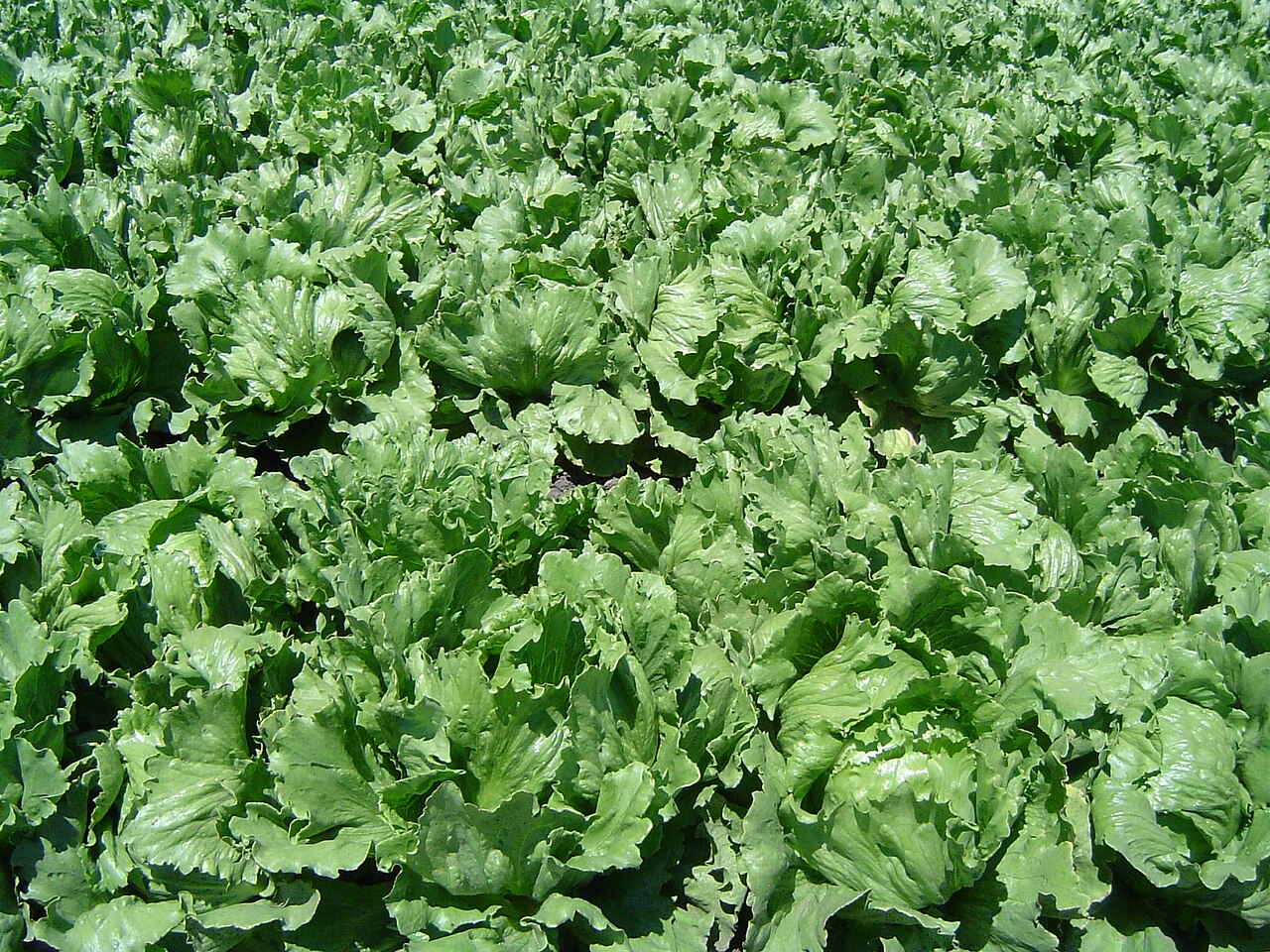
Butterhead, batavia, cos or loose-leaf, lettuce offers a fresh salad from spring to autumn, and even in winter under cover. It grows fast, thrives in our mild climate and slips in between every other crop. A sowing every three weeks is enough to never run short.
- Difficulty
- Easy
- Exhibition
- Sun in spring and autumn, partial shade in summer
- Watering
- Regular and frequent, soil always moist, in the morning by preference
- Floor
- Moist, loose, rich in humus, well drained
- Spacing
- 25 to 30 cm along the row, 30 cm between rows
- Harvest
- 45 to 70 days after sowing
Calendar · Belgian climate
When to sow, plant and harvest
| Activity | Jan | Feb | Mar | Apr | May | Jun | Jul | Aug | Sep | Oct | Nov | Dec |
|---|---|---|---|---|---|---|---|---|---|---|---|---|
| Sowing under cover | yes | yes | yes | yes | ||||||||
| Sowing in open ground | yes | yes | yes | yes | yes | |||||||
| Plantation | yes | yes | yes | yes | yes | yes | yes | |||||
| Harvest | yes | yes | yes | yes | yes | yes | yes |
Step by step
1Sowing
Sow under cover from February, then outdoors from April to August, in small quantities every three weeks. Lettuce seed needs light: barely cover it, with a few millimetres of fine compost. It germinates poorly above 25 °C; in summer, sow in the evening in a shady spot and keep moist. Germination takes four to eight days. In September, sow winter varieties under a cold frame or tunnel.
2Planting out
Transplant the young plants when they have four or five leaves, from March to September depending on the sowing, spacing them twenty-five to thirty centimetres apart. Plant without burying the neck, which must stay above the soil to avoid rot: a lettuce planted too deep will not heart up. Water generously to establish and shade for the first few days in summer. Shop-bought module plants are planted the same way.
3Caring
Water regularly, preferably in the morning, without letting the soil dry out: lettuce is made of water and drought stress makes it toughen or bolt. Hoe between the rows and mulch thinly. Protect young plants from slugs, their worst enemy, with ash, shells or an evening hunt. In spring and autumn, a fleece speeds up growth. No fertiliser is needed in composted soil.
4Harvesting
Cut butterheads and batavias at ground level, in the morning, as soon as the heart is firm, without waiting for them to bolt. Loose-leaf lettuces are harvested leaf by leaf, leaving the heart intact, or by shearing at three centimetres: they regrow two or three times. A lettuce that begins to stretch turns bitter: harvest it without delay. Stagger the sowings so that everything does not arrive at once.
5Storing
Lettuce keeps badly: pick it the same day or keep it two or three days in the fridge, unwashed, wrapped in a damp cloth in the vegetable drawer. It cannot be frozen or bottled. Slightly wilted outer leaves can be cooked in soup or braised with peas. The simplest thing remains to stagger the sowings so as to harvest just what you need.
Further reading
Planting and caring for plants properly
How to plant properly
Choosing the spot by season
Lettuce changes its mind with the months. In spring and autumn, it wants full sun and soil that warms up quickly, against a south wall or under a cold frame. In summer, it prefers partial shade: the foot of climbing beans, the light shade of tomatoes or the east side of a bed spare it from bolting. It slips in everywhere, between cabbages that will grow later, along the edge of leek rows, in a square free for six weeks. Moist soil, rich in humus, without standing water, remains the only real condition.
Preparing a fine, moist soil
Lettuce has short roots and grows fast: it needs a very fine, rich and loose surface layer. Fork the soil over to fifteen centimetres, work in two to three kilos of mature compost per square metre, then rake to a surface free of clods. In our clay soils that crust after rain, a surface dressing of leaf mould or potting compost helps germination. Avoid fresh manure, which attracts slugs and gives bland leaves. A bed already well manured for last year's squashes or cabbages will do without adding anything.
Sowing little and often
Sow a small quantity, two or three metres of row, every three weeks from March to August, rather than a whole bed in one go. The seeds need light: lay them in a drill half a centimetre deep, barely cover with fine compost and firm. They germinate between 10 and 20 °C, but go dormant above 25 °C. In July, therefore, sow in the evening, in the shade, or chit the seeds for two days in the fridge in a damp cloth before sowing. Germination takes four to eight days. Under cover, a February sowing gives plants ready to transplant by the end of March.
Matching the variety to the month
Each season has its lettuces. For March-April, choose early butterheads such as Reine de Mai or Merveille des quatre saisons. For summer, prefer batavias, cos and loose-leaf lettuces, such as oak leaf or Lollo, which are slower to bolt; the so-called bolt-resistant varieties are worth their price in July. For autumn, go back to hardy butterheads and batavias. For winter under a cold frame or tunnel, sow winter lettuces in September-October, Val d'Orge, Merveille d'hiver or Brune d'hiver, which will heart up in April. Always mix two or three types to spread the harvests.
Transplanting without burying the neck
Transplant the plants at the four- or five-leaf stage, three to four weeks after sowing, on an overcast day or in the late afternoon. With a trowel, open a hole just big enough, and set the root ball so that the neck, the join between leaves and roots, stays at soil level or slightly above. Buried too deep, the lettuce rots or does not heart up; set too high, it dries out. Space twenty-five centimetres apart for butterheads, thirty for batavias and cos, twenty for loose-leaf types. Water at once with a fine spray, then shade for two days with an upturned crate in summer.
In pots, containers or window boxes
Lettuce is the queen of the balcony. A window box fifteen to twenty centimetres deep, filled with good-quality potting compost with a little garden compost added, takes one lettuce every twenty centimetres or a dense sowing of loose-leaf lettuce to pick leaf by leaf. Place it in the morning sun and in afternoon shade in summer. Water every day in hot weather, as the compost dries out quickly, and every two or three days in spring. A saucer prevents drying out but must not stay full. Slugs climb less readily up to containers, which makes life a great deal easier for the town gardener.
Beginner's mistakes
Sowing the whole packet at once produces thirty ripe lettuces in the same week, then nothing: sow in small quantities. Burying the seed two centimetres deep stops germination, as it needs light. Transplanting too deep rots the neck. Letting the seedlings crowd in the seed row without thinning gives drawn lettuces that never heart up. Forgetting the slugs for the first few nights means losing everything. Finally, sowing a spring butterhead in July leads straight to bolting: read the season printed on the packet, it is the most useful piece of advice in this whole guide.
Look after it properly
Watering regularly
Lettuce is 95 % water: the soil must never dry out deep down. Water in the morning, at the base, two to three times a week in spring and almost every day in a heatwave, without wetting the heart, which would rot. A generous watering, five litres per square metre, is better than small sprinklings that do not soak in. A lettuce short of water toughens, turns bitter and bolts as soon as the heat returns. In autumn and under a cold frame, cut back sharply: excess moisture in cold weather leads to grey mould and downy mildew.
Mulching thinly
A mulch of two to three centimetres of dried grass clippings, hemp or flax mulch, laid after transplanting, keeps the soil cool, stops soil splashing onto the leaves and limits weeding. Leave a gap around the neck and do not mulch too thickly; slugs love damp mulch. In autumn and spring, it is better not to mulch at all, to let the soil warm up. Lettuce needs no fertiliser in composted soil; a very dilute nettle liquid can wake up a plant that has stalled, but excess nitrogen gives soft leaves that rot.
Thinning and tying
In a sowing in place, thin as soon as the seedlings have three leaves, first to ten centimetres, then to twenty-five, transplanting the removed plants elsewhere. A crowded lettuce stays small and drawn. Loose-leaf lettuces can be left denser, every ten centimetres. Cos and some batavias heart up better if you tie them loosely with a strand of raffia a week before harvest, which blanches and tenderises the heart. Remove damaged or rotten outer leaves as you go, as they attract slugs and fungi.
Preventing slugs, aphids and rots
Slugs are enemy number one, especially in our wet springs. Transplant sturdy plants rather than sowing in place, go hunting with a head torch for the first few evenings, set traps under planks and surround the plants with ash or eggshells in dry weather. Aphids lodge in the heart of butterheads: hose them off or spray soft soap diluted to 5 %. Against grey mould and downy mildew, give air, water in the morning, do not wet the foliage and remove affected leaves. Fine insect-proof mesh protects against birds and rabbits.
Through the season
In February-March, sow under cover and transplant under a cold frame the winter lettuces sown in October. In April, transplant outdoors under fleece and start sowing in place. From May to August, sow every three weeks, transplant, water, hunt slugs; in July, switch to summer varieties and partial shade. In September, sow the last autumn butterheads and the winter lettuces. In October, put a tunnel or cold frame over the autumn plants. In November-December, ventilate the frame whenever the weather is mild and dry, and harvest the last batavias.
Harvesting and extending the season
Cut butterheads at ground level, in the morning, as soon as the heart resists under the hand: three days more and they stretch, turn bitter and bolt. Loose-leaf lettuces are picked leaf by leaf, starting from the outside, or sheared three centimetres above the neck, for two or three regrowths. To extend the season, a fleece in March and October gains three weeks at each end, and a cold frame allows a harvest in November and from April. Let one plant a year go to seed: its seed, gathered in August when the tufts turn white, resows your favourite variety.
Obtaining seeds or seedlings
Seeds and seedlings: where to find them
A selection of reputable seed suppliers that deliver to your country, listed in order of proximity. Evadya does not receive any commission: these are suppliers we recommend for their reliability.
Semailles
For Belgian artisan seed producer, organic and reproducible seeds, over 250 regional varieties, a planting calendar tailored to the Belgian climate.
Against Small organisation: limited range of hybrid varieties and possible stock shortages during peak season.
Search for ‘lettuce’ on SemaillesKokopelli
For Europe’s largest collection of heirloom, organic and open-pollinated varieties; comprehensive growing guides.
Against No hybrids or seedlings; delivery times can sometimes be long during peak season; prices are slightly higher.
View the shopFerme de Sainte Marthe
For A long-established organic seed supplier, offering seeds and young plants, heirloom varieties, and nutrition and recipe guides.
Against Dispatched from the Loire: postage charges to Belgium and Switzerland; plants are fragile in transit.
Search for ‘lettuce’ on Ferme de Sainte MartheGraines Baumaux
For A vast selection (over 500 tomato varieties), with high-yielding F1 hybrids and heirloom varieties side by side, and plants available in season.
Against Not much organic produce; an old site; catalogue entries rather than growing guides.
Search for ‘lettuce’ on Graines BaumauxVreeken’s Zaden
For A very wide range of Dutch products, competitive prices, and numerous varieties suited to the Benelux climate.
Against Website in Dutch only; limited selection of organic produce.
Search for ‘lettuce’ on Vreeken’s ZadenDe Bolster
For Dutch organic seed producer, seeds suitable for propagation, a good selection for cool climates.
Against A shorter catalogue; website in Dutch.
Search for ‘lettuce’ on De BolsterZollinger Bio
For Swiss organic seeds, varieties suited to high altitudes and microclimates, and a unique phenological calendar.
Against Swiss prices and customs charges from the European Union.
Search for ‘lettuce’ on Zollinger BioBingenheimer Saatgut
For A leading German name in organic and biodynamic produce, offering open-pollinated varieties selected for the home gardener.
Against Website in German; delivery charges apply outside Germany.
Search for ‘lettuce’ on Bingenheimer SaatgutDreschflegel
For A collective of organic growers, specialising in rare and regional varieties, and the preservation of traditional farm seeds.
Against Small quantities; a catalogue that’s more activist than practical; website in German.
Search for ‘lettuce’ on DreschflegelFrom the vegetable patch to the plate
And then we savour it
What it offers
Low in calories and rich in water, lettuce provides gentle fibre, folate (vitamin B9) and vitamin K, as well as antioxidants concentrated in the greenest leaves.
In the kitchen, it’s simple
A garden lettuce, picked in the morning and served with a shallot vinaigrette and a few nasturtium flowers, makes the simplest and loveliest dish of May.
Living well
Going out to cut your salad five minutes before sitting down to eat is a luxury only the vegetable garden offers.
Also worth a look
Other vegetables
Leek
Allium porrum
Spinach
Spinacia oleracea
Lamb's lettuce (corn salad)
Valerianella locusta
Rocket
Eruca vesicaria subsp. sativa