herb · Apiacées
CorianderCoriandrum sativum
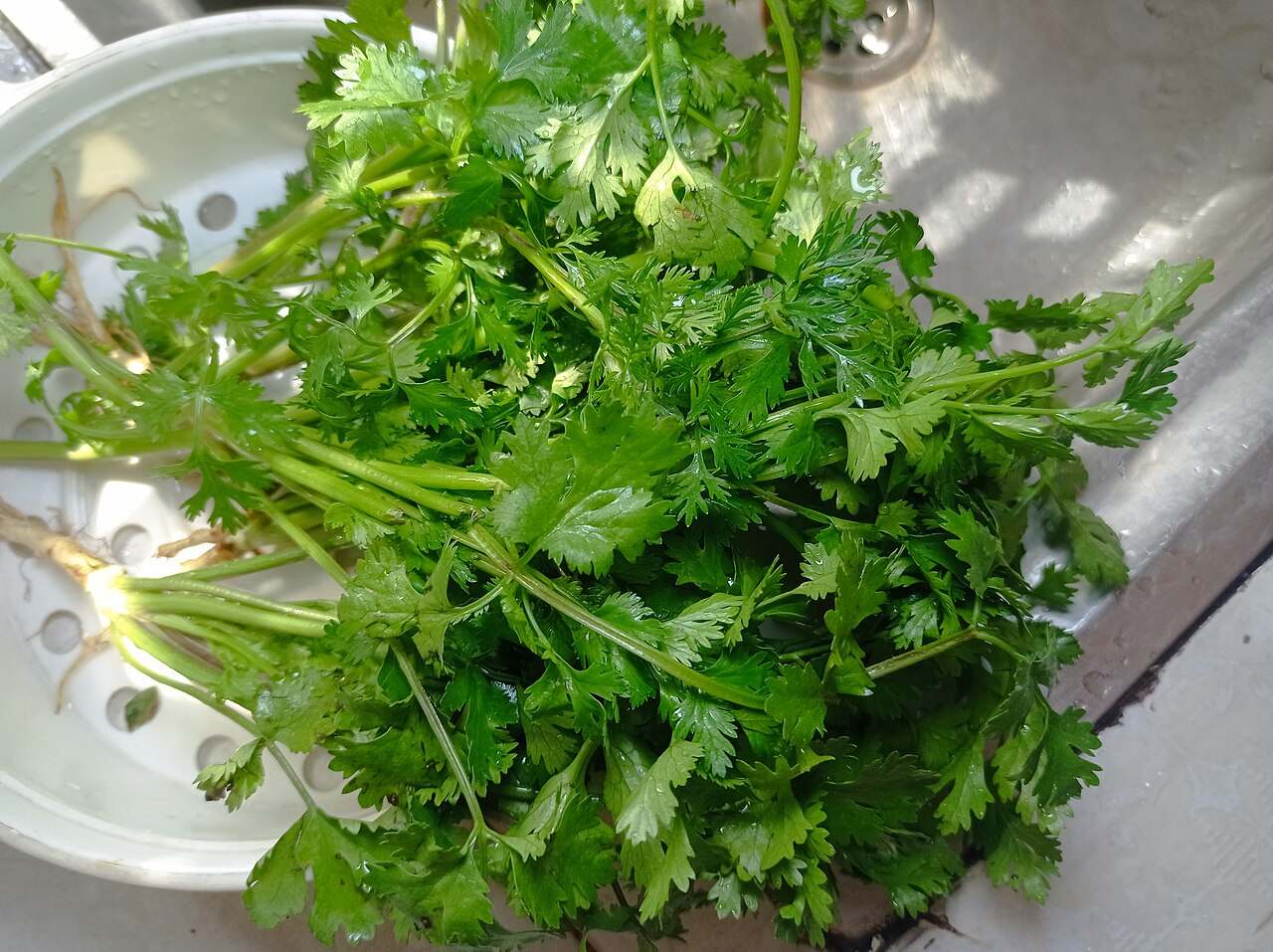
You love its leaf or you hate it, but coriander offers two harvests: the fresh leaves, the scent of Asian and North African kitchens, and the round seeds that flavour breads and pickled vegetables. Quick but in a hurry to flower, it is sown in small amounts, often, from spring onwards.
- Difficulty
- Intermediate
- Exhibition
- Sun in spring, partial shade in summer
- Watering
- Regular and light; drought hastens flowering.
- Floor
- Light, moist, well-drained, moderately rich soil.
- Spacing
- 15 to 20 cm between plants, 25 cm between rows.
- Harvest
- 40 to 50 days for the leaves, 90 to 110 for the seeds.
Calendar · Belgian climate
When to sow, plant and harvest
| Activity | Jan | Feb | Mar | Apr | May | Jun | Jul | Aug | Sep | Oct | Nov | Dec |
|---|---|---|---|---|---|---|---|---|---|---|---|---|
| Sowing under cover | yes | |||||||||||
| Sowing in open ground | yes | yes | yes | yes | yes | yes | ||||||
| Harvest | yes | yes | yes | yes | yes | yes |
Step by step
1Sowing
Sow in place from April to September, in rows 25 cm apart or in a pot 20 cm deep, one centimetre deep. Lightly crush the round seeds to split them in two; germination is then quicker and more even, in ten to fifteen days. Sow a little at a time, a one-metre row is enough, and repeat every three weeks for a continuous supply.
2Planting out
Coriander is not transplanted: its taproot copes badly with moving and the stress makes it bolt. So sow it directly where it will grow, in open ground, in a container or in a pot on the balcony. If you buy a pot from a garden centre, remove it without breaking the root ball and plant straight away, preferably in partial shade, watering copiously.
3Caring
Thin to 15 cm for well-leaved plants, hoe and mulch lightly. Water regularly, never letting it dry out, and shade summer sowings with a light fleece during the hot hours. Pinch out the first flower stems to gain a fortnight of leaves, then let a few plants flower: the white flowers attract hoverflies and ladybirds, and will give the seeds.
4Harvesting
Cut the young, broad, toothed leaves with scissors, from 15 cm in height, before the fine, feathery leaves of flowering appear. Harvest in the morning. For the seeds, wait until the umbels turn brown in August-September, cut the stems on a dry morning and let them finish drying upside down in a paper bag.
5Storing
Fresh leaves keep four to five days in the fridge, stems in a glass of water, capped with a bag. Drying makes them lose all their scent: freeze them chopped in oil ice cubes or whole in a bag. The seeds, thoroughly dry, keep for a year or two in a sealed jar and are ground at the last moment; set some aside for the spring sowings.
Further reading
Planting and caring for plants properly
How to plant properly
Choosing the spot
In spring and autumn, coriander wants sun; in summer, it prefers partial shade, where the long days and heat push it less quickly into flower. Best is to move it with each sowing: a row facing due south in April, a row in the light shade of climbing beans or an east-facing wall in June-July, then back in the sun in September. The soil should be light and moist, without excess richness. Keep it away from fennel, which hinders it, and from dill, with which it can cross if you are saving seed.
Preparing the soil
Loosen to 20 cm, as coriander has a taproot, and work in a kilo or two of mature compost per square metre, no more: soil that is too rich gives bland leaves and a plant that bolts. Rake the surface very fine, as germination is erratic in lumpy soil. In our capping loams, cover the drill with sieved compost. On heavy clay, a spadeful of sand along the seed row helps the root. A sowing on a bed that carried peas or lettuces in spring finds perfect soil.
Sowing at the right time
Sow in place from April to September, in small amounts repeated every three weeks: a one-metre row or a pot each time. First rub the round seeds between your hands or roll them under a small board to split them in two, which speeds up germination. Sow 1 cm deep, one seed every 3 cm, in rows 25 cm apart, cover with fine compost and keep moist. Germination in ten to fifteen days at 15 °C. The late August and September sowings, in less of a hurry to flower, are the most productive in leaves and hold on under fleece until November.
Choosing the variety
Two types exist, and the packet does not always say so. Leaf varieties, described as slow to bolt, such as Calypso, Leisure, Santo or Cruiser, keep their broad leaves three to four weeks longer and are the right choice for the kitchen. Seed varieties, described as Moroccan or large-seeded, flower quickly and are sown for the umbels and the September harvest. A pot of coriander from a garden centre or supermarket, sown densely and forced, bolts as soon as you take it out; better to eat it within the week and sow your own.
Do not transplant
Coriander cannot stand transplanting: any injury to the taproot or any extended stay in a pot triggers flowering within a fortnight, with no leaves to harvest. So always sow it where it will grow. If you want a head start, sow in March in biodegradable pots, three seeds per pot, and plant the whole pot as soon as the seedlings have two true leaves, without waiting. A bought pot is removed without touching the root ball and planted at once, in partial shade, with a copious watering. Then thin the sowing to 15 cm as soon as the plants have four leaves.
In a pot or window box
Coriander does well in a pot, provided it has depth: 20 cm at least for the root, in a window box 40 to 50 cm long placed facing east or west, never due south in summer. Ordinary potting compost lightened with a quarter of sand, clay pebbles at the bottom. Sow directly in the window box about twenty split seeds spread over the surface, thin to 10 cm, water as soon as the surface dries, every two days in summer. Plan for two window boxes that you resow alternately every three weeks, so as always to have young leaves to hand.
Beginner's mistakes
The first mistake is sowing just once, in May, a long row: everything flowers in June and the gardener concludes that coriander "bolts". It does bolt, yes, but you sow it little and often. The second is transplanting seedlings or keeping a shop-bought pot on a warm window. The third is letting the row dry out in June, which hastens flowering. Finally, waiting for the large leaves of "real" coriander when the plant is already making fine, feathery leaves: these announce the flower, it is time to resow and leave that plant for seed.
Look after it properly
Watering lightly and often
Coriander wants permanently moist soil, without ever being drowned. Water with a fine spray, preferably in the morning, four to five litres per square metre every two or three days in dry weather, more on a sowing still coming up, which must never dry out. A single day of dry soil in June is enough to persuade the plant to flower. In a pot, water as soon as the surface pales, every two days in summer, emptying the saucer. A coriander that droops in the morning lacks water; a coriander that yellows in sodden soil has too much.
Mulching and feeding
After thinning, mulch the row very lightly, 2 cm of well-dried grass clippings or flax shives, to keep the soil cool without smothering the young plants. Feeding: almost nothing. The compost from the soil preparation is enough; excess nitrogen gives large but bland, fragile leaves. A single watering of nettle liquid diluted to 5 % after the first cut relaunches regrowth. In a pot, a half-dose of liquid organic feed every three weeks is sufficient. A pale coriander in a pot lacks light or water rather than food.
Cutting, pinching, resowing
Harvest as soon as the plants are 15 cm tall, cutting the outer stems with scissors 3 cm above the ground, without touching the heart: the plant then gives two or three cuts ten days apart. Pinch out the first flower stem as soon as it shows, which gains a fortnight of leaves, then let it be. The real secret lies elsewhere: resow every three weeks from April to September, a metre at a time, and pull up bolted rows without regret, except for two or three plants left in flower for the insects and the seeds. Coriander is managed like the radish, in succession, not like a perennial.
Preventing diseases and pests
Coriander is little attacked. Aphids sometimes lodge on the umbels in June; a jet of water, soft soap at 5 % or simply the hoverflies, drawn by its own flowers, deal with them. Slugs nibble young sowings as they come up: evening collection and ash around the row. Rot at the crown or a bacterial blight spotting the leaves appear in heavy, overwatered soil; space out, water at the base in the morning, and change the spot. Repeated sowing on the same bed encourages soil-borne diseases: alternate with families other than the umbellifers.
Through the season
Early April, first sowing in full sun, under fleece if the nights freeze. May, thinning, first cuts, second sowing. June, sowing in partial shade, diligent watering, pinching flower stems, a few plants left in flower. July, spring rows pulled up or left for seed, new sowings in light shade. August, harvest of the browned seeds, autumn sowing, the most productive. September, last sowing under cover or in a pot. October-November, picking leaves under fleece or a cold frame until the hard frosts. A late September sowing in a cold greenhouse sometimes gives leaves in February.
Harvesting leaves and seeds
Cut the leaves in the morning, when they are broad and toothed, in the three to four weeks after germination, before the fine leaves appear. For the seeds, let two or three plants flower in June-July, wait until the umbels turn brown and the seeds rattle when rubbed, cut the stems on a dry morning in late August or September, and hang them upside down in a paper bag for a fortnight. Thresh, winnow, dry for another week. Some will go in the grinder, the rest will serve next year's sowings, coriander being one of the few herbs where you are entirely self-sufficient.
Obtaining seeds or seedlings
Seeds and seedlings: where to find them
A selection of reputable seed suppliers that deliver to your country, listed in order of proximity. Evadya does not receive any commission: these are suppliers we recommend for their reliability.
Semailles
For Belgian artisan seed producer, organic and reproducible seeds, over 250 regional varieties, a planting calendar tailored to the Belgian climate.
Against Small organisation: limited range of hybrid varieties and possible stock shortages during peak season.
Search for ‘coriander’ on SemaillesKokopelli
For Europe’s largest collection of heirloom, organic and open-pollinated varieties; comprehensive growing guides.
Against No hybrids or seedlings; delivery times can sometimes be long during peak season; prices are slightly higher.
View the shopFerme de Sainte Marthe
For A long-established organic seed supplier, offering seeds and young plants, heirloom varieties, and nutrition and recipe guides.
Against Dispatched from the Loire: postage charges to Belgium and Switzerland; plants are fragile in transit.
Search for ‘coriander’ on Ferme de Sainte MartheGraines Baumaux
For A vast selection (over 500 tomato varieties), with high-yielding F1 hybrids and heirloom varieties side by side, and plants available in season.
Against Not much organic produce; an old site; catalogue entries rather than growing guides.
Search for ‘coriander’ on Graines BaumauxVreeken’s Zaden
For A very wide range of Dutch products, competitive prices, and numerous varieties suited to the Benelux climate.
Against Website in Dutch only; limited selection of organic produce.
Search for ‘coriander’ on Vreeken’s ZadenDe Bolster
For Dutch organic seed producer, seeds suitable for propagation, a good selection for cool climates.
Against A shorter catalogue; website in Dutch.
Search for ‘coriander’ on De BolsterZollinger Bio
For Swiss organic seeds, varieties suited to high altitudes and microclimates, and a unique phenological calendar.
Against Swiss prices and customs charges from the European Union.
Search for ‘coriander’ on Zollinger BioBingenheimer Saatgut
For A leading German name in organic and biodynamic produce, offering open-pollinated varieties selected for the home gardener.
Against Website in German; delivery charges apply outside Germany.
Search for ‘coriander’ on Bingenheimer SaatgutDreschflegel
For A collective of organic growers, specialising in rare and regional varieties, and the preservation of traditional farm seeds.
Against Small quantities; a catalogue that’s more activist than practical; website in German.
Search for ‘coriander’ on DreschflegelFrom the vegetable patch to the plate
And then we savour it
What it offers
Leaves rich in vitamin K and beta-carotene; the seeds provide essential oils, including linalool.
In the kitchen, it’s simple
Snipped leaves over a vegetable curry or a carrot and coconut milk soup, crushed seeds in a marinade or cauliflower pickles.
Living well
Cracking a few seeds of your own coriander in the mortar is already the start of a journey before you even sit down to eat.
Also worth a look