leaf vegetable · Polygonacées
RhubarbRheum rhabarbarum
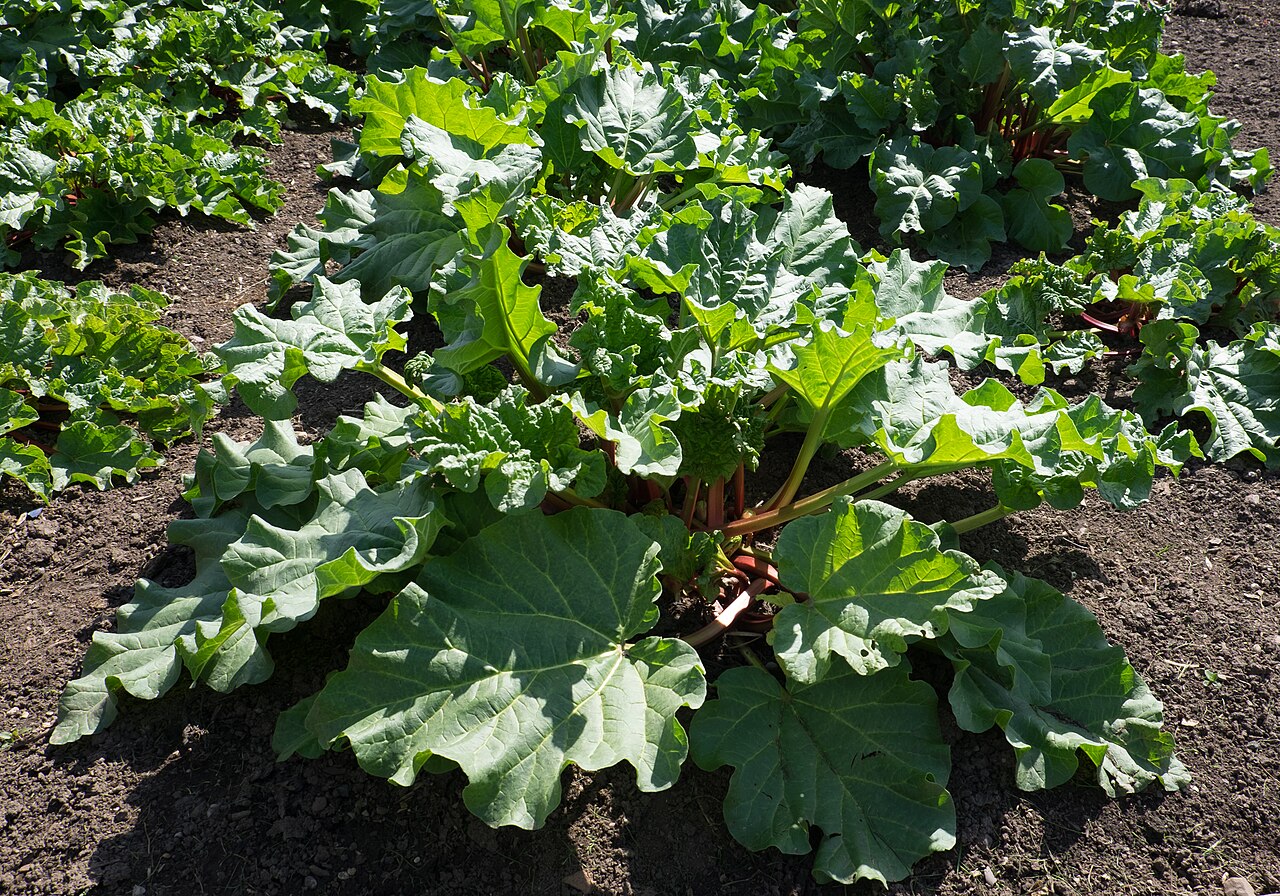
The first harvest of the year, rhubarb announces spring with its tart red or green stems from April. A perennial for twenty years, it asks for a cool, rich corner and nothing else, and delights every year in a compote, a tart or a jam with the June strawberries.
- Difficulty
- Easy
- Exhibition
- Sun or partial shade
- Watering
- Abundant in drought, especially in the first year; otherwise, mulch is enough in our climate.
- Floor
- Deep, rich soil, moist but not waterlogged in winter, very generously manured.
- Spacing
- 1 m each way.
- Harvest
- First proper harvest in the second year, then every spring.
Calendar · Belgian climate
When to sow, plant and harvest
| Activity | Jan | Feb | Mar | Apr | May | Jun | Jul | Aug | Sep | Oct | Nov | Dec |
|---|---|---|---|---|---|---|---|---|---|---|---|---|
| Sowing in open ground | yes | yes | ||||||||||
| Plantation | yes | yes | yes | yes | ||||||||
| Harvest | yes | yes | yes |
Step by step
1Sowing
Sowing is possible in April-May, in pots or a seedbed, 2 cm deep, but it gives variable, slow plants, to be harvested only in the third year. It mainly serves curious gardeners or those wanting many plants at low cost. For a reliable, quick result, prefer dividing an existing crown or buying a named plant.
2Planting
Plant in March-April or October-November a piece of crown carrying one or two buds, in a hole 50 cm each way filled with compost and well-rotted manure. Set the bud just at the surface, firm, water and mulch. Leave a metre between plants. Choose the spot with care, as the plant will stay fifteen to twenty years in the same place.
3Caring
Every autumn, spread a good layer of compost or manure around the crown, without covering the heart. Mulch in spring and water in drought. Cut off flower stems as soon as they appear, as they exhaust the plant. Every eight to ten years, divide the crown in March to rejuvenate it. Harvest nothing in the first year, very little in the second.
4Harvesting
From April to the end of June, take the largest stems by pulling them with a twisting movement at the base, never with a knife, always leaving at least half the leaves. Stop picking at Midsummer to let the crown rebuild its reserves; summer stems become more acid anyway. Cut off the leaves, which are toxic, and leave them at the base as mulch.
5Storing
The stems keep for a week in the fridge wrapped in a damp cloth. Cut into chunks and frozen raw on a tray, they last a year and can be cooked without thawing. As a compote, a jam with strawberries or ginger, or a syrup, rhubarb keeps all year in jars. Forced stems, more tender, are best eaten quickly.
Further reading
Planting and caring for plants properly
How to plant properly
Choosing the spot
Rhubarb will stay fifteen to twenty years in the same place: choose it with care, outside the vegetable garden rotation, in a corner it can occupy with its leaves a metre across. It likes gentle sun or partial shade, deep soil that stays moist in summer, and hates waterlogged soil in winter, which rots the crown. The foot of a hedge on the east side, the edge of an orchard, the north corner of the vegetable garden or the neighbourhood of the composter suit it. Allow a square metre per plant; two plants are enough for a family fond of tarts.
Preparing the soil
A month before planting, dig a hole 50 cm each way and set the soil aside. Mix it with an equal volume of well-rotted manure or mature compost, a good barrowload per plant, rhubarb being one of the hungriest plants in the garden. On heavy clay, add a bucket of gravel or coarse sand at the bottom and raise the planting level into a 15 cm mound. On acid soil, a handful of lime or two of wood ash bring the pH closer to the neutrality it prefers. Let the pit settle under the rain before planting.
Choosing the plant
The simplest and quickest is a piece of crown, taken in March or October from a plant over five years old at a neighbour's, with one or two fat red buds and a fist-sized portion of fleshy root. Garden centres offer potted plants in every season, often the variety Victoria, robust and green-red; for red, sweet stems, look for Frambozen Rood or Holsteiner Blut, and Timperley Early for an early harvest. Sowing, in April-May, gives variable plants to be harvested only in the third year: leave it to the curious.
Planting the crown
Plant in March-April, or preferably in October-November, when the soil is still warm and rain is assured. Set the piece in the centre of the pit, buds upwards, so that they sit 2 or 3 cm below the surface, never deeper, otherwise the crown rots. Return the enriched soil, firm by hand, water ten litres, then mulch with 5 cm of compost around the plant without covering the buds. A potted plant goes in at the same depth it had, after teasing out the roots circling at the bottom.
In a large container
Rhubarb lives reasonably well in a container of at least 60 litres, 50 cm deep and wide, placed in partial shade, in a mix of half potting compost and half garden compost, with careful drainage. It then produces thinner but numerous stems, and makes a fine ornamental plant on a terrace. Watering becomes decisive: every two days in summer, and a dressing of compost or organic fertiliser every spring. Repot or divide every four years in March. In winter, the container stays outside, as rhubarb needs the cold to start well again.
Beginner's mistakes
The first mistake is harvesting in the first year, which exhausts a crown that has not yet built its reserves: be patient, and take only two or three stems in the second year. The second is planting too deep or in soil that stays drowned in winter. The third is cutting the stems with a knife, leaving a stump that rots, instead of pulling them with a twist. Finally, putting rhubarb in a vegetable bed, where it gets in the way of crops and is disturbed at every digging, is a classic regret. Set it apart, and feed it without stinting.
Look after it properly
Watering just right
In the first year, water copiously in dry weather, ten litres per plant every week from May to September, so that the roots go down deep. After that, an established crown makes do with our rain, except during the increasingly frequent dry spells in July-August: the large leaves wilting in the morning is the signal to give twenty litres at the base. Always water the soil, without wetting the heart. A thirsty rhubarb makes short, fibrous, acid stems and starts to flower; a rhubarb drowned in winter rots beyond remedy.
Mulching and feeding
Rhubarb is fed every autumn: in November, once the foliage has died down, spread a 5 to 10 cm layer of well-rotted manure or compost all around the crown, leaving the heart uncovered. In spring, add a mulch of dried grass clippings or dead leaves that keeps the soil cool and smothers weeds. Nettle liquid diluted to 10 % in April and June supports the growth of the stems. The harvested leaves, toxic to eat but harmless on the ground, go back to the base as a nourishing mulch.
Cutting the flowers, dividing the crown
As soon as a flower stem appears, a thick hollow stalk carrying a cluster of buds, cut it at the base with a clean knife: it would draw all the sap at the expense of the stems. A crown that flowers a lot is often old, cramped or underfed. Every eight to ten years, in March or October, dig up the crown with a garden fork and cut it with a spade into pieces each carrying one or two buds and a good portion of root. Replant the outer pieces, the most vigorous, in fresh enriched soil, and compost the woody centre.
Preventing diseases and pests
Rhubarb has almost no enemies. Crown rot, the only serious disease, comes from drowned soil or compost laid on the heart; plant on a mound in heavy soil and keep the buds clear. Slugs nibble the young shoots in March: evening collection, coarse mulch, and inspection of the forcing bucket. Brown spots on the leaves in a wet summer are harmless, simply remove the affected leaves. Yellowing foliage and a soft crown sometimes signal crown rot; pull up the plant, do not replant in the same spot and start again from a healthy piece elsewhere.
Through the season
Late January, forcing under a large bucket or an upturned dustbin, surrounded by warm manure, for pink, tender stems from March. March, removal of the bucket after the first forced picking, tidying, nettle liquid. April to Midsummer, harvest, removal of flower stems, watering in drought. July-September, the crown rests, copious watering in a heatwave. October-November, division if needed, thick autumn manuring. December-January, the plant disappears completely below ground; mark its place with a stake so as not to injure it when digging. Never force the same plant two years running.
Harvesting and extending the season
From mid-April to the end of June, grasp stems over 30 cm long at the base, pull with a twisting movement, and never take more than half the stems at once so the crown can breathe. Stop at Midsummer, 24 June, so the plant can rebuild its reserves. A vigorous crown tolerates a few extra stems in August, but they are more acid and richer in oxalic acid. To bring the season forward, place an opaque bucket in February over a plant more than three years old: in the dark and warmth, the pale, sweet stems can be picked from mid-March.
Obtaining seeds or seedlings
Seeds and seedlings: where to find them
A selection of reputable seed suppliers that deliver to your country, listed in order of proximity. Evadya does not receive any commission: these are suppliers we recommend for their reliability.
Semailles
For Belgian artisan seed producer, organic and reproducible seeds, over 250 regional varieties, a planting calendar tailored to the Belgian climate.
Against Small organisation: limited range of hybrid varieties and possible stock shortages during peak season.
Search for ‘rhubarb’ on SemaillesKokopelli
For Europe’s largest collection of heirloom, organic and open-pollinated varieties; comprehensive growing guides.
Against No hybrids or seedlings; delivery times can sometimes be long during peak season; prices are slightly higher.
View the shopFerme de Sainte Marthe
For A long-established organic seed supplier, offering seeds and young plants, heirloom varieties, and nutrition and recipe guides.
Against Dispatched from the Loire: postage charges to Belgium and Switzerland; plants are fragile in transit.
Search for ‘rhubarb’ on Ferme de Sainte MartheGraines Baumaux
For A vast selection (over 500 tomato varieties), with high-yielding F1 hybrids and heirloom varieties side by side, and plants available in season.
Against Not much organic produce; an old site; catalogue entries rather than growing guides.
Search for ‘rhubarb’ on Graines BaumauxVreeken’s Zaden
For A very wide range of Dutch products, competitive prices, and numerous varieties suited to the Benelux climate.
Against Website in Dutch only; limited selection of organic produce.
Search for ‘rhubarb’ on Vreeken’s ZadenDe Bolster
For Dutch organic seed producer, seeds suitable for propagation, a good selection for cool climates.
Against A shorter catalogue; website in Dutch.
Search for ‘rhubarb’ on De BolsterZollinger Bio
For Swiss organic seeds, varieties suited to high altitudes and microclimates, and a unique phenological calendar.
Against Swiss prices and customs charges from the European Union.
Search for ‘rhubarb’ on Zollinger BioBingenheimer Saatgut
For A leading German name in organic and biodynamic produce, offering open-pollinated varieties selected for the home gardener.
Against Website in German; delivery charges apply outside Germany.
Search for ‘rhubarb’ on Bingenheimer SaatgutDreschflegel
For A collective of organic growers, specialising in rare and regional varieties, and the preservation of traditional farm seeds.
Against Small quantities; a catalogue that’s more activist than practical; website in German.
Search for ‘rhubarb’ on DreschflegelFrom the vegetable patch to the plate
And then we savour it
What it offers
Stems rich in fibre, vitamin K and potassium, low in calories; only the stems are eaten, the leaves are toxic.
In the kitchen, it’s simple
Rhubarb meringue tart, rhubarb and strawberry compote, or a tangy chutney to accompany a Herve cheese.
Living well
The first rhubarb tart of April is a family occasion looked forward to all winter.
Also worth a look
Other vegetables
Leek
Allium porrum
Lettuce
Lactuca sativa
Spinach
Spinacia oleracea
Lamb's lettuce (corn salad)
Valerianella locusta