bulb vegetable · Apiacées
Florence fennelFoeniculum vulgare var. azoricum
Florence fennel brings an aniseed note from the south to the Belgian vegetable garden. Its secret takes few words: a sowing that is not too early, moist soil and regular water, otherwise it runs to flower. Well managed, it gives fine white bulbs at the end of summer, crisp raw and meltingly tender braised.
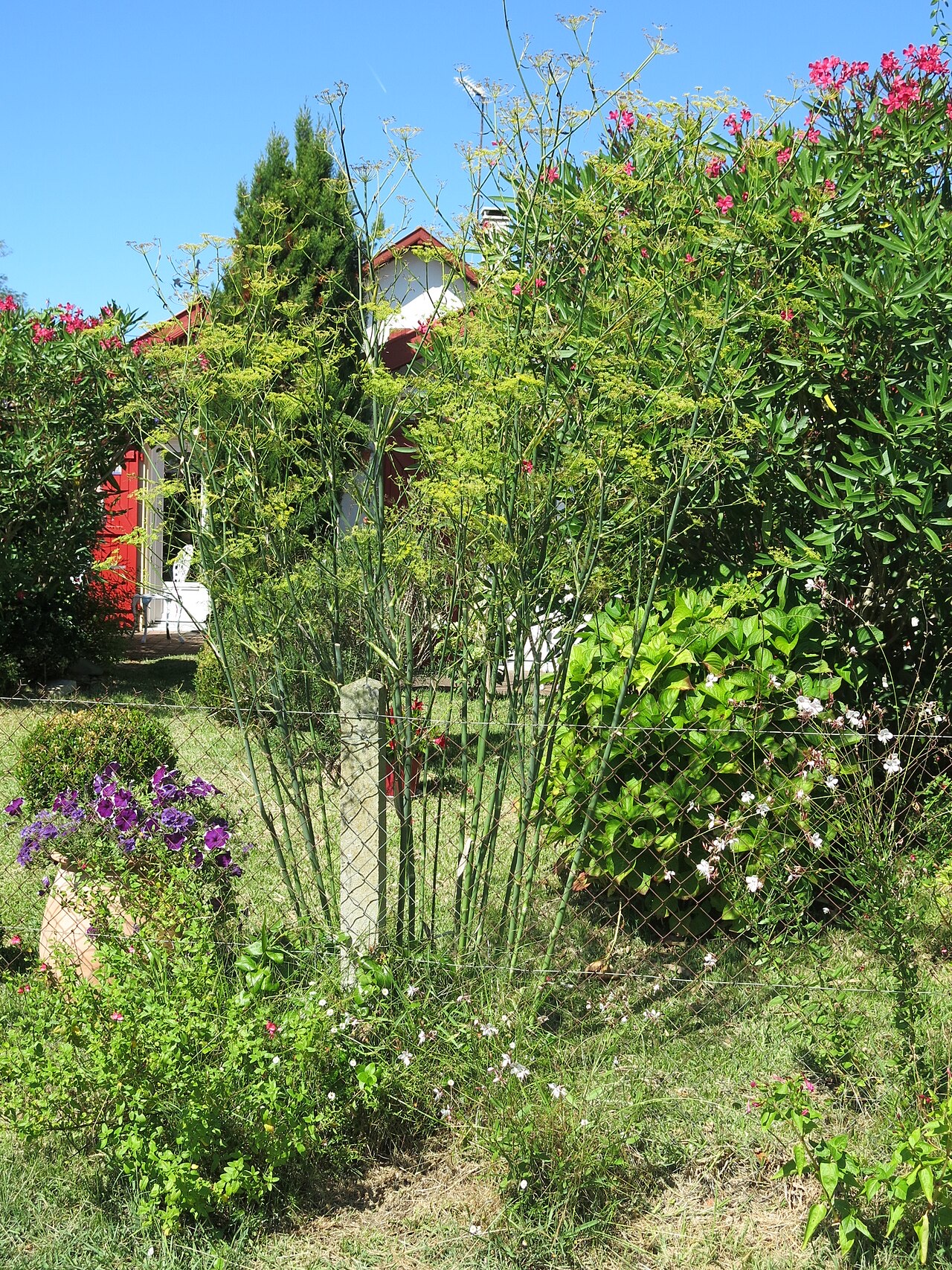
- Difficulty
- Intermediate
- Exhibition
- Sun
- Watering
- Regular and generous; the slightest water stress triggers bolting.
- Floor
- Light, rich, moist, well-drained soil, enriched with mature compost.
- Spacing
- 25 to 30 cm between plants, 40 cm between rows.
- Harvest
- 80 to 100 days.
Calendar · Belgian climate
When to sow, plant and harvest
| Activity | Jan | Feb | Mar | Apr | May | Jun | Jul | Aug | Sep | Oct | Nov | Dec |
|---|---|---|---|---|---|---|---|---|---|---|---|---|
| Sowing under cover | yes | yes | ||||||||||
| Sowing in open ground | yes | yes | ||||||||||
| Plantation | yes | yes | yes | |||||||||
| Harvest | yes | yes | yes | yes |
Step by step
1Sowing
Sow in pots in April-May under cover, without excess heat, two seeds per pot, for planting out after the Ice Saints. The most reliable method remains sowing in place from June to mid-July, in rows 40 cm apart, one centimetre deep. The shortening days after the solstice discourage flowering and favour the bulb.
2Planting out
Transplant the young pot-grown plants as soon as they have four leaves, without disturbing the taproot, every 25 to 30 cm, in fine, enriched soil. A plant that has spent too long in its pot never makes a good bulb. Water copiously at planting, mulch straight away and protect the young plants from slugs from the very first evening.
3Caring
Water regularly, twice a week in dry weather, and keep a thick mulch. Thin direct sowings to 25 cm. When the bulb starts to form, earth it up with fine soil to about ten centimetres: it blanches and becomes more tender. Pinch out any flower stem as soon as it appears, as it would spell the end of the bulb.
4Harvesting
Cut the bulb with a knife at ground level when it reaches the size of a fist, firm and nice and white, from August until the first frosts. Do not wait too long, as it hardens and turns fibrous. Leave the stump in the ground: it often produces a few leafy shoots that still flavour dishes. The feathery foliage can be picked at will throughout the crop.
5Storing
The bulb keeps for a week in the salad drawer, leaves cut off and wrapped in a cloth. Sliced, blanched for two minutes and frozen, it then suits soups and braises. The leaves can be chopped and frozen in olive oil ice cubes. The seeds, from a plant left to flower, are harvested in September and flavour breads and herbal teas all winter.
Further reading
Planting and caring for plants properly
How to plant properly
Choosing the spot
Florence fennel demands the sunniest bed in the vegetable garden, sheltered from the prevailing westerly winds that flatten its tall foliage. Choose soil that stays moist without ever being waterlogged, neither a clay hollow nor a dry bank. It is happy at the edge of the greenhouse, after a spring crop such as peas or lettuces, whose soil is still clean and loose. Keep it away from beans, tomatoes and coriander, with which it gets on badly, and from dill, with which it hybridises. A row of fennel near the leeks makes good neighbours.
Preparing the soil
The bulb only forms well in light soil that is crumbly at depth. Loosen to 25 cm with a broadfork and work in three kilos of mature compost per square metre, with no fresh manure, which would give hollow, bland bulbs. In our loamy soils that compact, add a little coarse sand; in clay, build a ridge 15 cm high for drainage. Rake the surface finely, as the seed is small and the young roots fragile. Soil that is neither acid nor too chalky suits it; a handful of ash per square metre provides the potash it likes.
Sowing at the right time
In our climate, sowing in place between 15 June and 15 July is the safest: the shortening days after the solstice prevent bolting. Draw drills one centimetre deep and 40 cm apart, sow a seed every 5 cm, cover with fine compost and firm with the back of the rake. Keep the soil moist with a mister until germination, in eight to twelve days. Thin first to 10 cm, then to 25 cm when the plants have four leaves; the pulled seedlings can be eaten in salad. A spring sowing under cover, in April, is possible but often bolts.
Sowing in pots without stress
If you are set on a summer harvest, sow in mid-April or May in 8 cm pots, two seeds per pot, at 18 °C, with no more heat than that. Keep a single seedling and move the pots out under a cold frame as soon as they are up so they do not become leggy. Fennel hates having its taproot disturbed: you absolutely must plant it before the roots start circling the bottom of the pot, that is, three to four weeks after sowing. A plant that has waited in its pot, even a fortnight too long, will make a flower instead of a bulb, whatever you do afterwards.
Transplanting and planting
Plant the young pot-grown plants after the Ice Saints, or in July for late sowings, in the evening, every 25 to 30 cm in rows 40 cm apart. Remove from the pot without breaking the root ball, set it so the crown is level with the surface, and firm without forcing. Water copiously, two litres per plant, then mulch lightly with dried grass clippings. That same evening, put in place protection against slugs, which adore young fennel: a cut-down bottle or a collar of ash. Shade with a crate for the first three days if the sun is strong.
In a container on the terrace
Fennel does well in a container at least 30 cm deep and 40 cm wide, one plant every 20 cm, in a mix of two thirds potting compost to one third garden compost, over a bed of clay pebbles. Sow directly into the container at the end of June, a station of three seeds at each position, and keep the strongest seedling. Put the container in the sun but watch the watering very closely: in a pot, a single day of drought in August is enough to trigger flowering. A mulch over the surface and a saucer emptied after each watering give good-sized bulbs in September.
Beginner's mistakes
The most common fault is sowing in April in open ground, in soil at 8 °C: the fennel sulks, suffers a cold snap and flowers from June without making a bulb. The second is transplanting plants that are too old or bare-rooted. The third is forgetting to water in the middle of a heatwave. Finally, many people confuse Florence fennel with perennial wild fennel, which never makes a bulb and whose seeds self-sow everywhere. Check the packet for the words "Florence" or "azoricum" before buying.
Look after it properly
Watering without ups and downs
The whole art of fennel lies in regular watering: neither dry nor drowned, but always moist. Allow eight to ten litres per square metre twice a week whenever rain is lacking, daily in a heatwave, applied at the base in the evening. The slightest water stress is read by the plant as the end of the season, and it bolts within days. A porous hose under the mulch, or an upturned bottle pushed in beside each plant, evens out the supply. Check with a finger: the soil should be moist 5 cm below the surface.
Mulching and feeding
As soon as the plants are 15 cm tall, spread 5 cm of fine mulch, dried grass clippings or chopped straw, keeping the crown slightly clear. This mulch keeps the soil cool, stops our loams from capping and cuts watering by a good third. As for feeding, fennel is moderately hungry: nettle liquid diluted to 10 % once established, then comfrey liquid every three weeks once the bulb starts to form, are enough. Avoid any excess nitrogen, which gives exuberant foliage and a soft bulb that keeps badly.
Earthing up to blanch
When the bulb reaches the size of an egg, generally four to five weeks after sowing in place, draw fine soil or mulch up its sides to half its height, leaving the leaves clear. Repeat twice at ten-day intervals. Deprived of light, the bulb blanches, becomes more tender and less fibrous, and loses its bitterness. This earthing up also steadies the plants against the wind. Pinch out without hesitation any flower stem as soon as it shows: the bulb would stop swelling, but a plant pinched in time still gives a few weeks of leaves.
Preventing diseases and pests
Fennel suffers little disease in our gardens. Slugs are the real danger to young plants: pick them off at dusk, turn over trap boards in the morning, and use a coarse mulch while the plants are small. Black aphids sometimes settle on the stems in summer; a jet of water in the morning or a spray of soft soap at 5 % deals with them, and the hoverflies drawn by neighbouring umbels do the rest. Rot at the crown signals soil that is too wet or earthing up done too early on cold ground. Do not replant fennel in the same spot for three years.
Through the season
Mid-June, sowing in place and first protection against slugs. Early July, thinning, mulching and nettle liquid. Late July, diligent watering, first earthing up as soon as the bulb forms, comfrey liquid. August, second earthing up, watching for flower stems, picking leaves for the kitchen. September, harvest of the first fist-sized bulbs, lighter watering. October, harvest of the rest before the hard frosts; a fleece laid over the remaining plants gains two or three weeks. November, cutting the stumps to 3 cm and covering with leaves for a few leafy regrowths.
Harvesting and extending the season
Cut the bulb with a knife just below the base plate, as soon as it is firm, white and 8 to 10 cm wide; better to harvest a little early than a little late, as the bulb hardens quickly. Harvest in the morning by preference, for crisper flesh. Leave the stump in place: it regrows as small leafy stems that flavour stocks and fish until the frosts. To spread the harvest, sow in three batches, mid-June, early July and mid-July. A layer of dead leaves and a double fleece keep the last bulbs in the ground until mid-November in Brabant or Hainaut.
Obtaining seeds or seedlings
Seeds and seedlings: where to find them
A selection of reputable seed suppliers that deliver to your country, listed in order of proximity. Evadya does not receive any commission: these are suppliers we recommend for their reliability.
Semailles
For Belgian artisan seed producer, organic and reproducible seeds, over 250 regional varieties, a planting calendar tailored to the Belgian climate.
Against Small organisation: limited range of hybrid varieties and possible stock shortages during peak season.
Search for ‘florence fennel’ on SemaillesKokopelli
For Europe’s largest collection of heirloom, organic and open-pollinated varieties; comprehensive growing guides.
Against No hybrids or seedlings; delivery times can sometimes be long during peak season; prices are slightly higher.
View the shopFerme de Sainte Marthe
For A long-established organic seed supplier, offering seeds and young plants, heirloom varieties, and nutrition and recipe guides.
Against Dispatched from the Loire: postage charges to Belgium and Switzerland; plants are fragile in transit.
Search for ‘florence fennel’ on Ferme de Sainte MartheGraines Baumaux
For A vast selection (over 500 tomato varieties), with high-yielding F1 hybrids and heirloom varieties side by side, and plants available in season.
Against Not much organic produce; an old site; catalogue entries rather than growing guides.
Search for ‘florence fennel’ on Graines BaumauxVreeken’s Zaden
For A very wide range of Dutch products, competitive prices, and numerous varieties suited to the Benelux climate.
Against Website in Dutch only; limited selection of organic produce.
Search for ‘florence fennel’ on Vreeken’s ZadenDe Bolster
For Dutch organic seed producer, seeds suitable for propagation, a good selection for cool climates.
Against A shorter catalogue; website in Dutch.
Search for ‘florence fennel’ on De BolsterZollinger Bio
For Swiss organic seeds, varieties suited to high altitudes and microclimates, and a unique phenological calendar.
Against Swiss prices and customs charges from the European Union.
Search for ‘florence fennel’ on Zollinger BioBingenheimer Saatgut
For A leading German name in organic and biodynamic produce, offering open-pollinated varieties selected for the home gardener.
Against Website in German; delivery charges apply outside Germany.
Search for ‘florence fennel’ on Bingenheimer SaatgutDreschflegel
For A collective of organic growers, specialising in rare and regional varieties, and the preservation of traditional farm seeds.
Against Small quantities; a catalogue that’s more activist than practical; website in German.
Search for ‘florence fennel’ on DreschflegelFrom the vegetable patch to the plate
And then we savour it
What it offers
A very low-calorie bulb, rich in fibre, potassium and vitamin C, with an aniseed aroma that comes from anethole.
In the kitchen, it’s simple
Raw in thin slices with orange and black olives, or braised in the oven with a drizzle of olive oil and Parmesan to accompany a North Sea fish.
Living well
Crushing a fennel leaf between your fingers as you pass is treating yourself to a breath of the Mediterranean in the middle of the Ardennes or Brabant.
Also worth a look