bulb vegetable · Amaryllidacées
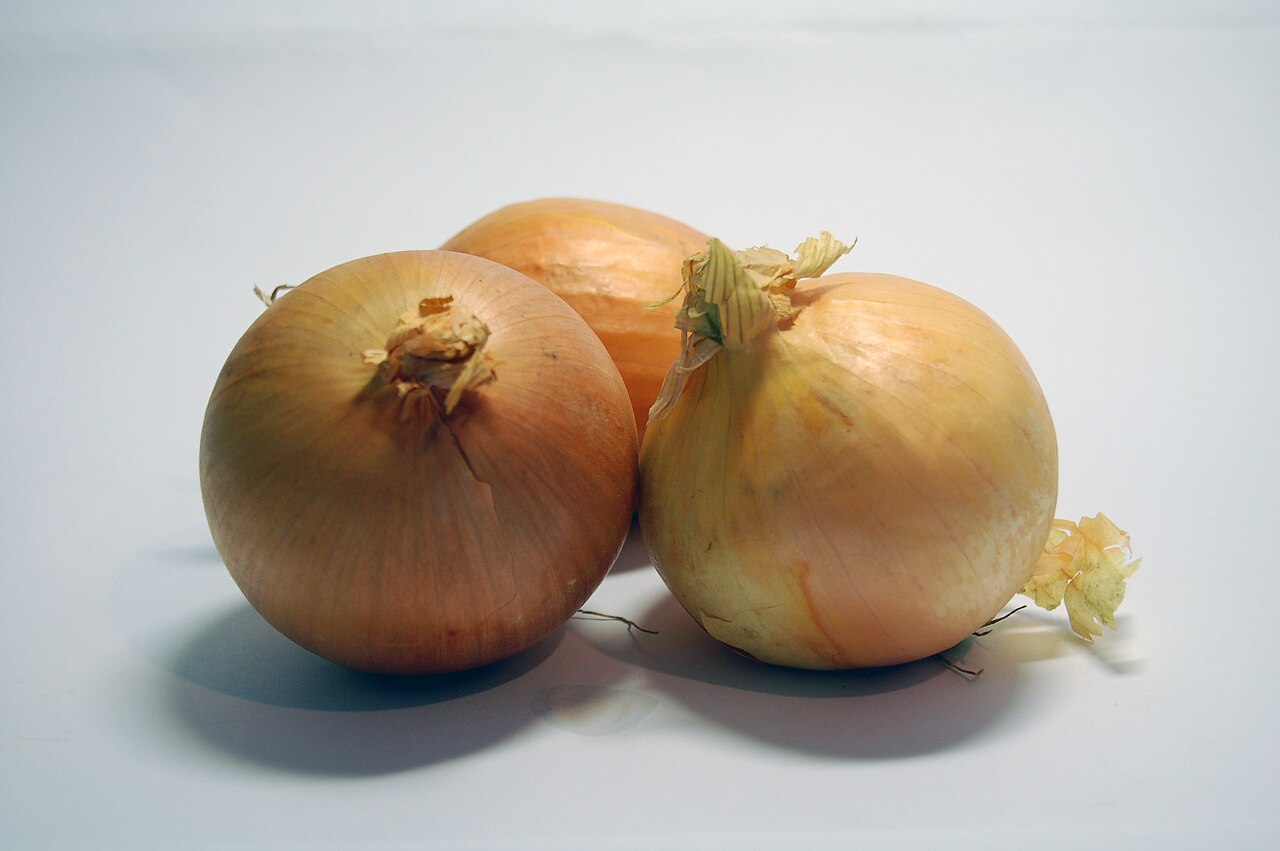
OnionAllium cepa
Indispensable in the kitchen, the onion is easy to succeed with from sets planted in spring or autumn. It asks for little water, little space, and keeps for months once properly dried. Red onions and small white spring onions also deserve their place.
- Difficulty
- Easy
- Exhibition
- Full sun
- Watering
- Low, only in drought, stopped a month before harvest
- Floor
- Light, well drained, without fresh manure
- Spacing
- 10 to 15 cm along the row, 25 cm between rows
- Harvest
- 100 to 120 days after planting sets
Calendar · Belgian climate
When to sow, plant and harvest
| Activity | Jan | Feb | Mar | Apr | May | Jun | Jul | Aug | Sep | Oct | Nov | Dec |
|---|---|---|---|---|---|---|---|---|---|---|---|---|
| Sowing under cover | yes | |||||||||||
| Sowing in open ground | yes | yes | yes | |||||||||
| Plantation | yes | yes | yes | yes | ||||||||
| Harvest | yes | yes | yes |
Step by step
1Sowing
Sow under cover in February in a seed tray, or outdoors in March-April, in drills one centimetre deep and twenty-five centimetres apart, one seed every two centimetres. Sowing suits storage varieties and white onions above all. For the latter, an August sowing gives small fresh onions from April. Germination takes two to three weeks. Then thin to ten centimetres and transplant the seedlings you remove.
2Planting out
The simplest method remains planting sets, from March to April for summer onions, or in October-November for overwintering varieties. Push each set in point upwards, every ten to fifteen centimetres, leaving the tip just showing. In heavy soil, plant on a raised bed or in a drill of sand. Choose small sets, under two centimetres, as they are less inclined to bolt.
3Caring
Hoe regularly; the onion copes badly with competition from weeds and its thin foliage does not cover the soil. Hand-weed close to the bulbs so as not to damage them. Water only in marked drought, and stop all watering a month before harvest. Remove flower stalks as soon as they appear. Do not mulch too thickly, as moisture at the neck encourages rot. No fertiliser is needed.
4Harvesting
Harvest when two thirds of the leaves have yellowed and flopped over, generally from late June to August depending on the variety. Choose a dry day, lift the bulbs by hand or with a fork, and leave them to dry on the ground for a few days in the sun, leaves still on, bringing them in if it rains. White onions are picked fresh, without drying, as soon as they reach the size you want, in spring.
5Storing
After one to two weeks of thorough drying, under cover and well ventilated, plait the onions by their leaves or cut these back to three centimetres and put them in nets or crates. Store in a dry, airy, cool and dark place: they keep until spring. Check regularly and remove any soft bulbs. Red onions keep less long than yellow ones.
Further reading
Planting and caring for plants properly
How to plant properly
Choosing the spot
The onion wants sun from morning to evening and a soil that dries quickly after rain. Give it the best-exposed bed, away from hedges and tall vegetables that would shade its thin foliage. Avoid the bottom of the garden where water stands in winter and spring: in our loamy or clay soils, that is where the bulbs rot. Ideally, the bed received compost for the previous crop, for example squashes, potatoes or cabbages. Keep a rotation of three to four years with garlic, shallots and leeks, which share the same diseases.
Preparing a light, settled soil
Work the soil with a broadfork or a garden fork in late winter, without turning it, then crumble it finely with a rake. Above all, add no fresh manure or young compost: they rot the bulbs and attract the onion fly. In heavy soil, work in two or three buckets of coarse sand and very mature compost per square metre, or build a raised bed ten to fifteen centimetres high. Then let the soil settle for one to two weeks before planting: the onion likes a settled soil, not a fluffed-up one where the roots find no purchase.
Sets or seed: choosing your method
To start with, sets are the surest route: they come up quickly, stand up to slugs and give a harvest in four months. Choose firm sets the size of a hazelnut, with no green shoot or soft patch. Large sets bolt more easily. Sowing, which is cheaper, suits storage varieties such as Jaune paille des Vertus or white onions: it needs a fine tilth, a slow germination of two to three weeks and meticulous weeding. A third option, the module-grown plants sold in garden centres in April, combines the advantages of both.
Planting the sets at the right time
Plant summer onions as soon as the soil can be worked without sticking to your boots, generally between mid-March and mid-April in Belgium. Planting in cold, waterlogged soil rots the sets or triggers bolting. Mark out rows twenty-five centimetres apart, and push each set in point upwards every ten centimetres, until only the tip shows. Firm lightly with the flat of the hand. If blackbirds and magpies pull up the freshly planted sets, cover the bed with a net or fleece for two weeks, until the roots have anchored.
Trying overwintering onions
Overwintering varieties, such as Radar, Senshyu or Shakespeare, are planted between mid-October and mid-November and harvested from June, when shop onions are at their dearest. They come through our winters without protection, but absolutely demand a well-drained soil: on a raised bed or a fifteen-centimetre ridge, otherwise the winter rain rots them. Space them a little more widely, fifteen centimetres, as they grow larger. Do not mulch them; moisture at the neck is fatal to them. In spring they get away early and deliver their harvest before the heavy downy mildew attacks of July.
In pots or containers
The onion makes do with a container at least twenty-five centimetres deep, filled with two thirds potting compost and one third sand or perlite for drainage. Plant the sets every ten centimetres, tip just showing, and place the container in full sun against a south-facing wall. Water only when the compost is dry three centimetres down. Containers suit white spring onions and Welsh onions particularly well, as these are picked young; large storage onions stay smaller in them. On a balcony, the onion fly is rare, which is a real advantage.
Beginner's mistakes
The first mistake is burying the sets too deep: they become drawn and the bulb stays small. The second is planting in freshly manured soil, which attracts the fly and causes rot. The third is squeezing the rows together to save space: without air, downy mildew moves in and the foliage never dries. Weeding is also often forgotten, whereas the onion, with its narrow foliage, gets smothered by chickweed in a few weeks. Finally, planting too early, in February, in cold soil, triggers bolting: better to wait a fortnight longer.
Look after it properly
Watering sparingly
The onion is one of the most frugal vegetables in the garden. After planting, a single watering is enough to bring the sets into contact with the soil. After that, water only in marked drought, when the soil is dry five centimetres down and the foliage turns bluish, generally not before May or June in our climate. Water at the base, early in the morning, without wetting the leaves, at the rate of one watering can for two metres of row. Stop all watering as soon as the leaves begin to flop over, about a month before harvest: a bulb full of water keeps badly.
Hoeing rather than mulching
Regular hoeing is a better substitute for both watering and mulching. Run the hoe between the rows every ten to fifteen days, especially after rain, to break the crust and aerate the soil. Close to the bulbs, pull weeds by hand so as not to damage the skin. If you insist on mulching, choose a fine, dry mulch such as dried grass clippings, no more than two centimetres deep, and always keep the neck clear. No fertiliser is needed in soil properly composted the year before; too much nitrogen gives lush foliage and soft bulbs that rot in the cellar.
Exposing the bulbs and removing flower stalks
From June onwards, the bulbs swell and lift themselves naturally out of the soil: do not try to cover them, as this is how they ripen and how their skin colours. Even draw the soil away from them a little to expose them to the sun. If a flower stalk appears, recognisable by its thick stem and its swelling, cut it off at once level with the leaves: the bulb will still be edible but will not keep, so eat it first. Do not bend the leaves over to hasten ripening, as used to be advised: it opens a door to neck rot.
Preventing fly, downy mildew and rots
The onion fly lays its eggs in April-May at the base of the young plants; its larvae bore into the bulb, which yellows and comes loose. Lay fine insect-proof mesh from planting until mid-June, and alternate the rows with carrots, whose scent confuses the trail. Pull up and bin any wilted plant. Against downy mildew, which coats the leaves in grey felt in warm, damp weather, space the plants out, never wet the foliage and spray horsetail decoction every ten days from June until harvest. A four-year rotation remains the best protection against white rot.
Through the season
In March-April, plant, lay the mesh and watch out for birds. In May, hoe every two weeks and pull weeds by hand. In June, remove the mesh, expose the bulbs, water once or twice if the month is dry and remove flower stalks. In July, stop watering, watch for downy mildew and prepare a dry space for drying. In August, harvest the summer onions, dry, sort and store. In October-November, plant overwintering onions on a raised bed, and put any remaining sets away somewhere dry so they do not sprout.
Harvesting and drying properly
Harvest when two thirds of the leaves have flopped and yellowed, on a dry morning, lifting the bulbs with a fork without pulling on the tops. Leave them to dry on the ground, roots upwards, for three to five days of dry weather, or spread them on a slatted rack under an airy shelter if it rains. Drying continues for two to three weeks, until the neck is thin and dry and the skin rustles. Never wash onions; just brush off the soil. Careless drying is the leading cause of rot in the cellar: take your time, storage depends on it.
Extending the season
To never run short of onions, combine three crops: overwintering onions planted in October for a June harvest, spring sets for winter storage, and a mid-August sowing of white onions under fleece for small fresh onions from April. Storage onions kept between 5 and 15 °C in a dry, dark place last until March; check them every month and eat the largest first, as they keep less well. Bulbs that sprout in late winter can be replanted in a pot to provide green onion tops until the first harvests.
Obtaining seeds or seedlings
Seeds and seedlings: where to find them
A selection of reputable seed suppliers that deliver to your country, listed in order of proximity. Evadya does not receive any commission: these are suppliers we recommend for their reliability.
Semailles
For Belgian artisan seed producer, organic and reproducible seeds, over 250 regional varieties, a planting calendar tailored to the Belgian climate.
Against Small organisation: limited range of hybrid varieties and possible stock shortages during peak season.
Search for ‘onion’ on SemaillesKokopelli
For Europe’s largest collection of heirloom, organic and open-pollinated varieties; comprehensive growing guides.
Against No hybrids or seedlings; delivery times can sometimes be long during peak season; prices are slightly higher.
View the shopFerme de Sainte Marthe
For A long-established organic seed supplier, offering seeds and young plants, heirloom varieties, and nutrition and recipe guides.
Against Dispatched from the Loire: postage charges to Belgium and Switzerland; plants are fragile in transit.
Search for ‘onion’ on Ferme de Sainte MartheGraines Baumaux
For A vast selection (over 500 tomato varieties), with high-yielding F1 hybrids and heirloom varieties side by side, and plants available in season.
Against Not much organic produce; an old site; catalogue entries rather than growing guides.
Search for ‘onion’ on Graines BaumauxVreeken’s Zaden
For A very wide range of Dutch products, competitive prices, and numerous varieties suited to the Benelux climate.
Against Website in Dutch only; limited selection of organic produce.
Search for ‘onion’ on Vreeken’s ZadenDe Bolster
For Dutch organic seed producer, seeds suitable for propagation, a good selection for cool climates.
Against A shorter catalogue; website in Dutch.
Search for ‘onion’ on De BolsterZollinger Bio
For Swiss organic seeds, varieties suited to high altitudes and microclimates, and a unique phenological calendar.
Against Swiss prices and customs charges from the European Union.
Search for ‘onion’ on Zollinger BioBingenheimer Saatgut
For A leading German name in organic and biodynamic produce, offering open-pollinated varieties selected for the home gardener.
Against Website in German; delivery charges apply outside Germany.
Search for ‘onion’ on Bingenheimer SaatgutDreschflegel
For A collective of organic growers, specialising in rare and regional varieties, and the preservation of traditional farm seeds.
Against Small quantities; a catalogue that’s more activist than practical; website in German.
Search for ‘onion’ on DreschflegelFrom the vegetable patch to the plate
And then we savour it
What it offers
The onion provides sulphur compounds, antioxidants such as quercetin, fibre and vitamin C. It flavours dishes without adding calories.
In the kitchen, it’s simple
Small white onions in June, freshly picked, slip raw into a salad; large storage onions, slowly softened in butter, become an autumn tart or soup.
Living well
Plaiting your onions in the shade on an August afternoon, then hanging them in the kitchen, is preparing yourself a winter full of flavour.
Also worth a look
Other vegetables
Garlic
Allium sativum
Shallot
Allium cepa var. aggregatum
Florence fennel
Foeniculum vulgare var. azoricum
Tomato
Solanum lycopersicum