brassica · Brassicacées
KaleBrassica oleracea var. sabellica
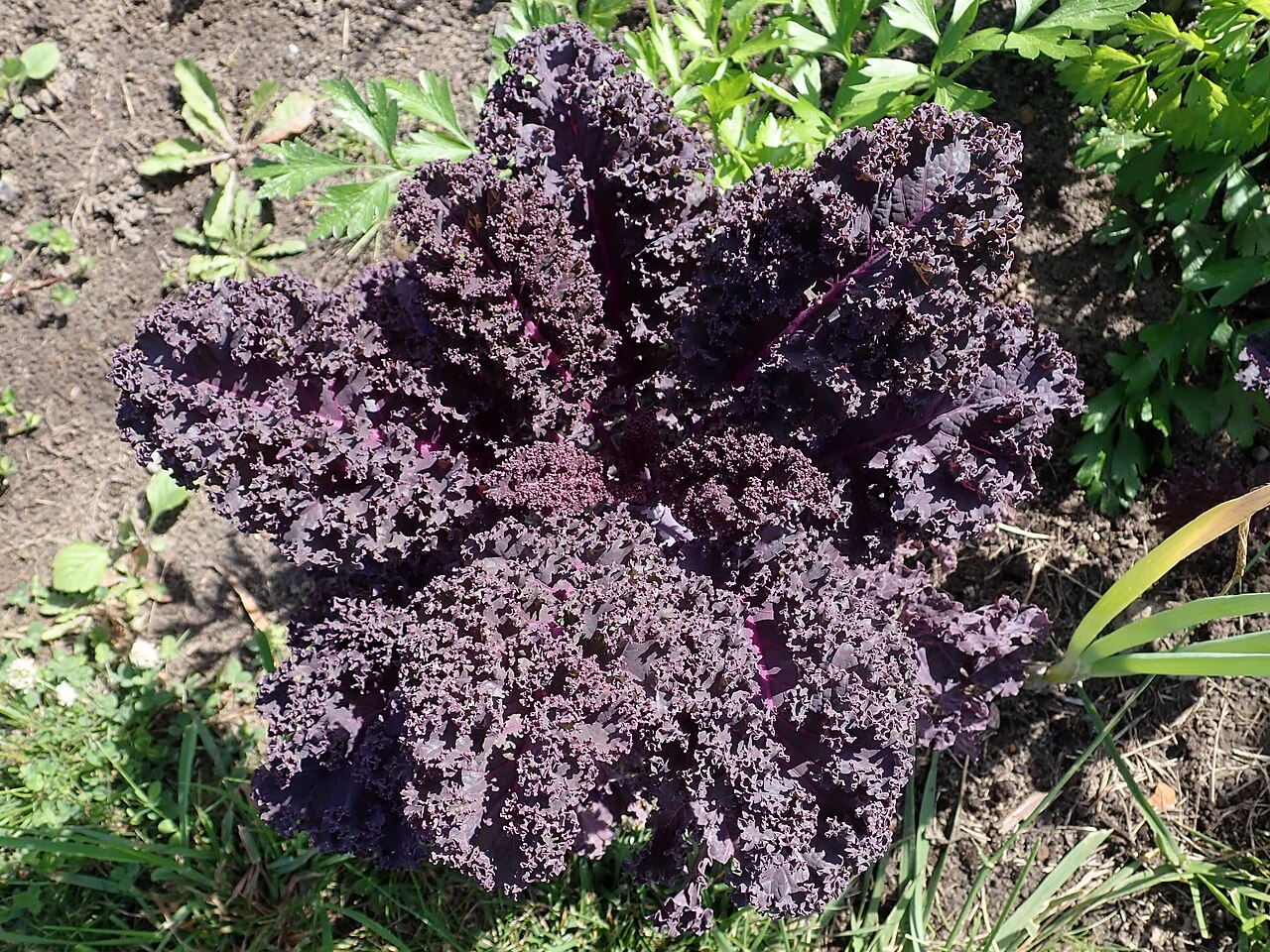
Curly kale, or boerenkool as it is called in the north of the country, is without doubt the easiest of the cabbages. It needs neither to head up nor any particular care, withstands severe frosts and offers its curly leaves, green or purple, all winter long, leaf after leaf.
- Difficulty
- Easy
- Exhibition
- Sun or light partial shade
- Watering
- Moderate, regular in summer; very frugal from autumn.
- Floor
- Any deep, moist, reasonably rich soil; tolerates heavy ground.
- Spacing
- 50 cm between plants, 60 cm between rows.
- Harvest
- 80 to 120 days.
Calendar · Belgian climate
When to sow, plant and harvest
| Activity | Jan | Feb | Mar | Apr | May | Jun | Jul | Aug | Sep | Oct | Nov | Dec |
|---|---|---|---|---|---|---|---|---|---|---|---|---|
| Sowing under cover | yes | yes | ||||||||||
| Sowing in open ground | yes | yes | yes | |||||||||
| Plantation | yes | yes | yes | |||||||||
| Harvest | yes | yes | yes | yes | yes | yes | yes |
Step by step
1Sowing
Sow from April to June in an outdoor seedbed or in pots, one centimetre deep, thinly, in rows 10 cm apart. A March sowing under a cold frame brings the harvest forward to summer, but kale is best enjoyed in winter: a May-June sowing is enough. Thin to 5 cm or prick out into pots at the two-true-leaf stage for stocky plants.
2Planting out
Plant from May to July, when the plants have five leaves, every 50 cm, burying the stem up to the first leaves and firming well. Kale happily follows peas, broad beans or early potatoes. Water generously at planting, fit a collar against the cabbage root fly and, in summer, insect-proof mesh against the cabbage white.
3Caring
Hoe, mulch and water in dry weather in summer, then let it be from October. Earth up lightly as the stems gain height, and stake the tall varieties in a windy position. Regularly remove yellow leaves from the bottom. Nettle liquid in August strengthens the plants. Watch for mealy aphids and caterpillars until the first frosts, which settle the matter.
4Harvesting
Pick the outer leaves one by one, from the bottom up, snapping them cleanly against the stem, as soon as they are the size of your hand. Always leave the central tuft intact so that the plant keeps producing, from September to March. Leaves harvested after a frost are milder and sweeter. The young spring shoots, before flowering, are a delight.
5Storing
Leave the plants in place and pick as you go: it is the best larder. The leaves last a week in the vegetable drawer, in an open bag. Stripped of their midrib, blanched for two minutes and frozen, they keep all winter. Dried in a low oven with a little oil and salt, they make crisps that keep a few days in a tin.
Further reading
Planting and caring for plants properly
How to plant properly
Choosing the spot
Kale is the least demanding of the cabbages: full sun by preference, but light partial shade suits it, and it tolerates heavy ground as well as average soils, provided they are deep and moist. It stays in place from June to March and reaches sixty to eighty centimetres: give it a bed you will not need before spring, ideally sheltered from the west wind, or plant it at the back of the vegetable garden, where it also makes a fine ornamental plant, especially the purple varieties. Keep the four-year rotation without brassicas, as clubroot demands. It happily follows peas, broad beans and early potatoes.
Preparing the soil
Moderate manuring is enough: three kilos of mature compost per square metre, worked in to twenty centimetres the previous autumn or a month before planting. Avoid fresh manure, which gives soft leaves and attracts aphids, and excess nitrogen in general, which harms frost resistance. Lime lightly on acid soil, as for the other cabbages. Scratch the surface, remove perennial weeds, then firm the soil with the rake: kale, tall and heavy with leaves, must anchor itself in firm soil. Soil that drains well in winter matters more than rich soil.
Sowing at the right time
Kale is mainly enjoyed from October to March: a sowing from mid-May to mid-June is perfect here. Sown earlier, in March-April, it gives leaves from summer, but enormous, tired plants by winter. Sow in an outdoor seedbed, under mesh, in rows ten centimetres apart, one seed every two centimetres, one centimetre deep, or directly in eight-centimetre pots, two seeds per pot. Germination takes a week. All varieties are equally hardy; the palm-tree kale Nero di Toscana is a little less frost-resistant than green curly types such as Westlandse Winter.
Raising and planting
Thin to five centimetres or keep one plant per pot. Plant five to six weeks after sowing, from late June to late July, when the plant has five leaves, every fifty centimetres, sixty between rows, or forty for dwarf varieties. Bury the stem up to the first leaves, firm well, water three litres per plant. A cardboard collar against the cabbage root fly, then insect-proof mesh until September. Sowing directly in place, three seeds per station every fifty centimetres, thinned afterwards, works just as well for this undemanding crop.
Sowing densely for baby leaves
Kale can also be grown as baby leaves, salad-mix style, ready in three to five weeks. Sow densely, in rows fifteen centimetres apart or broadcast, from March to September, on fine soil, and cut with scissors at three centimetres when the leaves are ten centimetres long: three or four regrowths follow. Red Russian and Nero di Toscana are excellent for this purpose, tender and mild. This method occupies a corner of a bed for six weeks, between two crops, and provides green salads when lettuce is short, in April or September.
In pots or containers
Kale is the balcony cabbage par excellence. A twenty-litre pot thirty centimetres deep per plant, or a forty-centimetre window box for two dwarf plants, filled with potting compost mixed with a third of garden compost and well firmed, is enough. Place in sun or partial shade, water every two days in summer, feed with plant liquid every three weeks until September. The container can stay outside all winter; move it close to a wall in severe frost and check that it does not stay waterlogged. A purple variety such as Redbor decorates the terrace while feeding you.
Beginner's mistakes
Sowing too early and feeding too heavily gives giant, soft plants infested with aphids, which suffer at the first frost. Planting without firming leaves the plant rocking about and flat on the ground by November. Forgetting the mesh in July-August means finding the plant stripped to its ribs by the cabbage white. Harvesting by cutting the top, like a headed cabbage, ends production; you must pick leaf by leaf. Leaving yellow lower leaves in place attracts slugs and disease. Finally, forgetting the pigeons in winter, when kale is the only greenery in the neighbourhood, costs the harvest in a week.
Look after it properly
Watering moderately
Water every two or three days for the two weeks after planting, then ten litres per square metre once a week in July-August in dry weather, at the base, in the morning. Kale stands drought better than its cousins, but a plant that is thirsty in August produces tough leaves. From September, rain is enough; in winter, nothing more is needed, and sodden soil is in fact its main enemy. In a container, water when the compost is dry two centimetres down, and check the drainage before winter.
Mulching and light feeding
A month after planting, mulch six to eight centimetres deep with dried grass clippings, straw or leaves, keeping the collar clear. One watering of nettle liquid diluted to 10 % in July, a second in early August, and that is all: after mid-August, no more nitrogen, otherwise the leaves stay soft and freeze. A handful of wood ash at the base in late August provides potash and strengthens winter hardiness. Very dark green, firm leaves in October are the sign of a well-balanced crop; pale, puckered leaves betray excess.
Earthing up, staking and tidying
Earth up the base of the stem to ten centimetres in August, then again in October, to anchor the plant as it gains height. The tall varieties, palm-tree kale and tall curly types, benefit from staking in a windy spot from September, with a loose tie. Regularly snap off the lower leaves as they yellow, downwards, to let air in and stop slugs settling there. The stem is thus gradually bared below a tuft of healthy leaves, like a little palm tree, which is perfectly normal and makes harvesting easier.
Preventing cabbage white, aphids, whitefly and pigeons
The cabbage white is the summer pest: insect-proof mesh from planting to the end of September, otherwise weekly inspection, eggs crushed and caterpillars picked off. Mealy cabbage aphids nestle in the curly leaves, where they are hard to dislodge: hose off, soft soap diluted to 5 %, removal of badly affected leaves; the first frosts eliminate them. Whitefly rise in a cloud from under the leaves in August: a jet of water in the morning, lower leaves removed. From December, pigeons devour kale in a few days: a net or fleece over hoops, not touching the leaves. A collar against the cabbage root fly at planting.
Through the season
In May-June, sow in a seedbed or pots under mesh. In June-July, plant after the peas, firm, collar, mesh, water. In July, mulch, feed. In August, earth up, ash at the base, watch for aphids and caterpillars, remove yellow leaves. In September, remove the mesh at the end of the month, stake, start picking the lowest leaves. In October, earth up again, harvest. From November to February, harvest after the frosts, net against pigeons. In March, pick the young shoots and flower buds, then pull up before flowering exhausts the plant.
Harvesting and extending the season
Pick leaf by leaf, starting from the bottom, as soon as they are the size of your hand, snapping them cleanly against the stem with a downward movement. Always leave the central tuft and five or six leaves so that the plant keeps producing, from September to March. Harvest in frost-free weather or let the leaves thaw on the plant; they are much sweeter after a frost of minus five. Remove the midrib before cooking. In late March, the still-closed flower buds cook like broccoli, and the young spring leaves are the most tender of the year.
Obtaining seeds or seedlings
Seeds and seedlings: where to find them
A selection of reputable seed suppliers that deliver to your country, listed in order of proximity. Evadya does not receive any commission: these are suppliers we recommend for their reliability.
Semailles
For Belgian artisan seed producer, organic and reproducible seeds, over 250 regional varieties, a planting calendar tailored to the Belgian climate.
Against Small organisation: limited range of hybrid varieties and possible stock shortages during peak season.
Search for ‘kale’ on SemaillesKokopelli
For Europe’s largest collection of heirloom, organic and open-pollinated varieties; comprehensive growing guides.
Against No hybrids or seedlings; delivery times can sometimes be long during peak season; prices are slightly higher.
View the shopFerme de Sainte Marthe
For A long-established organic seed supplier, offering seeds and young plants, heirloom varieties, and nutrition and recipe guides.
Against Dispatched from the Loire: postage charges to Belgium and Switzerland; plants are fragile in transit.
Search for ‘kale’ on Ferme de Sainte MartheGraines Baumaux
For A vast selection (over 500 tomato varieties), with high-yielding F1 hybrids and heirloom varieties side by side, and plants available in season.
Against Not much organic produce; an old site; catalogue entries rather than growing guides.
Search for ‘kale’ on Graines BaumauxVreeken’s Zaden
For A very wide range of Dutch products, competitive prices, and numerous varieties suited to the Benelux climate.
Against Website in Dutch only; limited selection of organic produce.
Search for ‘kale’ on Vreeken’s ZadenDe Bolster
For Dutch organic seed producer, seeds suitable for propagation, a good selection for cool climates.
Against A shorter catalogue; website in Dutch.
Search for ‘kale’ on De BolsterZollinger Bio
For Swiss organic seeds, varieties suited to high altitudes and microclimates, and a unique phenological calendar.
Against Swiss prices and customs charges from the European Union.
Search for ‘kale’ on Zollinger BioBingenheimer Saatgut
For A leading German name in organic and biodynamic produce, offering open-pollinated varieties selected for the home gardener.
Against Website in German; delivery charges apply outside Germany.
Search for ‘kale’ on Bingenheimer SaatgutDreschflegel
For A collective of organic growers, specialising in rare and regional varieties, and the preservation of traditional farm seeds.
Against Small quantities; a catalogue that’s more activist than practical; website in German.
Search for ‘kale’ on DreschflegelFrom the vegetable patch to the plate
And then we savour it
What it offers
Very rich in vitamin K, vitamin C, beta-carotene and calcium that is well absorbed for a vegetable.
In the kitchen, it’s simple
A curly kale stoemp with a country sausage, or chopped leaves sautéed with garlic and finished with lemon juice.
Living well
Picking your frosted kale leaves with gloved hands is the vegetable garden still feeding you when everything else is resting.
Also worth a look
Other vegetables
Leek
Allium porrum
Lettuce
Lactuca sativa
Spinach
Spinacia oleracea
Lamb's lettuce (corn salad)
Valerianella locusta